 Image 1 of 1
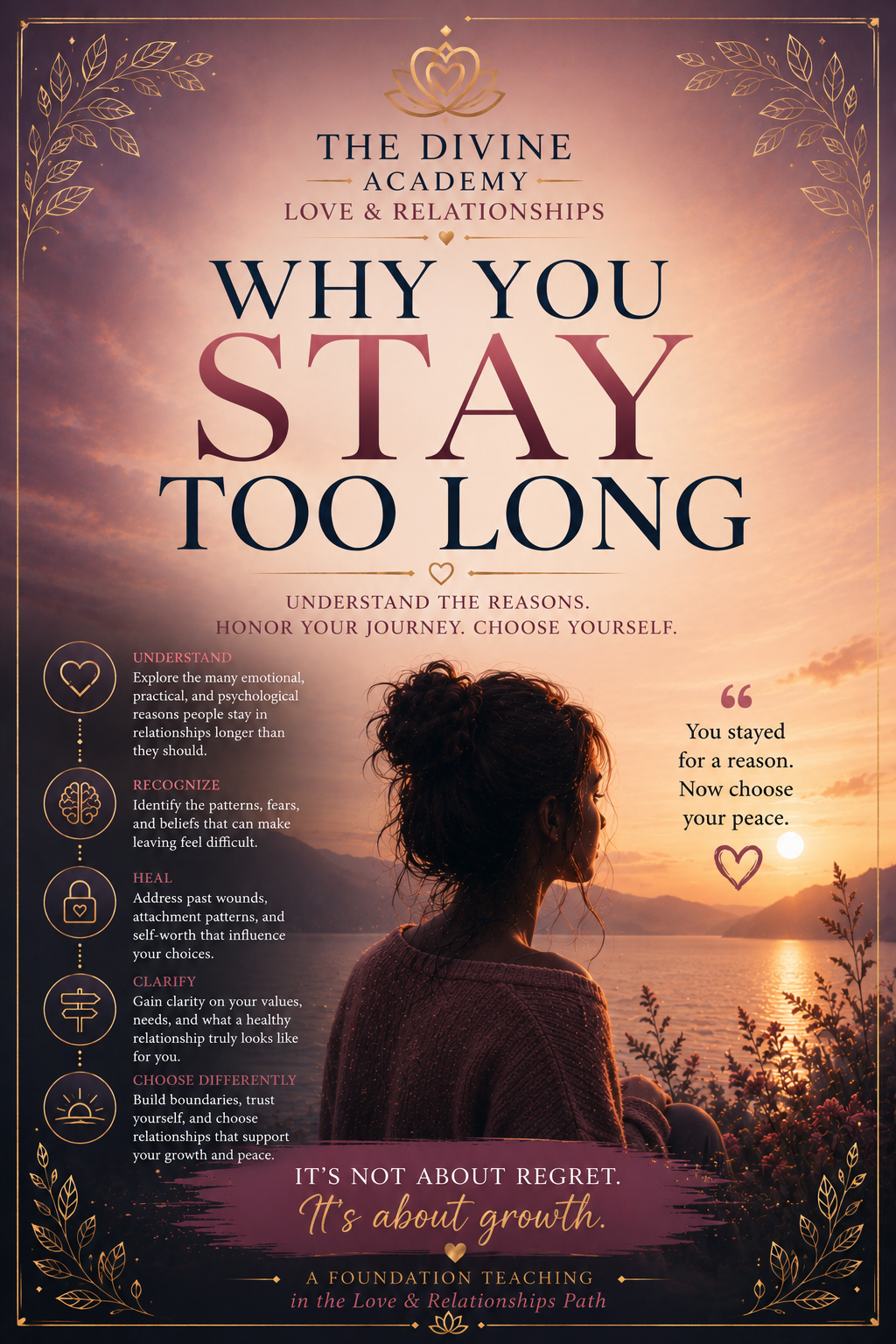
Why You Stay Too Long
Foundation Teaching • Love & Relationships
Leaving a relationship isn't always about knowing it's time to go. Sometimes it's about understanding why it's so hard to leave.
Have you ever looked back on a relationship and wondered,
"Why didn't I leave sooner?"
It's a question many people ask after a relationship ends.
From the outside, leaving can seem like the obvious choice.
From the inside, relationships are far more complex.
People stay for many different reasons.
Sometimes it's hope that things will change.
Sometimes it's love, emotional attachment, shared history, fear of being alone, financial concerns, family responsibilities, personal values, or uncertainty about what comes next.
None of these reasons automatically make someone weak.
They make someone human.
This Foundation Teaching explores why people often stay in relationships longer than they intended, the many factors that can influence those decisions, and how greater awareness can help you recognize relationship patterns and make choices that better support your well-being.
What You'll Learn
Inside this Foundation Teaching, you'll discover:
Why leaving a relationship can be more difficult than it appears
The emotional, practical, and psychological factors that influence relationship decisions
How hope, attachment, fear, and familiarity can affect your choices
The role of boundaries, self-awareness, and relationship values
Common misconceptions about why people stay
How recurring relationship patterns develop
How awareness can help you make healthier relationship decisions moving forward
At a Glance
Learning Path: Love & Relationships
Resource Type: Foundation Teaching
Level: Beginner
Length: 6 Pages
Format: Digital PDF
Who This Teaching Is For
This teaching is for anyone who has ever wondered:
"Why did I stay so long?"
"Why is leaving sometimes harder than staying?"
"Why do I keep hoping things will change?"
"Why do I ignore what I know deep down?"
"How can I make healthier relationship choices?"
Whether you're reflecting on a past relationship, navigating a current one, or simply wanting to better understand relationship dynamics, this teaching offers a compassionate, evidence-informed perspective on why staying can be so difficult.
Why This Matters
It's easy to judge ourselves after a relationship ends.
Many people look back with regret and think,
"I should have left sooner."
But healing often begins when we replace judgment with understanding.
Relationships involve emotions, memories, hopes, responsibilities, fears, and practical realities that aren't always visible from the outside.
Understanding why you stayed isn't about making excuses.
It's about recognizing the factors that influenced your decisions so you can respond differently in the future.
The goal isn't to criticize the version of yourself that stayed.
The goal is to support the version of yourself that's learning, growing, and choosing with greater clarity.
Every relationship offers an opportunity to better understand your needs, values, boundaries, and the kind of connection you want to build moving forward.
Foundation Teaching • Love & Relationships
Leaving a relationship isn't always about knowing it's time to go. Sometimes it's about understanding why it's so hard to leave.
Have you ever looked back on a relationship and wondered,
"Why didn't I leave sooner?"
It's a question many people ask after a relationship ends.
From the outside, leaving can seem like the obvious choice.
From the inside, relationships are far more complex.
People stay for many different reasons.
Sometimes it's hope that things will change.
Sometimes it's love, emotional attachment, shared history, fear of being alone, financial concerns, family responsibilities, personal values, or uncertainty about what comes next.
None of these reasons automatically make someone weak.
They make someone human.
This Foundation Teaching explores why people often stay in relationships longer than they intended, the many factors that can influence those decisions, and how greater awareness can help you recognize relationship patterns and make choices that better support your well-being.
What You'll Learn
Inside this Foundation Teaching, you'll discover:
Why leaving a relationship can be more difficult than it appears
The emotional, practical, and psychological factors that influence relationship decisions
How hope, attachment, fear, and familiarity can affect your choices
The role of boundaries, self-awareness, and relationship values
Common misconceptions about why people stay
How recurring relationship patterns develop
How awareness can help you make healthier relationship decisions moving forward
At a Glance
Learning Path: Love & Relationships
Resource Type: Foundation Teaching
Level: Beginner
Length: 6 Pages
Format: Digital PDF
Who This Teaching Is For
This teaching is for anyone who has ever wondered:
"Why did I stay so long?"
"Why is leaving sometimes harder than staying?"
"Why do I keep hoping things will change?"
"Why do I ignore what I know deep down?"
"How can I make healthier relationship choices?"
Whether you're reflecting on a past relationship, navigating a current one, or simply wanting to better understand relationship dynamics, this teaching offers a compassionate, evidence-informed perspective on why staying can be so difficult.
Why This Matters
It's easy to judge ourselves after a relationship ends.
Many people look back with regret and think,
"I should have left sooner."
But healing often begins when we replace judgment with understanding.
Relationships involve emotions, memories, hopes, responsibilities, fears, and practical realities that aren't always visible from the outside.
Understanding why you stayed isn't about making excuses.
It's about recognizing the factors that influenced your decisions so you can respond differently in the future.
The goal isn't to criticize the version of yourself that stayed.
The goal is to support the version of yourself that's learning, growing, and choosing with greater clarity.
Every relationship offers an opportunity to better understand your needs, values, boundaries, and the kind of connection you want to build moving forward.