 Image 1 of 1
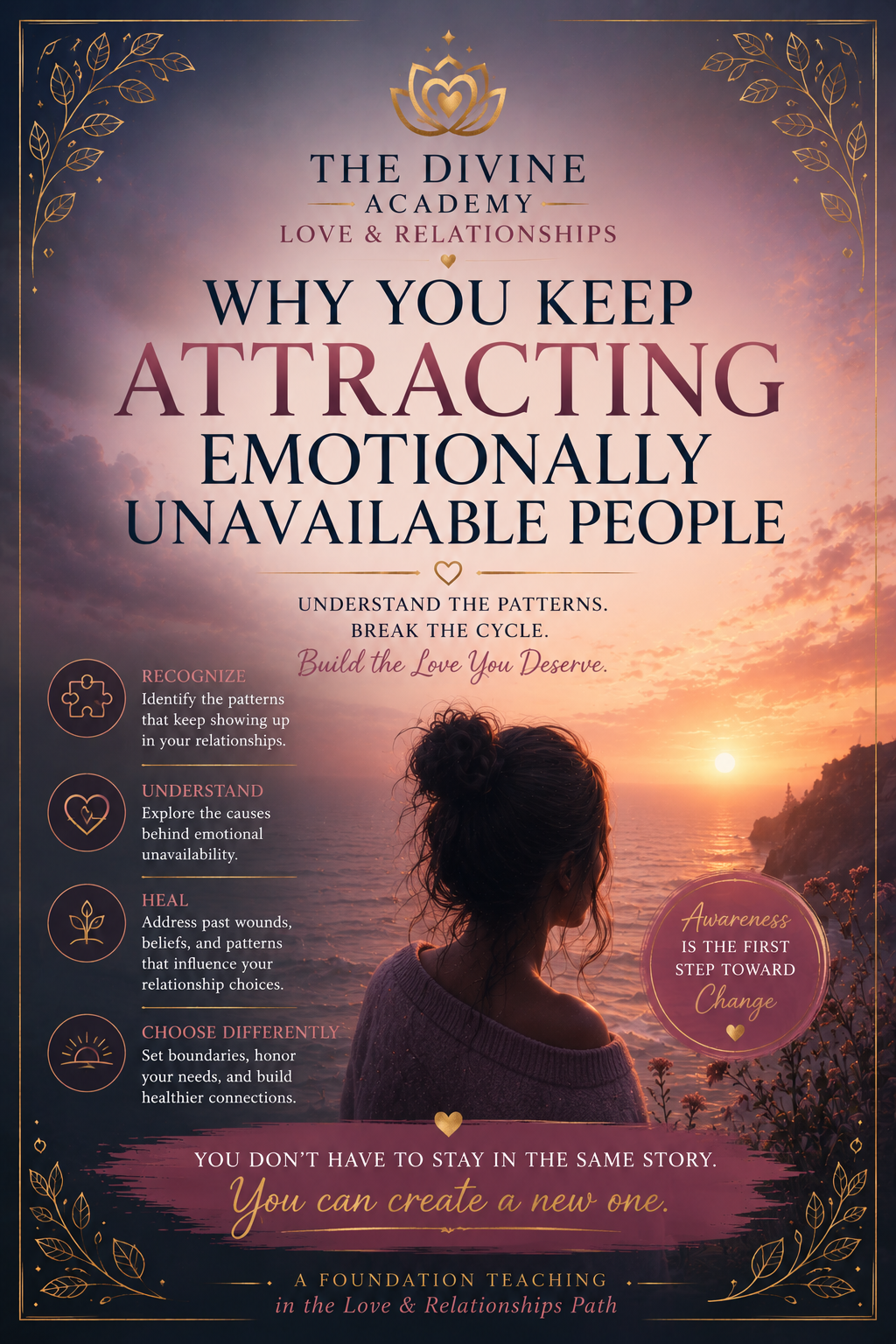
Why You Keep Attracting Emotionally Unavailable People
Foundation Teaching • Love & Relationships
Sometimes the question isn't "Why do I keep attracting them?"—it's "Why do these relationship patterns keep repeating?"
Have you ever found yourself in relationships that follow a familiar pattern?
Maybe the other person seemed interested in the beginning but slowly became distant.
Perhaps they avoided emotional conversations, struggled with commitment, sent mixed signals, or never seemed fully available.
After enough similar experiences, it's natural to ask:
"Why does this keep happening?"
The answer is rarely as simple as "you attract emotionally unavailable people."
Relationships are influenced by many factors, including emotional availability, attachment patterns, communication, boundaries, compatibility, life experiences, personal readiness, and the choices both people make.
This Foundation Teaching explores what emotional availability really means, why recurring relationship patterns can develop, and how greater awareness can help you build healthier, more balanced relationships.
What You'll Learn
Inside this Foundation Teaching, you'll discover:
What emotional availability actually means
Common characteristics of emotionally unavailable relationship dynamics
Why relationship patterns sometimes repeat
How attachment, beliefs, and past experiences can influence relationship choices
The role of boundaries and communication in healthy relationships
Common misconceptions about emotional unavailability
How awareness helps you make healthier relationship decisions
At a Glance
Learning Path: Love & Relationships
Resource Type: Foundation Teaching
Level: Beginner
Length: 6 Pages
Format: Digital PDF
Who This Teaching Is For
This teaching is for anyone who has ever wondered:
"Why do I keep ending up in the same kind of relationship?"
"What does emotionally unavailable actually mean?"
"Why do I ignore red flags?"
"Can relationship patterns be changed?"
"How do I build healthier relationships?"
Whether you're reflecting on past relationships, navigating a current one, or simply wanting to better understand relationship dynamics, this teaching offers a compassionate, evidence-informed introduction to emotional availability and recurring relationship patterns.
Why This Matters
When similar relationship experiences happen repeatedly, it's easy to blame yourself—or blame everyone else.
Healthy relationships are usually more complex than that.
Patterns often develop through a combination of experiences, beliefs, expectations, communication, boundaries, attachment, timing, and compatibility.
Understanding these patterns isn't about assigning fault.
It's about gaining clarity.
The more clearly you understand your relationship patterns, the better equipped you become to recognize healthy dynamics, communicate your needs, establish boundaries, and make intentional choices about the relationships you build.
Awareness doesn't guarantee every future relationship will be healthy.
It does give you the opportunity to notice patterns earlier and respond differently.
Healthy relationships begin long before commitment.
They begin with understanding.
Foundation Teaching • Love & Relationships
Sometimes the question isn't "Why do I keep attracting them?"—it's "Why do these relationship patterns keep repeating?"
Have you ever found yourself in relationships that follow a familiar pattern?
Maybe the other person seemed interested in the beginning but slowly became distant.
Perhaps they avoided emotional conversations, struggled with commitment, sent mixed signals, or never seemed fully available.
After enough similar experiences, it's natural to ask:
"Why does this keep happening?"
The answer is rarely as simple as "you attract emotionally unavailable people."
Relationships are influenced by many factors, including emotional availability, attachment patterns, communication, boundaries, compatibility, life experiences, personal readiness, and the choices both people make.
This Foundation Teaching explores what emotional availability really means, why recurring relationship patterns can develop, and how greater awareness can help you build healthier, more balanced relationships.
What You'll Learn
Inside this Foundation Teaching, you'll discover:
What emotional availability actually means
Common characteristics of emotionally unavailable relationship dynamics
Why relationship patterns sometimes repeat
How attachment, beliefs, and past experiences can influence relationship choices
The role of boundaries and communication in healthy relationships
Common misconceptions about emotional unavailability
How awareness helps you make healthier relationship decisions
At a Glance
Learning Path: Love & Relationships
Resource Type: Foundation Teaching
Level: Beginner
Length: 6 Pages
Format: Digital PDF
Who This Teaching Is For
This teaching is for anyone who has ever wondered:
"Why do I keep ending up in the same kind of relationship?"
"What does emotionally unavailable actually mean?"
"Why do I ignore red flags?"
"Can relationship patterns be changed?"
"How do I build healthier relationships?"
Whether you're reflecting on past relationships, navigating a current one, or simply wanting to better understand relationship dynamics, this teaching offers a compassionate, evidence-informed introduction to emotional availability and recurring relationship patterns.
Why This Matters
When similar relationship experiences happen repeatedly, it's easy to blame yourself—or blame everyone else.
Healthy relationships are usually more complex than that.
Patterns often develop through a combination of experiences, beliefs, expectations, communication, boundaries, attachment, timing, and compatibility.
Understanding these patterns isn't about assigning fault.
It's about gaining clarity.
The more clearly you understand your relationship patterns, the better equipped you become to recognize healthy dynamics, communicate your needs, establish boundaries, and make intentional choices about the relationships you build.
Awareness doesn't guarantee every future relationship will be healthy.
It does give you the opportunity to notice patterns earlier and respond differently.
Healthy relationships begin long before commitment.
They begin with understanding.