 Image 1 of 1
Foundation Teaching • Feminine, Masculine & Polarity
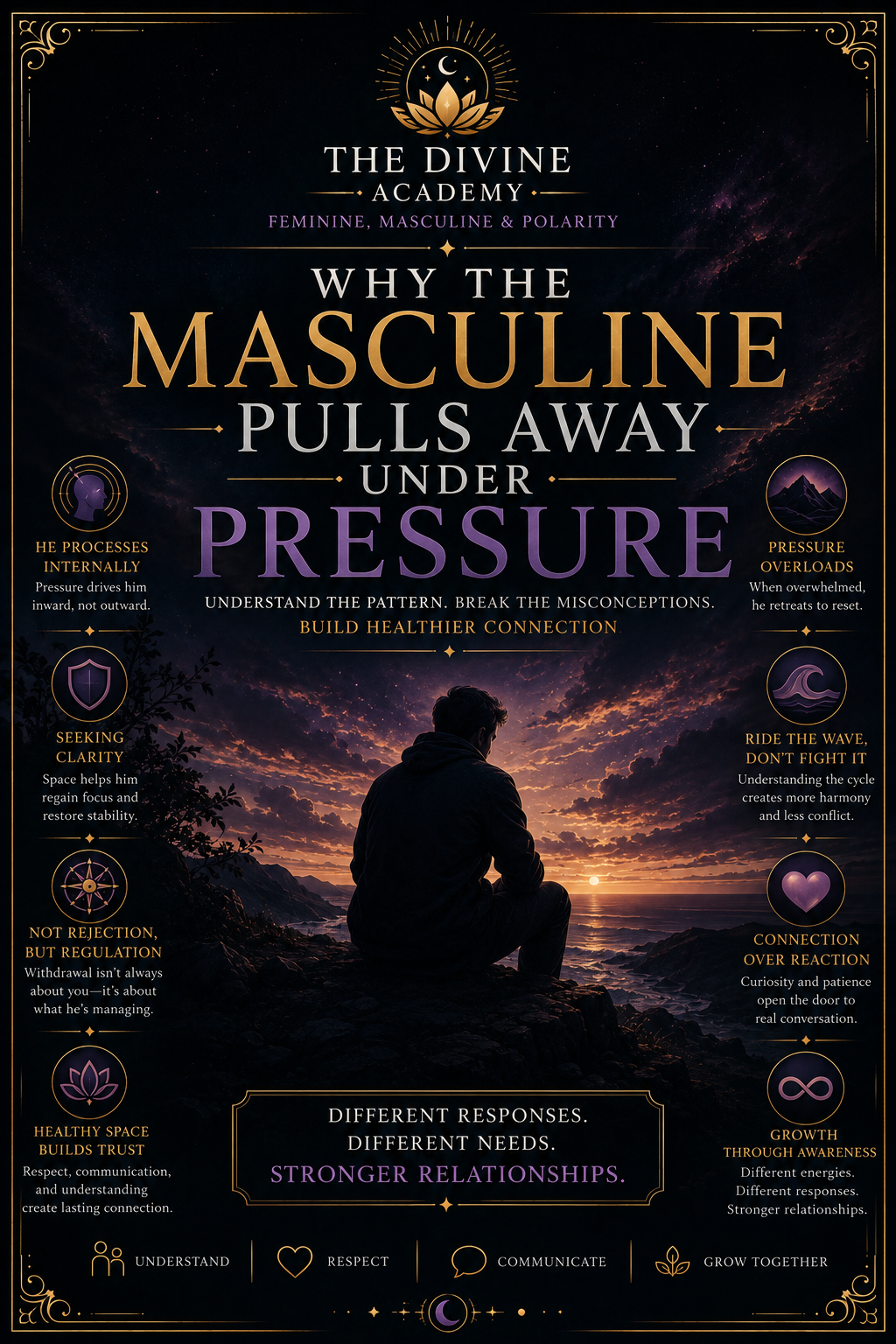
Sometimes distance isn't about rejection—it's about how someone responds to pressure.
One of the most misunderstood ideas within masculine and feminine polarity teachings is the tendency for masculine energy to withdraw during times of stress or overwhelm.
For some, this behavior is immediately interpreted as emotional distance, loss of interest, or a lack of commitment.
Many polarity practitioners, however, offer a different perspective.
They suggest that masculine energy often processes pressure internally, seeking space to regain clarity, stability, and direction before reconnecting.
This Foundation Teaching explores this commonly discussed dynamic, helping you understand the difference between healthy space, emotional regulation, and unhealthy avoidance.
What You'll Learn
Inside this Foundation Teaching, you'll discover:
How many polarity teachings explain masculine withdrawal under pressure
The difference between healthy space and emotional avoidance
Why pressure can influence communication and connection
Common misconceptions about masculine energy
How personality, attachment, and life experiences also shape these behaviors
How understanding different coping styles can support healthier relationships
At a Glance
Learning Path: Feminine, Masculine & Polarity
Resource Type: Foundation Teaching
Level: Beginner
Length: 6 Pages
Format: Digital PDF
Who This Teaching Is For
This teaching is for anyone who wants to:
Better understand masculine and feminine polarity
Learn why some people seek space during stressful periods
Improve communication in relationships
Explore healthier relationship dynamics
Separate common myths from the ideas presented within polarity teachings
Why This Matters
Differences in how people respond to stress are one of the most common sources of misunderstanding in relationships.
Without understanding these differences, it's easy to misinterpret someone's need for space as rejection or assume that every withdrawal carries the same meaning.
Developing a deeper understanding of this concept encourages more thoughtful communication, healthier expectations, and greater awareness of the many ways people navigate pressure and emotional challenges.
This teaching introduces one of the central ideas within many polarity frameworks while recognizing that every individual and every relationship is unique.
Foundation Teaching • Feminine, Masculine & Polarity
Sometimes distance isn't about rejection—it's about how someone responds to pressure.
One of the most misunderstood ideas within masculine and feminine polarity teachings is the tendency for masculine energy to withdraw during times of stress or overwhelm.
For some, this behavior is immediately interpreted as emotional distance, loss of interest, or a lack of commitment.
Many polarity practitioners, however, offer a different perspective.
They suggest that masculine energy often processes pressure internally, seeking space to regain clarity, stability, and direction before reconnecting.
This Foundation Teaching explores this commonly discussed dynamic, helping you understand the difference between healthy space, emotional regulation, and unhealthy avoidance.
What You'll Learn
Inside this Foundation Teaching, you'll discover:
How many polarity teachings explain masculine withdrawal under pressure
The difference between healthy space and emotional avoidance
Why pressure can influence communication and connection
Common misconceptions about masculine energy
How personality, attachment, and life experiences also shape these behaviors
How understanding different coping styles can support healthier relationships
At a Glance
Learning Path: Feminine, Masculine & Polarity
Resource Type: Foundation Teaching
Level: Beginner
Length: 6 Pages
Format: Digital PDF
Who This Teaching Is For
This teaching is for anyone who wants to:
Better understand masculine and feminine polarity
Learn why some people seek space during stressful periods
Improve communication in relationships
Explore healthier relationship dynamics
Separate common myths from the ideas presented within polarity teachings
Why This Matters
Differences in how people respond to stress are one of the most common sources of misunderstanding in relationships.
Without understanding these differences, it's easy to misinterpret someone's need for space as rejection or assume that every withdrawal carries the same meaning.
Developing a deeper understanding of this concept encourages more thoughtful communication, healthier expectations, and greater awareness of the many ways people navigate pressure and emotional challenges.
This teaching introduces one of the central ideas within many polarity frameworks while recognizing that every individual and every relationship is unique.