 Image 1 of 1
Foundation Teaching • Chart Systems
There isn't one "best" chart system—only the one that best fits what you're hoping to explore.
If you're new to chart systems, it can feel overwhelming trying to decide where to begin.
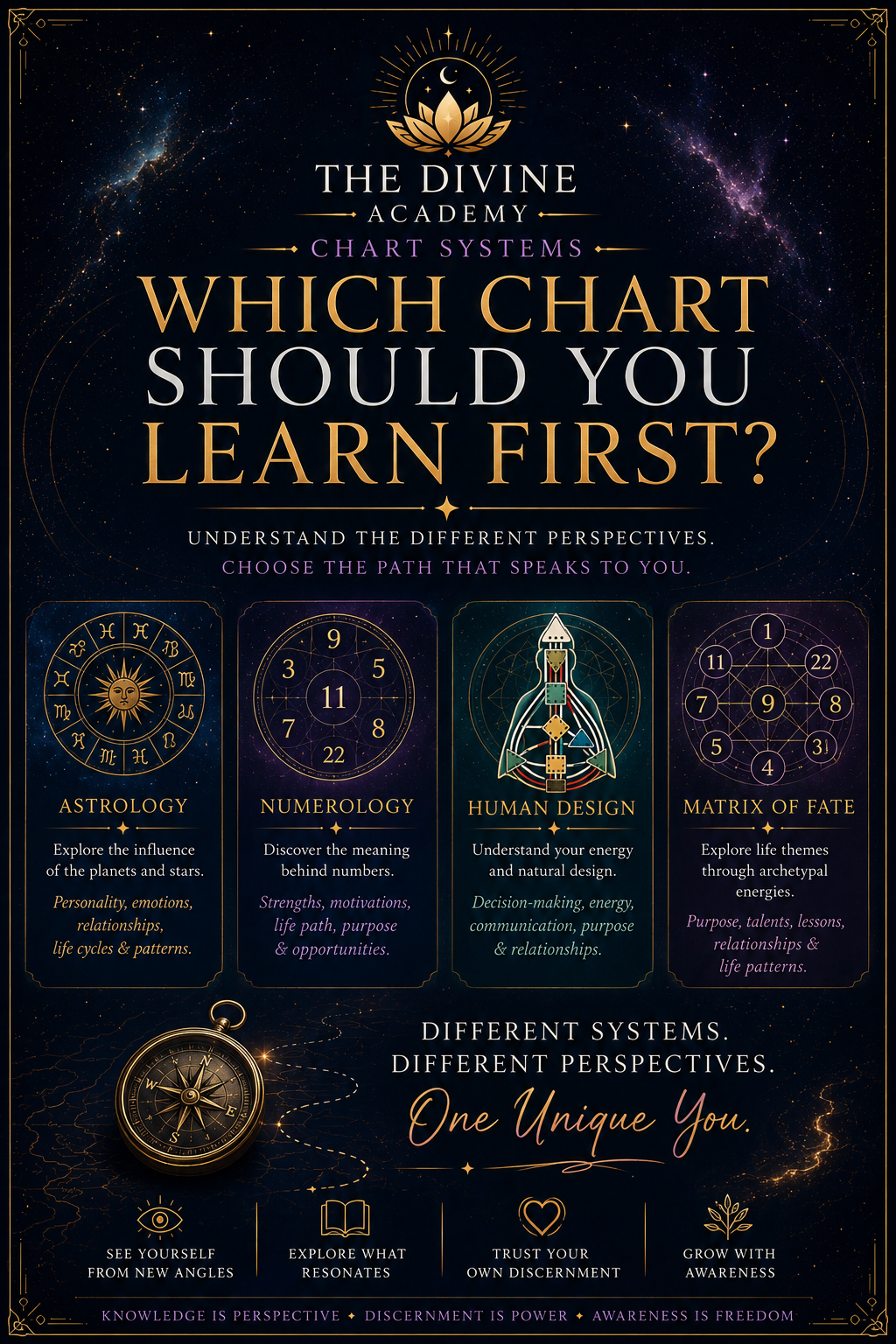
Astrology explores celestial patterns.
Numerology focuses on symbolic meanings found in numbers.
Human Design examines decision-making and energetic tendencies.
The Matrix of Fate uses archetypes and birth-date calculations to explore personality and life themes.
With so many options, it's natural to wonder which one is right for you.
This Foundation Teaching introduces the purpose of each system, highlights their similarities and differences, and helps you choose a starting point based on your interests—not because one system is better than another.
What You'll Learn
Inside this Foundation Teaching, you'll discover:
The primary purpose of astrology, numerology, Human Design, and the Matrix of Fate
What each system is designed to explore
The similarities and differences between the four frameworks
Which questions each chart system is best suited to explore
Common misconceptions about comparing chart systems
How to choose a learning path that aligns with your interests
At a Glance
Learning Path: Chart Systems
Resource Type: Foundation Teaching
Level: Beginner
Length: 6 Pages
Format: Digital PDF
Who This Teaching Is For
This teaching is for anyone who wants to:
Understand the differences between popular chart systems
Decide which framework to learn first
Explore self-discovery without feeling overwhelmed
Compare astrology, numerology, Human Design, and the Matrix of Fate
Build a strong foundation before diving deeper into any one system
Why This Matters
With so many chart systems available today, it's easy to assume they all answer the same questions—or that one must be better than the others.
In reality, each framework was developed with its own methods, symbolism, and areas of focus. Understanding those differences allows you to approach each system with realistic expectations and choose the one that best aligns with what you're hoping to learn.
Whether you're exploring chart systems out of curiosity or beginning a deeper journey of self-discovery, this teaching helps you confidently choose where to start while encouraging an open-minded and balanced perspective.
Foundation Teaching • Chart Systems
There isn't one "best" chart system—only the one that best fits what you're hoping to explore.
If you're new to chart systems, it can feel overwhelming trying to decide where to begin.
Astrology explores celestial patterns.
Numerology focuses on symbolic meanings found in numbers.
Human Design examines decision-making and energetic tendencies.
The Matrix of Fate uses archetypes and birth-date calculations to explore personality and life themes.
With so many options, it's natural to wonder which one is right for you.
This Foundation Teaching introduces the purpose of each system, highlights their similarities and differences, and helps you choose a starting point based on your interests—not because one system is better than another.
What You'll Learn
Inside this Foundation Teaching, you'll discover:
The primary purpose of astrology, numerology, Human Design, and the Matrix of Fate
What each system is designed to explore
The similarities and differences between the four frameworks
Which questions each chart system is best suited to explore
Common misconceptions about comparing chart systems
How to choose a learning path that aligns with your interests
At a Glance
Learning Path: Chart Systems
Resource Type: Foundation Teaching
Level: Beginner
Length: 6 Pages
Format: Digital PDF
Who This Teaching Is For
This teaching is for anyone who wants to:
Understand the differences between popular chart systems
Decide which framework to learn first
Explore self-discovery without feeling overwhelmed
Compare astrology, numerology, Human Design, and the Matrix of Fate
Build a strong foundation before diving deeper into any one system
Why This Matters
With so many chart systems available today, it's easy to assume they all answer the same questions—or that one must be better than the others.
In reality, each framework was developed with its own methods, symbolism, and areas of focus. Understanding those differences allows you to approach each system with realistic expectations and choose the one that best aligns with what you're hoping to learn.
Whether you're exploring chart systems out of curiosity or beginning a deeper journey of self-discovery, this teaching helps you confidently choose where to start while encouraging an open-minded and balanced perspective.