 Image 1 of 1
Understand the influences and experiences that shaped what you accept as true about yourself, other people, and life.
You carry beliefs about yourself, relationships, success, safety, love, money, spirituality, family, and the way life works. Some were directly taught to you. Others developed through observation, repetition, personal experiences, and the conclusions you formed from what happened.
Over time, these messages and conclusions can begin feeling like unquestionable truths—even when you never consciously chose them.
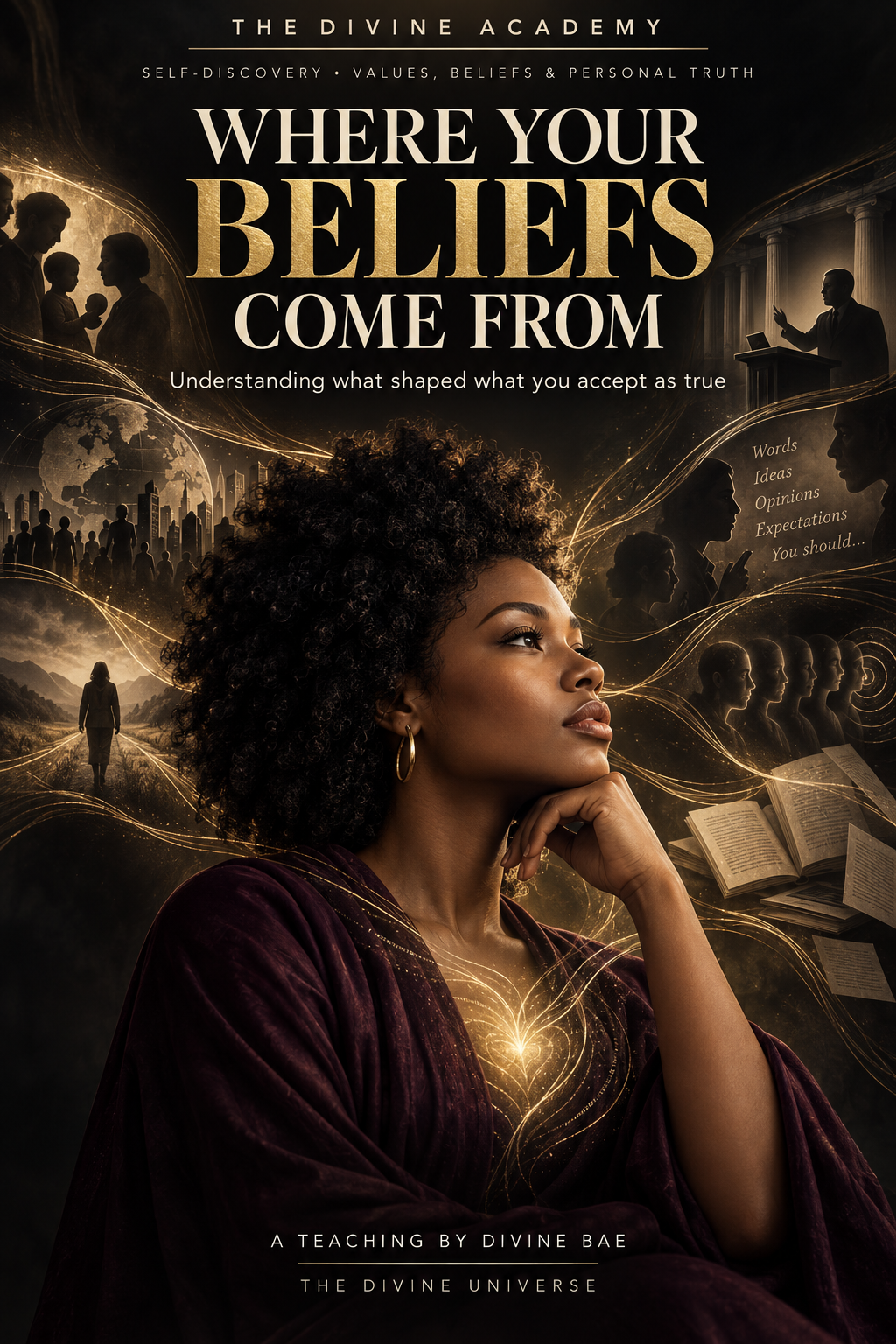
Where Your Beliefs Come From is an Expanded Teaching created to help you understand how beliefs form, where they commonly originate, and why inherited or learned beliefs can feel deeply personal.
This resource will help you:
Understand what a belief is and how it differs from a fact, opinion, or value
Recognize how beliefs begin forming during early life
Explore the people, environments, experiences, and messages that influenced what you believe
Understand how personal experiences become broader conclusions about yourself or life
Recognize why inherited beliefs can feel like your own voice
Begin examining whether your beliefs were consciously chosen
Why Understanding Your Beliefs Matters
Explore how beliefs influence your expectations, interpretations, choices, relationships, and understanding of what is possible.
What a Belief Is
Understand the difference between beliefs, facts, opinions, and values—and how beliefs can operate even when you cannot clearly name them.
How Beliefs Begin to Form
Learn how observation, repetition, emotional experiences, early relationships, and personal conclusions contribute to belief formation.
Where Your Beliefs Come From
Explore the influence of family, culture, community, religion, education, authority figures, relationships, media, social environments, and personal experiences.
How Experience Becomes Belief
Understand how an event can become an interpretation, conclusion, expectation, and eventually a broader belief.
Why Inherited Beliefs Can Feel Personal
Learn why familiarity, belonging, repetition, family loyalty, culture, and shared experiences can make inherited beliefs feel deeply personal.
Common Misunderstandings
Examine assumptions about certainty, conscious choice, personal experience, questioning beliefs, changing your mind, and protective beliefs.
Examples and Scenarios
See how beliefs about love, money, emotions, trust, and possibility can develop through lived experiences and repeated messages.
What to Pay Attention To
Begin noticing absolute statements, strong emotional reactions, recurring expectations, and patterns that may reveal the beliefs operating beneath your awareness.
Key Takeaways
Bring the Teaching together through a final reflection on where one influential belief came from and how it affects your present life.
Belief-formation examples and scenarios
Fact, opinion, value, and belief distinctions
The experience-to-belief sequence
Self-observation questions
A Belief Origin Check-In
A final guided reflection
You want to understand why you believe what you believe
You recognize that family, culture, religion, or past experiences influenced your worldview
You hold beliefs that conflict with what you consciously want
Certain beliefs feel true even though you have never examined them
You notice yourself making broad conclusions based on earlier experiences
You want to explore your personal truth without being told what you should believe
Format: Digital Expanded Teaching
Length: Approximately 27 pages
Delivery: Digital download
Access: PDF
TDU Branch: The Divine Academy
Learning Path: Self-Discovery
Focus: Values, Beliefs & Personal Truth
Understand the influences and experiences that shaped what you accept as true about yourself, other people, and life.
You carry beliefs about yourself, relationships, success, safety, love, money, spirituality, family, and the way life works. Some were directly taught to you. Others developed through observation, repetition, personal experiences, and the conclusions you formed from what happened.
Over time, these messages and conclusions can begin feeling like unquestionable truths—even when you never consciously chose them.
Where Your Beliefs Come From is an Expanded Teaching created to help you understand how beliefs form, where they commonly originate, and why inherited or learned beliefs can feel deeply personal.
This resource will help you:
Understand what a belief is and how it differs from a fact, opinion, or value
Recognize how beliefs begin forming during early life
Explore the people, environments, experiences, and messages that influenced what you believe
Understand how personal experiences become broader conclusions about yourself or life
Recognize why inherited beliefs can feel like your own voice
Begin examining whether your beliefs were consciously chosen
Why Understanding Your Beliefs Matters
Explore how beliefs influence your expectations, interpretations, choices, relationships, and understanding of what is possible.
What a Belief Is
Understand the difference between beliefs, facts, opinions, and values—and how beliefs can operate even when you cannot clearly name them.
How Beliefs Begin to Form
Learn how observation, repetition, emotional experiences, early relationships, and personal conclusions contribute to belief formation.
Where Your Beliefs Come From
Explore the influence of family, culture, community, religion, education, authority figures, relationships, media, social environments, and personal experiences.
How Experience Becomes Belief
Understand how an event can become an interpretation, conclusion, expectation, and eventually a broader belief.
Why Inherited Beliefs Can Feel Personal
Learn why familiarity, belonging, repetition, family loyalty, culture, and shared experiences can make inherited beliefs feel deeply personal.
Common Misunderstandings
Examine assumptions about certainty, conscious choice, personal experience, questioning beliefs, changing your mind, and protective beliefs.
Examples and Scenarios
See how beliefs about love, money, emotions, trust, and possibility can develop through lived experiences and repeated messages.
What to Pay Attention To
Begin noticing absolute statements, strong emotional reactions, recurring expectations, and patterns that may reveal the beliefs operating beneath your awareness.
Key Takeaways
Bring the Teaching together through a final reflection on where one influential belief came from and how it affects your present life.
Belief-formation examples and scenarios
Fact, opinion, value, and belief distinctions
The experience-to-belief sequence
Self-observation questions
A Belief Origin Check-In
A final guided reflection
You want to understand why you believe what you believe
You recognize that family, culture, religion, or past experiences influenced your worldview
You hold beliefs that conflict with what you consciously want
Certain beliefs feel true even though you have never examined them
You notice yourself making broad conclusions based on earlier experiences
You want to explore your personal truth without being told what you should believe
Format: Digital Expanded Teaching
Length: Approximately 27 pages
Delivery: Digital download
Access: PDF
TDU Branch: The Divine Academy
Learning Path: Self-Discovery
Focus: Values, Beliefs & Personal Truth