 Image 1 of 1
Understand how to recognize your thoughts, emotions, motives, reactions, and patterns while they are actively influencing you.
You may know your personality, your triggers, your strengths, and parts of your history. But can you recognize when fear is shaping an assumption, when defensiveness is preventing you from listening, or when an unspoken need is influencing your behavior?
Knowing information about yourself is not always the same as being aware of yourself.
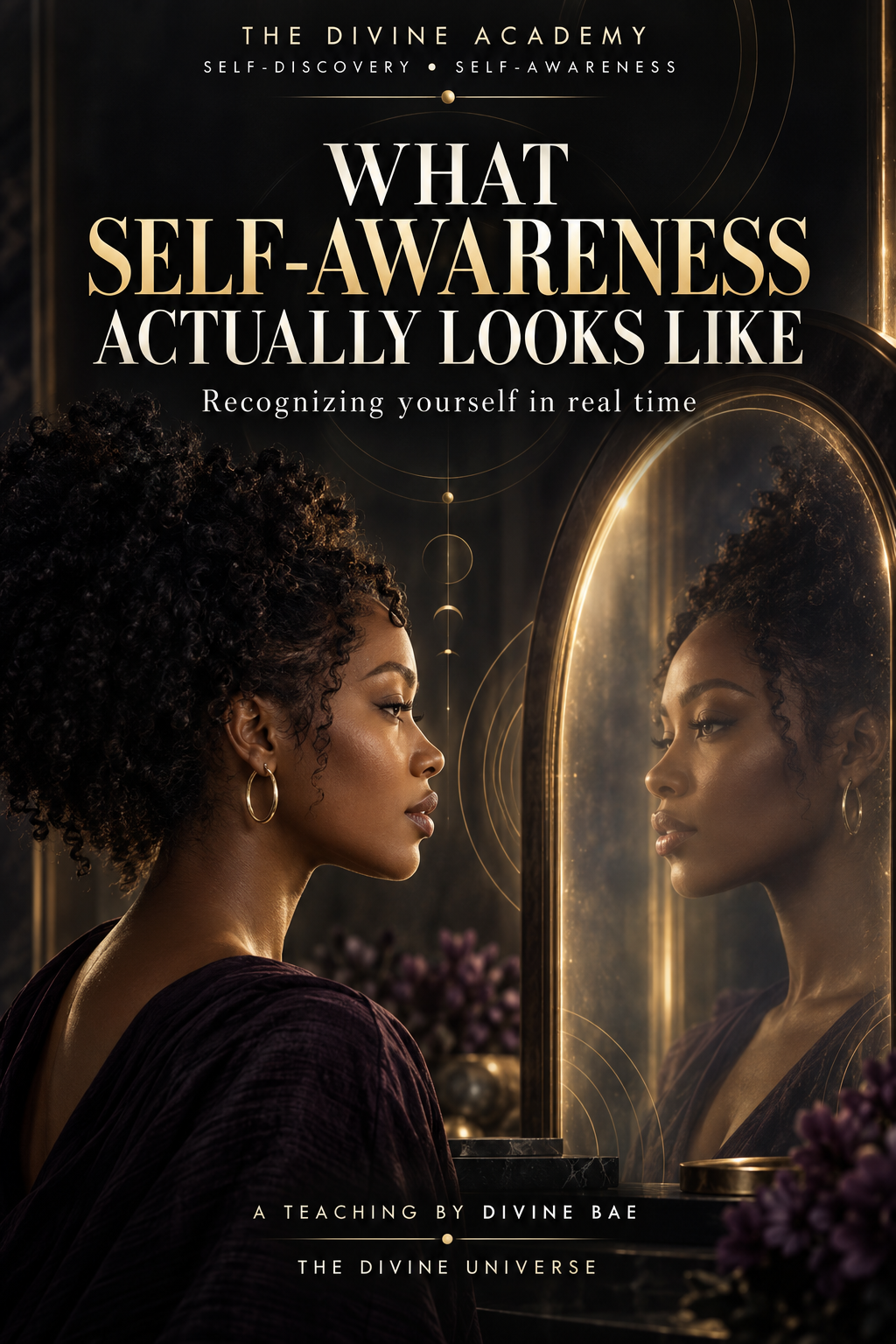
What Self-Awareness Actually Looks Like is an Expanded Teaching created to help you recognize self-awareness as a real-time practice. Through clear distinctions, relatable scenarios, and guided reflection, you’ll explore what may be happening beneath your reactions—and how greater awareness can create space for more intentional choices.
This resource will help you:
Understand the difference between self-knowledge and self-awareness
Recognize the thoughts, emotions, needs, assumptions, and motives influencing you
Notice when past experiences may be shaping a present reaction
Identify recurring patterns across relationships and situations
Examine the difference between your intentions and your impact
Practice honest self-observation without slipping into shame, blame, or constant self-criticism
Why Self-Awareness Matters
Understand how awareness creates space between an experience and your response—and why recognizing a pattern is often the beginning of meaningful change.
Self-Knowledge Is Not Always Self-Awareness
Explore why knowing facts about yourself does not always mean recognizing yourself while your patterns are actively influencing you.
What Self-Awareness Actually Looks Like
Learn how awareness includes your emotions, thoughts, physical responses, assumptions, needs, motives, choices, and impact.
How It Shows Up in Everyday Life
See how self-awareness can appear during conflict, rejection, decision-making, boundary-setting, feedback, and repeating patterns.
Common Misunderstandings
Understand why self-awareness is not the same as overthinking, self-criticism, controlling every emotion, explaining away your behavior, or assuming everything is your fault.
Examples and Scenarios
Follow relatable situations that demonstrate the difference between an automatic reaction and a self-aware response.
What to Pay Attention To
Begin noticing your immediate reactions, repeated language, contradictions, avoidance, resentment, recurring feedback, and impact.
Key Takeaways
Bring the Teaching together through clear reminders and a final guided reflection.
The seven-question Self-Awareness Pause
Real-life reflection scenarios
Fact-versus-interpretation distinctions
Observation prompts
Pattern-recognition questions
A final guided reflection
You know a lot about yourself but struggle to recognize patterns while they are happening
You often understand your reactions only after the moment has passed
You want to understand what may be driving your choices and behavior
You sometimes experience assumptions or emotional interpretations as facts
You want to take accountability without shaming or attacking yourself
You need a clear foundation before beginning deeper self-discovery work
Format: Digital Expanded Teaching
Length: Approximately 28 pages
Delivery: Digital download
Access: PDF
TDU Branch: The Divine Academy
Learning Path: Self-Discovery
Focus: Self-Awareness
Understand how to recognize your thoughts, emotions, motives, reactions, and patterns while they are actively influencing you.
You may know your personality, your triggers, your strengths, and parts of your history. But can you recognize when fear is shaping an assumption, when defensiveness is preventing you from listening, or when an unspoken need is influencing your behavior?
Knowing information about yourself is not always the same as being aware of yourself.
What Self-Awareness Actually Looks Like is an Expanded Teaching created to help you recognize self-awareness as a real-time practice. Through clear distinctions, relatable scenarios, and guided reflection, you’ll explore what may be happening beneath your reactions—and how greater awareness can create space for more intentional choices.
This resource will help you:
Understand the difference between self-knowledge and self-awareness
Recognize the thoughts, emotions, needs, assumptions, and motives influencing you
Notice when past experiences may be shaping a present reaction
Identify recurring patterns across relationships and situations
Examine the difference between your intentions and your impact
Practice honest self-observation without slipping into shame, blame, or constant self-criticism
Why Self-Awareness Matters
Understand how awareness creates space between an experience and your response—and why recognizing a pattern is often the beginning of meaningful change.
Self-Knowledge Is Not Always Self-Awareness
Explore why knowing facts about yourself does not always mean recognizing yourself while your patterns are actively influencing you.
What Self-Awareness Actually Looks Like
Learn how awareness includes your emotions, thoughts, physical responses, assumptions, needs, motives, choices, and impact.
How It Shows Up in Everyday Life
See how self-awareness can appear during conflict, rejection, decision-making, boundary-setting, feedback, and repeating patterns.
Common Misunderstandings
Understand why self-awareness is not the same as overthinking, self-criticism, controlling every emotion, explaining away your behavior, or assuming everything is your fault.
Examples and Scenarios
Follow relatable situations that demonstrate the difference between an automatic reaction and a self-aware response.
What to Pay Attention To
Begin noticing your immediate reactions, repeated language, contradictions, avoidance, resentment, recurring feedback, and impact.
Key Takeaways
Bring the Teaching together through clear reminders and a final guided reflection.
The seven-question Self-Awareness Pause
Real-life reflection scenarios
Fact-versus-interpretation distinctions
Observation prompts
Pattern-recognition questions
A final guided reflection
You know a lot about yourself but struggle to recognize patterns while they are happening
You often understand your reactions only after the moment has passed
You want to understand what may be driving your choices and behavior
You sometimes experience assumptions or emotional interpretations as facts
You want to take accountability without shaming or attacking yourself
You need a clear foundation before beginning deeper self-discovery work
Format: Digital Expanded Teaching
Length: Approximately 28 pages
Delivery: Digital download
Access: PDF
TDU Branch: The Divine Academy
Learning Path: Self-Discovery
Focus: Self-Awareness