 Image 1 of 1
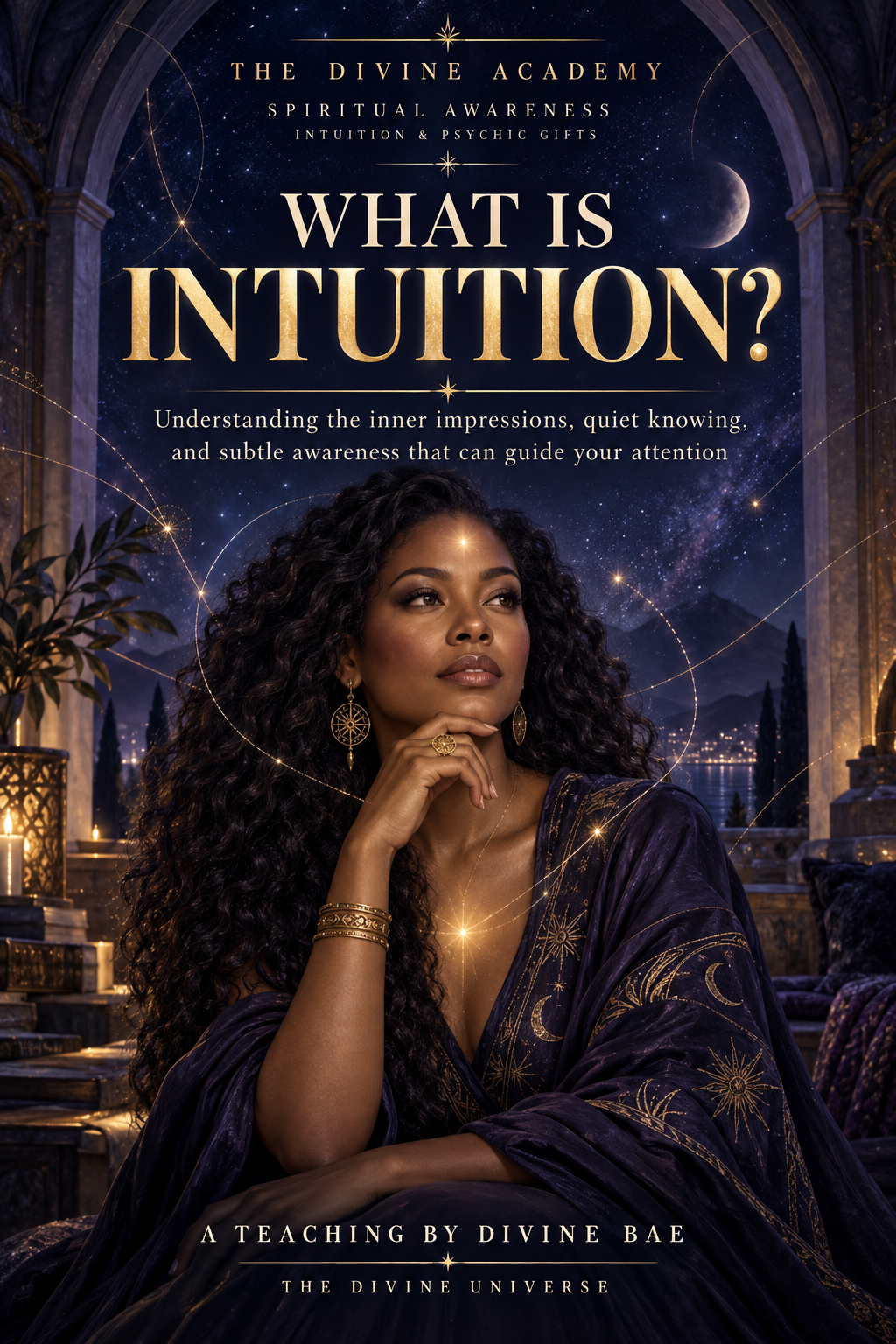
Understand the inner impressions, quiet knowing, and subtle awareness that can guide your attention.
You may have sensed that something was wrong, felt drawn toward a particular choice, noticed a detail others missed, or received an inner nudge that later became meaningful.
These experiences are often described as intuition—but not every thought, feeling, physical sensation, dream, or impulse is intuitive guidance.
What Is Intuition? was created to help you understand how intuition may arise through experience, pattern recognition, embodied awareness, emotional perception, spiritual sensitivity, or a combination of these influences.
This Teaching will help you:
Understand intuition beyond vague or mystical definitions
Explore psychological, embodied, experiential, and spiritual perspectives
Recognize the different ways intuitive impressions may appear
Understand why intuition is often subtle rather than dramatic
Separate the original impression from the meaning assigned to it
Use discernment without dismissing your inner awareness
This Teaching explores intuition as an immediate form of perception or knowing that reaches your awareness before you can consciously explain how you arrived there. It examines how experience, pattern recognition, the body, emotions, and spiritual interpretation may contribute to intuitive impressions.
It also explains how intuition may appear through quiet knowing, physical sensations, inner nudges, images, dreams, shifts in attention, or a sense of timing—and why meaningful impressions still require context, observation, and discernment.
Examples of how intuition may appear
Questions for examining intuitive impressions
The Intuition Awareness Check-In
Prompts for separating an impression from its interpretation
Guidance for combining intuition with evidence and reasoning
A final reflection on how your awareness communicates with you
You sometimes know or sense something without understanding why
You receive inner nudges but struggle to interpret them
You experience intuition through feelings or physical sensations
You are unsure whether an impression is intuition, fear, hope, or assumption
You want to become more aware without treating everything as a message
You want a grounded foundation before exploring psychic gifts more deeply
Format: Digital Expanded Teaching
Length: 18 pages
Delivery: Digital
Access: PDF download
TDU Branch: The Divine Academy
Area: Spiritual Awareness
Deep Dive: Intuition, Energy & the Unseen
Focus: Intuition & Psychic Gifts
This Teaching explores intuition through psychological, embodied, experiential, and spiritual perspectives. It does not claim that every intuitive impression has a supernatural source or that intuition is always accurate.
Intuition should not replace evidence, professional care, informed decision-making, or attention to immediate safety. This resource is educational and self-reflective and is not medical advice, mental-health treatment, diagnosis, or psychic verification.
Understand the inner impressions, quiet knowing, and subtle awareness that can guide your attention.
You may have sensed that something was wrong, felt drawn toward a particular choice, noticed a detail others missed, or received an inner nudge that later became meaningful.
These experiences are often described as intuition—but not every thought, feeling, physical sensation, dream, or impulse is intuitive guidance.
What Is Intuition? was created to help you understand how intuition may arise through experience, pattern recognition, embodied awareness, emotional perception, spiritual sensitivity, or a combination of these influences.
This Teaching will help you:
Understand intuition beyond vague or mystical definitions
Explore psychological, embodied, experiential, and spiritual perspectives
Recognize the different ways intuitive impressions may appear
Understand why intuition is often subtle rather than dramatic
Separate the original impression from the meaning assigned to it
Use discernment without dismissing your inner awareness
This Teaching explores intuition as an immediate form of perception or knowing that reaches your awareness before you can consciously explain how you arrived there. It examines how experience, pattern recognition, the body, emotions, and spiritual interpretation may contribute to intuitive impressions.
It also explains how intuition may appear through quiet knowing, physical sensations, inner nudges, images, dreams, shifts in attention, or a sense of timing—and why meaningful impressions still require context, observation, and discernment.
Examples of how intuition may appear
Questions for examining intuitive impressions
The Intuition Awareness Check-In
Prompts for separating an impression from its interpretation
Guidance for combining intuition with evidence and reasoning
A final reflection on how your awareness communicates with you
You sometimes know or sense something without understanding why
You receive inner nudges but struggle to interpret them
You experience intuition through feelings or physical sensations
You are unsure whether an impression is intuition, fear, hope, or assumption
You want to become more aware without treating everything as a message
You want a grounded foundation before exploring psychic gifts more deeply
Format: Digital Expanded Teaching
Length: 18 pages
Delivery: Digital
Access: PDF download
TDU Branch: The Divine Academy
Area: Spiritual Awareness
Deep Dive: Intuition, Energy & the Unseen
Focus: Intuition & Psychic Gifts
This Teaching explores intuition through psychological, embodied, experiential, and spiritual perspectives. It does not claim that every intuitive impression has a supernatural source or that intuition is always accurate.
Intuition should not replace evidence, professional care, informed decision-making, or attention to immediate safety. This resource is educational and self-reflective and is not medical advice, mental-health treatment, diagnosis, or psychic verification.