 Image 1 of 1
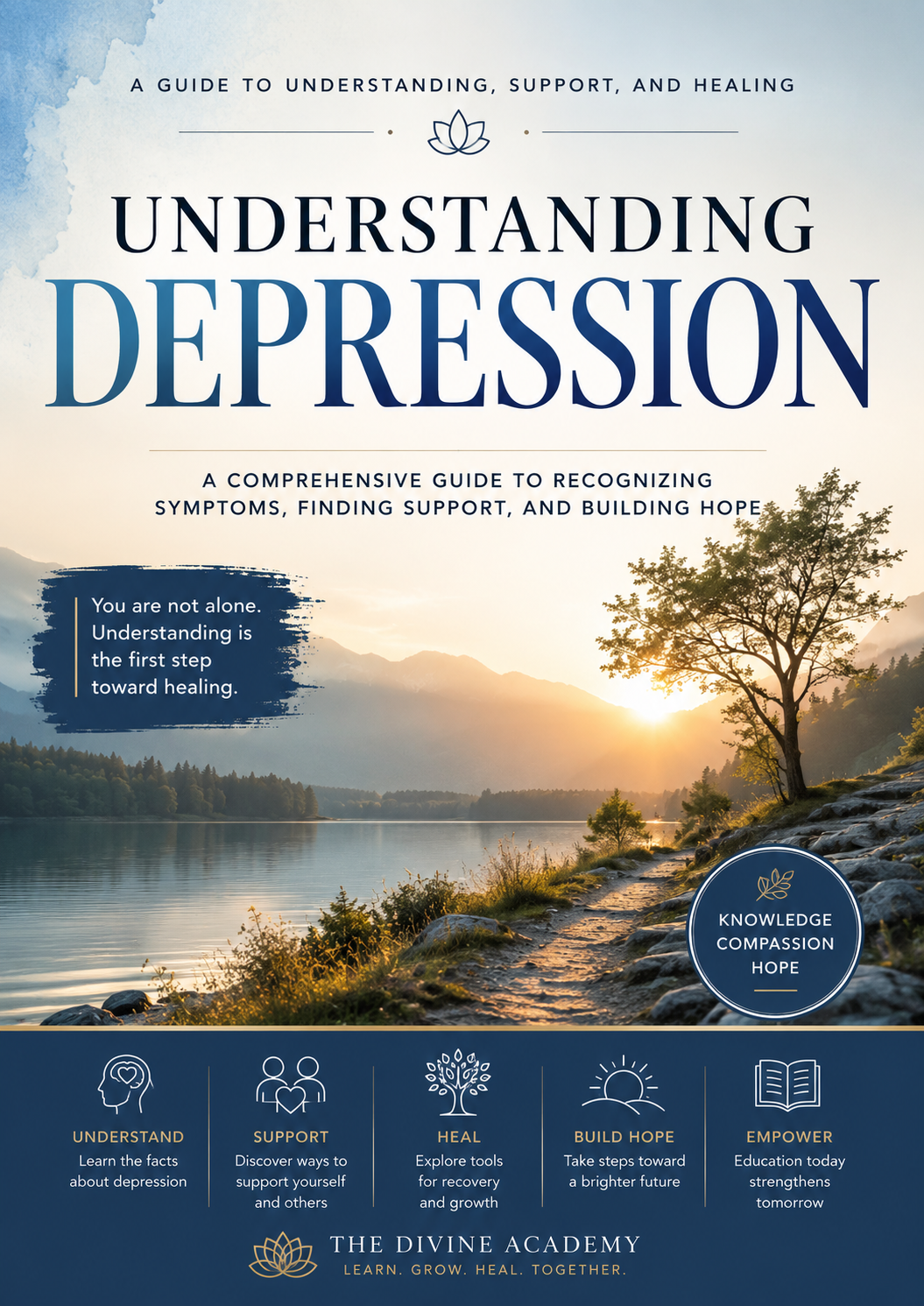
Understanding Depression Guide
Mini Guide • Mental Health
Depression is more than feeling sad—it is a real mental health condition that can affect nearly every part of a person's life.
It can influence emotions, thoughts, energy, sleep, appetite, motivation, relationships, work, school, physical health, and the ability to enjoy everyday experiences.
Depression also does not look the same for everyone.
Some people experience persistent sadness or hopelessness. Others feel emotionally numb, irritable, disconnected, or constantly exhausted. Some struggle to complete everyday tasks, while others continue meeting responsibilities and quietly hide what they are experiencing.
Understanding Depression explores what depression is, how it differs from temporary sadness, the many ways it can appear, and why it should never be dismissed as laziness, weakness, or a lack of willpower.
This guide also introduces common contributing factors, different depressive disorders, treatment options, practical examples, reflection questions, and ways to support yourself or someone else with greater awareness and compassion.
It is designed to educate—not diagnose—and encourages readers to seek qualified professional care when symptoms persist, worsen, or interfere with daily life.
Inside This Guide
Inside this Mini Guide, you'll explore:
What depression actually is
The difference between depression and everyday sadness
Common emotional, cognitive, physical, and behavioral symptoms
Biological, psychological, social, and environmental contributing factors
Different types of depressive disorders
How depression can appear across different ages
How depression affects relationships, work, school, and self-care
Why some people hide their depression
The cycle of withdrawal, isolation, and worsening symptoms
Common questions and misconceptions about depression
Practical examples of how depression may appear in everyday life
Treatment, support, and recovery
When professional or immediate crisis support may be needed
At a Glance
Learning Path: Mental Health
Resource Type: Mini Guide
Level: Beginner
Length: 36 Pages
Format: Digital PDF
Who This Guide Is For
This guide is for anyone who has ever wondered:
"What is the difference between depression and feeling sad?"
"Why does depression affect motivation and energy?"
"Can someone be depressed even if they appear to be functioning normally?"
"Can depression happen without an obvious reason?"
"What symptoms should be taken seriously?"
"How is depression treated?"
"How can I support someone who may be experiencing depression?"
"When should someone reach out for professional help?"
Whether you are learning for yourself, trying to understand someone you care about, or building a stronger foundation in mental health, this guide provides a compassionate and educational introduction to depression.
It is not intended to diagnose a mental health condition or replace professional medical or psychological care.
Why This Matters
Depression is often misunderstood because it is commonly reduced to sadness.
In reality, it can affect nearly every area of life.
It may change how a person thinks about themselves, how they connect with others, how they care for their body, how they perform at work or school, and whether they can imagine a hopeful future.
Misunderstanding depression can lead people to dismiss symptoms as laziness, weakness, negativity, or a lack of effort.
These misconceptions can increase shame and make it harder for someone to ask for help.
Learning about depression helps replace judgment with knowledge.
It allows us to recognize that symptoms can look different from person to person and that someone does not have to appear visibly distressed to be struggling.
Understanding depression also helps us respond more effectively.
It reminds us to take persistent changes in mood and functioning seriously, encourage professional support, avoid minimizing someone's experience, and recognize when immediate crisis help may be needed.
Depression is real.
It is treatable.
And with appropriate care, support, and time, recovery is possible.
Mini Guide • Mental Health
Depression is more than feeling sad—it is a real mental health condition that can affect nearly every part of a person's life.
It can influence emotions, thoughts, energy, sleep, appetite, motivation, relationships, work, school, physical health, and the ability to enjoy everyday experiences.
Depression also does not look the same for everyone.
Some people experience persistent sadness or hopelessness. Others feel emotionally numb, irritable, disconnected, or constantly exhausted. Some struggle to complete everyday tasks, while others continue meeting responsibilities and quietly hide what they are experiencing.
Understanding Depression explores what depression is, how it differs from temporary sadness, the many ways it can appear, and why it should never be dismissed as laziness, weakness, or a lack of willpower.
This guide also introduces common contributing factors, different depressive disorders, treatment options, practical examples, reflection questions, and ways to support yourself or someone else with greater awareness and compassion.
It is designed to educate—not diagnose—and encourages readers to seek qualified professional care when symptoms persist, worsen, or interfere with daily life.
Inside This Guide
Inside this Mini Guide, you'll explore:
What depression actually is
The difference between depression and everyday sadness
Common emotional, cognitive, physical, and behavioral symptoms
Biological, psychological, social, and environmental contributing factors
Different types of depressive disorders
How depression can appear across different ages
How depression affects relationships, work, school, and self-care
Why some people hide their depression
The cycle of withdrawal, isolation, and worsening symptoms
Common questions and misconceptions about depression
Practical examples of how depression may appear in everyday life
Treatment, support, and recovery
When professional or immediate crisis support may be needed
At a Glance
Learning Path: Mental Health
Resource Type: Mini Guide
Level: Beginner
Length: 36 Pages
Format: Digital PDF
Who This Guide Is For
This guide is for anyone who has ever wondered:
"What is the difference between depression and feeling sad?"
"Why does depression affect motivation and energy?"
"Can someone be depressed even if they appear to be functioning normally?"
"Can depression happen without an obvious reason?"
"What symptoms should be taken seriously?"
"How is depression treated?"
"How can I support someone who may be experiencing depression?"
"When should someone reach out for professional help?"
Whether you are learning for yourself, trying to understand someone you care about, or building a stronger foundation in mental health, this guide provides a compassionate and educational introduction to depression.
It is not intended to diagnose a mental health condition or replace professional medical or psychological care.
Why This Matters
Depression is often misunderstood because it is commonly reduced to sadness.
In reality, it can affect nearly every area of life.
It may change how a person thinks about themselves, how they connect with others, how they care for their body, how they perform at work or school, and whether they can imagine a hopeful future.
Misunderstanding depression can lead people to dismiss symptoms as laziness, weakness, negativity, or a lack of effort.
These misconceptions can increase shame and make it harder for someone to ask for help.
Learning about depression helps replace judgment with knowledge.
It allows us to recognize that symptoms can look different from person to person and that someone does not have to appear visibly distressed to be struggling.
Understanding depression also helps us respond more effectively.
It reminds us to take persistent changes in mood and functioning seriously, encourage professional support, avoid minimizing someone's experience, and recognize when immediate crisis help may be needed.
Depression is real.
It is treatable.
And with appropriate care, support, and time, recovery is possible.