 Image 1 of 1
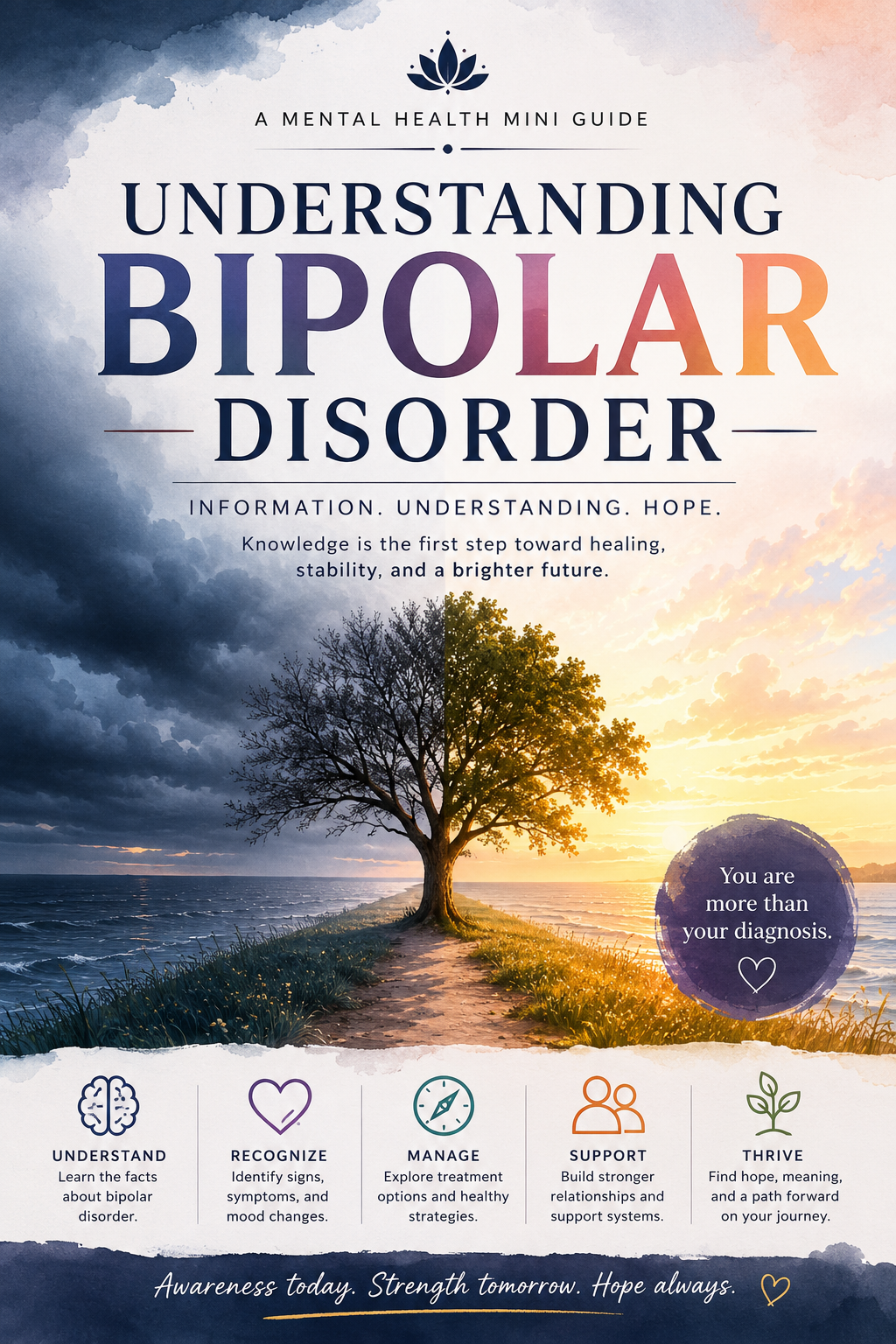
Understanding Bipolar Disorder
Mini Guide • Mental Health
Bipolar disorder is much more than mood swings. It is a complex mental health condition that affects mood, energy, thinking, behavior, and daily functioning through recurring mood episodes.
Many people have heard the word bipolar, but it is often misunderstood or used incorrectly to describe someone whose emotions change quickly.
In reality, bipolar disorder involves distinct episodes of mania, hypomania, depression, or mixed features that are far more intense and long-lasting than the normal emotional ups and downs everyone experiences.
These mood episodes can affect sleep, concentration, judgment, relationships, work, school, finances, and overall well-being. While the experience is different for every individual, bipolar disorder is a recognized medical and mental health condition—not a personality trait or character flaw.
Understanding Bipolar Disorder explores what bipolar disorder is, how it differs from ordinary mood changes, the different types of bipolar disorder, common symptoms, treatment options, and practical ways to better understand the condition.
You'll also learn about recovery, long-term management, reducing stigma, and how to support yourself or someone you care about with greater knowledge and compassion.
This guide is designed to educate—not diagnose—and encourages readers to seek qualified healthcare or mental health professionals if symptoms are causing distress or interfering with everyday life.
Inside This Guide
Inside this Mini Guide, you'll explore:
What bipolar disorder is
The difference between normal mood changes and mood disorders
Understanding mood episodes
Mania
Hypomania
Major depressive episodes
Mixed features
Bipolar I Disorder
Bipolar II Disorder
Cyclothymic Disorder
Biological, psychological, and environmental contributing factors
Emotional, cognitive, physical, and behavioral symptoms
How bipolar disorder affects relationships
Challenges at work and school
Why bipolar disorder is sometimes misdiagnosed
Treatment and long-term management
Common questions and misconceptions
Practical examples of bipolar disorder in everyday life
Reflection questions for self-awareness
Recovery, support, and reducing stigma
At a Glance
Learning Path: Mental Health
Resource Type: Mini Guide
Level: Beginner
Length: 37 Pages
Format: Digital PDF
Who This Is For
This guide is for anyone who has ever wondered:
"What is bipolar disorder?"
"Is bipolar disorder just extreme mood swings?"
"What's the difference between Bipolar I and Bipolar II?"
"What are mania and hypomania?"
"How does bipolar disorder affect everyday life?"
"Can someone live a successful life with bipolar disorder?"
"What treatments are available?"
"How can I support a loved one living with bipolar disorder?"
"When should someone seek professional help?"
Whether you're learning for yourself, supporting someone you care about, or expanding your understanding of mental health, this guide provides a balanced, compassionate introduction to bipolar disorder.
It is not intended to diagnose bipolar disorder or replace professional medical or psychological care.
Why This Matters
Bipolar disorder is one of the most misunderstood mental health conditions.
Because the word bipolar is often used casually or inaccurately, many people mistakenly believe it simply means being emotional, unpredictable, or having frequent mood swings.
These misconceptions can increase stigma and make it harder for people living with bipolar disorder to seek understanding and support.
Learning about bipolar disorder helps replace myths with facts.
It allows us to recognize that mood episodes involve significant changes in mood, energy, sleep, thinking, and behavior—not simply changing emotions from one moment to the next.
Understanding bipolar disorder also reminds us that people are far more than their diagnosis.
With appropriate treatment, education, healthy routines, supportive relationships, and ongoing medical care, many people living with bipolar disorder build successful careers, healthy relationships, families, and fulfilling lives.
Knowledge creates compassion.
Compassion reduces stigma.
And reducing stigma helps create environments where people feel safer seeking the support they deserve.
Bipolar disorder is real.
It is treatable.
And with the right care and support, long-term stability and recovery are possible.
Mini Guide • Mental Health
Bipolar disorder is much more than mood swings. It is a complex mental health condition that affects mood, energy, thinking, behavior, and daily functioning through recurring mood episodes.
Many people have heard the word bipolar, but it is often misunderstood or used incorrectly to describe someone whose emotions change quickly.
In reality, bipolar disorder involves distinct episodes of mania, hypomania, depression, or mixed features that are far more intense and long-lasting than the normal emotional ups and downs everyone experiences.
These mood episodes can affect sleep, concentration, judgment, relationships, work, school, finances, and overall well-being. While the experience is different for every individual, bipolar disorder is a recognized medical and mental health condition—not a personality trait or character flaw.
Understanding Bipolar Disorder explores what bipolar disorder is, how it differs from ordinary mood changes, the different types of bipolar disorder, common symptoms, treatment options, and practical ways to better understand the condition.
You'll also learn about recovery, long-term management, reducing stigma, and how to support yourself or someone you care about with greater knowledge and compassion.
This guide is designed to educate—not diagnose—and encourages readers to seek qualified healthcare or mental health professionals if symptoms are causing distress or interfering with everyday life.
Inside This Guide
Inside this Mini Guide, you'll explore:
What bipolar disorder is
The difference between normal mood changes and mood disorders
Understanding mood episodes
Mania
Hypomania
Major depressive episodes
Mixed features
Bipolar I Disorder
Bipolar II Disorder
Cyclothymic Disorder
Biological, psychological, and environmental contributing factors
Emotional, cognitive, physical, and behavioral symptoms
How bipolar disorder affects relationships
Challenges at work and school
Why bipolar disorder is sometimes misdiagnosed
Treatment and long-term management
Common questions and misconceptions
Practical examples of bipolar disorder in everyday life
Reflection questions for self-awareness
Recovery, support, and reducing stigma
At a Glance
Learning Path: Mental Health
Resource Type: Mini Guide
Level: Beginner
Length: 37 Pages
Format: Digital PDF
Who This Is For
This guide is for anyone who has ever wondered:
"What is bipolar disorder?"
"Is bipolar disorder just extreme mood swings?"
"What's the difference between Bipolar I and Bipolar II?"
"What are mania and hypomania?"
"How does bipolar disorder affect everyday life?"
"Can someone live a successful life with bipolar disorder?"
"What treatments are available?"
"How can I support a loved one living with bipolar disorder?"
"When should someone seek professional help?"
Whether you're learning for yourself, supporting someone you care about, or expanding your understanding of mental health, this guide provides a balanced, compassionate introduction to bipolar disorder.
It is not intended to diagnose bipolar disorder or replace professional medical or psychological care.
Why This Matters
Bipolar disorder is one of the most misunderstood mental health conditions.
Because the word bipolar is often used casually or inaccurately, many people mistakenly believe it simply means being emotional, unpredictable, or having frequent mood swings.
These misconceptions can increase stigma and make it harder for people living with bipolar disorder to seek understanding and support.
Learning about bipolar disorder helps replace myths with facts.
It allows us to recognize that mood episodes involve significant changes in mood, energy, sleep, thinking, and behavior—not simply changing emotions from one moment to the next.
Understanding bipolar disorder also reminds us that people are far more than their diagnosis.
With appropriate treatment, education, healthy routines, supportive relationships, and ongoing medical care, many people living with bipolar disorder build successful careers, healthy relationships, families, and fulfilling lives.
Knowledge creates compassion.
Compassion reduces stigma.
And reducing stigma helps create environments where people feel safer seeking the support they deserve.
Bipolar disorder is real.
It is treatable.
And with the right care and support, long-term stability and recovery are possible.