 Image 1 of 1
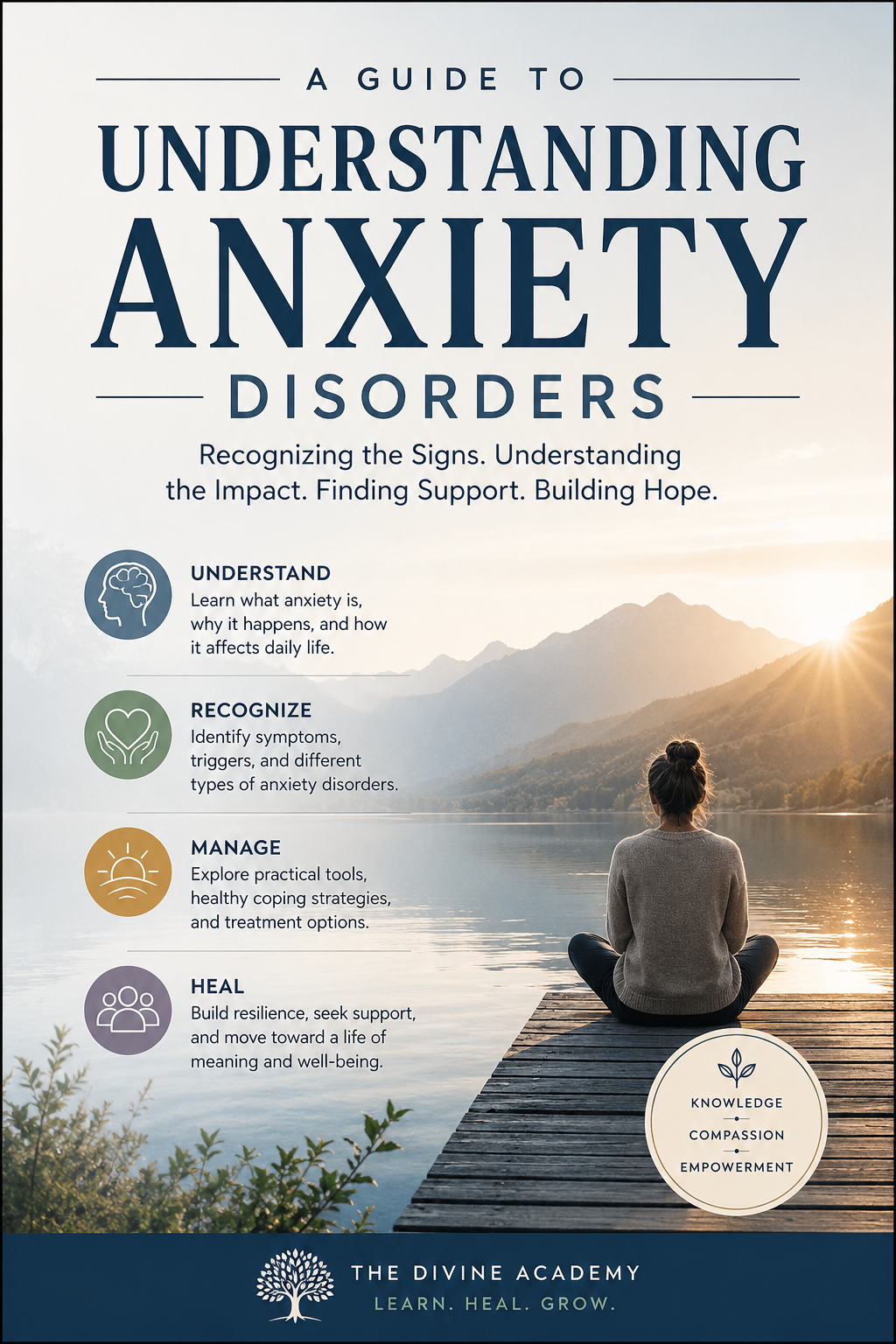
Understanding Anxiety Disorders Mini Guide
Mini Guide • Mental Health
Anxiety is a normal part of being human—but when fear, worry, or physical symptoms become persistent and begin interfering with daily life, something deeper may be happening.
Anxiety disorders are often misunderstood as simply worrying too much, being overly nervous, or struggling to calm down.
In reality, anxiety can affect nearly every part of a person's experience.
It can influence thoughts, emotions, breathing, heart rate, sleep, concentration, decision-making, confidence, relationships, work, school, and the ability to participate in everyday situations.
Understanding Anxiety Disorders explores what anxiety is, how it differs from an anxiety disorder, and why the body's stress response can become activated even when no immediate danger is present.
This guide introduces common symptoms, contributing factors, different types of anxiety disorders, the cycle of fear and avoidance, and the many ways anxiety can appear in everyday life.
It also explores professional treatment, healthy coping strategies, support, reflection, and recovery while reminding readers that anxiety disorders are real, common, and treatable mental health conditions.
This guide is designed to educate—not diagnose—and encourages readers to seek qualified professional support when anxiety becomes persistent, overwhelming, or disruptive to everyday functioning.
Inside This Guide
Inside this Mini Guide, you'll explore:
What anxiety is and why humans experience it
The difference between everyday anxiety and anxiety disorders
The fight, flight, freeze, and fawn responses
Emotional, cognitive, physical, and behavioral symptoms
Biological, psychological, social, and environmental contributing factors
Generalized Anxiety Disorder
Panic Disorder and panic attacks
Social Anxiety Disorder
Specific Phobias
Agoraphobia
Separation Anxiety Disorder
How anxiety affects relationships
How anxiety can affect work and school
The cycle of fear, avoidance, and temporary relief
Common questions and misconceptions
Practical examples of how anxiety may appear in daily life
Treatment, coping strategies, support, and recovery
Reflection questions for greater self-awareness
When professional or immediate support may be needed
At a Glance
Learning Path: Mental Health
Resource Type: Mini Guide
Level: Beginner
Length: 37 Pages
Format: Digital PDF
Who This Is For
This guide is for anyone who has ever wondered:
“What is the difference between anxiety and an anxiety disorder?”
“Why does anxiety cause so many physical symptoms?”
“Why do panic attacks feel so frightening?”
“Can someone have anxiety even if they appear calm?”
“Why do I avoid situations that make me anxious?”
“Can children and teenagers have anxiety disorders?”
“What types of anxiety disorders are there?”
“How is anxiety treated?”
“How can I support someone who experiences anxiety?”
“When is it time to seek professional help?”
Whether you're learning for yourself, trying to understand someone you care about, or strengthening your overall knowledge of mental health, this guide provides a compassionate and educational foundation.
It is not intended to diagnose a mental health condition or replace professional medical or psychological care.
Why This Matters
Anxiety is one of the most common human experiences, but anxiety disorders are often minimized, misunderstood, or dismissed.
Someone experiencing anxiety may be told to relax, stop overthinking, think positively, or simply face their fears.
These responses overlook the fact that anxiety disorders affect both the brain and the body.
They can create intense physical sensations, repeated worry, fear of losing control, avoidance, exhaustion, and difficulty completing tasks that may appear simple to others.
Without understanding, people may mistake anxiety for weakness, laziness, indecisiveness, shyness, or a lack of confidence.
These assumptions can increase shame and make it harder for someone to ask for help.
Learning about anxiety disorders helps replace judgment with awareness.
It allows us to recognize that anxiety can look different from person to person and that someone does not have to appear visibly distressed to be struggling.
Understanding anxiety also helps people respond more effectively.
It encourages us to take symptoms seriously, seek qualified care, build healthier coping strategies, offer compassionate support, and recognize when anxiety is beginning to interfere with everyday life.
Anxiety disorders are real.
They are treatable.
And with appropriate care, support, education, and time, recovery is possible.
Mini Guide • Mental Health
Anxiety is a normal part of being human—but when fear, worry, or physical symptoms become persistent and begin interfering with daily life, something deeper may be happening.
Anxiety disorders are often misunderstood as simply worrying too much, being overly nervous, or struggling to calm down.
In reality, anxiety can affect nearly every part of a person's experience.
It can influence thoughts, emotions, breathing, heart rate, sleep, concentration, decision-making, confidence, relationships, work, school, and the ability to participate in everyday situations.
Understanding Anxiety Disorders explores what anxiety is, how it differs from an anxiety disorder, and why the body's stress response can become activated even when no immediate danger is present.
This guide introduces common symptoms, contributing factors, different types of anxiety disorders, the cycle of fear and avoidance, and the many ways anxiety can appear in everyday life.
It also explores professional treatment, healthy coping strategies, support, reflection, and recovery while reminding readers that anxiety disorders are real, common, and treatable mental health conditions.
This guide is designed to educate—not diagnose—and encourages readers to seek qualified professional support when anxiety becomes persistent, overwhelming, or disruptive to everyday functioning.
Inside This Guide
Inside this Mini Guide, you'll explore:
What anxiety is and why humans experience it
The difference between everyday anxiety and anxiety disorders
The fight, flight, freeze, and fawn responses
Emotional, cognitive, physical, and behavioral symptoms
Biological, psychological, social, and environmental contributing factors
Generalized Anxiety Disorder
Panic Disorder and panic attacks
Social Anxiety Disorder
Specific Phobias
Agoraphobia
Separation Anxiety Disorder
How anxiety affects relationships
How anxiety can affect work and school
The cycle of fear, avoidance, and temporary relief
Common questions and misconceptions
Practical examples of how anxiety may appear in daily life
Treatment, coping strategies, support, and recovery
Reflection questions for greater self-awareness
When professional or immediate support may be needed
At a Glance
Learning Path: Mental Health
Resource Type: Mini Guide
Level: Beginner
Length: 37 Pages
Format: Digital PDF
Who This Is For
This guide is for anyone who has ever wondered:
“What is the difference between anxiety and an anxiety disorder?”
“Why does anxiety cause so many physical symptoms?”
“Why do panic attacks feel so frightening?”
“Can someone have anxiety even if they appear calm?”
“Why do I avoid situations that make me anxious?”
“Can children and teenagers have anxiety disorders?”
“What types of anxiety disorders are there?”
“How is anxiety treated?”
“How can I support someone who experiences anxiety?”
“When is it time to seek professional help?”
Whether you're learning for yourself, trying to understand someone you care about, or strengthening your overall knowledge of mental health, this guide provides a compassionate and educational foundation.
It is not intended to diagnose a mental health condition or replace professional medical or psychological care.
Why This Matters
Anxiety is one of the most common human experiences, but anxiety disorders are often minimized, misunderstood, or dismissed.
Someone experiencing anxiety may be told to relax, stop overthinking, think positively, or simply face their fears.
These responses overlook the fact that anxiety disorders affect both the brain and the body.
They can create intense physical sensations, repeated worry, fear of losing control, avoidance, exhaustion, and difficulty completing tasks that may appear simple to others.
Without understanding, people may mistake anxiety for weakness, laziness, indecisiveness, shyness, or a lack of confidence.
These assumptions can increase shame and make it harder for someone to ask for help.
Learning about anxiety disorders helps replace judgment with awareness.
It allows us to recognize that anxiety can look different from person to person and that someone does not have to appear visibly distressed to be struggling.
Understanding anxiety also helps people respond more effectively.
It encourages us to take symptoms seriously, seek qualified care, build healthier coping strategies, offer compassionate support, and recognize when anxiety is beginning to interfere with everyday life.
Anxiety disorders are real.
They are treatable.
And with appropriate care, support, education, and time, recovery is possible.