 Image 1 of 1
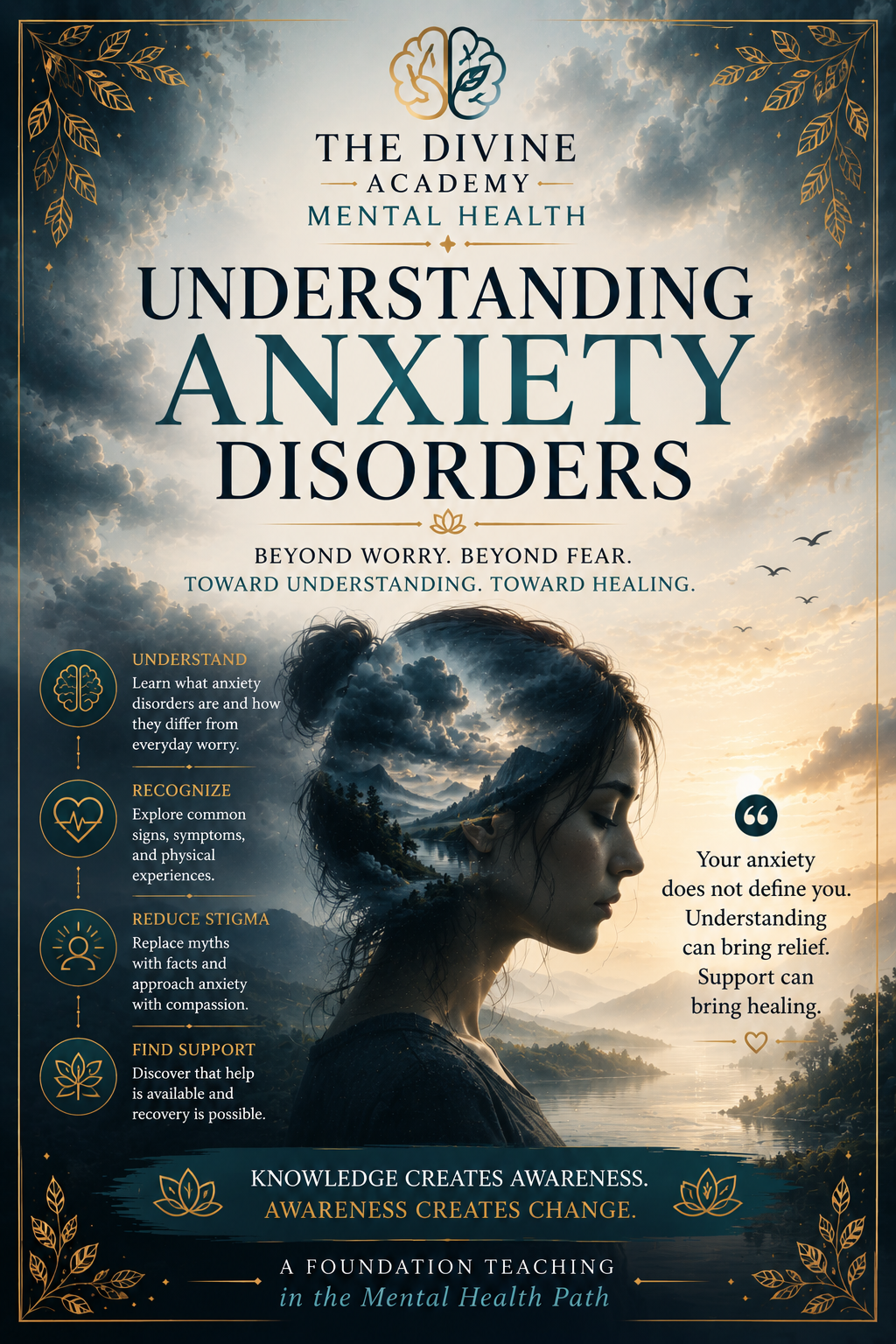
Understanding Anxiety Disorders
Foundation Teaching • Mental Health
Feeling anxious is part of being human. Anxiety disorders are something different.
Everyone experiences anxiety from time to time.
You might feel nervous before an important presentation, worried about a loved one, or anxious during a major life change. These feelings are natural responses to uncertainty, challenge, or perceived danger.
Anxiety disorders go beyond everyday worry.
They involve persistent or excessive fear, anxiety, or worry that can interfere with daily life, relationships, work, school, and overall well-being.
Anxiety disorders can also affect the body, leading to symptoms such as muscle tension, rapid heartbeat, restlessness, difficulty concentrating, stomach discomfort, or trouble sleeping.
This Foundation Teaching explores what anxiety disorders are, how they differ from everyday anxiety, the different types of anxiety disorders, and why understanding them is an important step toward reducing stigma and encouraging people to seek support.
What You'll Learn
Inside this Foundation Teaching, you'll discover:
What anxiety disorders are
The difference between everyday anxiety and anxiety disorders
Common signs and symptoms
How anxiety can affect both the mind and body
The different types of anxiety disorders
Common misconceptions about anxiety
Why anxiety disorders are treatable and recovery is possible
At a Glance
Learning Path: Mental Health
Resource Type: Foundation Teaching
Level: Beginner
Length: 6 Pages
Format: Digital PDF
Who This Teaching Is For
This teaching is for anyone who has ever wondered:
"What's the difference between anxiety and an anxiety disorder?"
"Why do anxiety disorders affect people so differently?"
"Can anxiety cause physical symptoms?"
"Why can't someone simply stop worrying?"
"Can people recover from anxiety disorders?"
Whether you're learning for yourself, supporting someone you care about, or expanding your understanding of mental health, this teaching provides a compassionate, evidence-informed introduction to one of the most common groups of mental health conditions.
Why This Matters
Anxiety disorders are among the most common mental health conditions, yet they are often misunderstood.
Many people mistakenly believe anxiety is simply overthinking or worrying too much.
In reality, anxiety disorders involve much more than worry alone.
They can affect thoughts, emotions, physical sensations, behavior, and daily functioning in ways that make everyday activities feel overwhelming.
Understanding anxiety disorders helps replace myths with knowledge and judgment with compassion.
It also reminds us that anxiety disorders are real health conditions—not personality flaws or signs of weakness.
With appropriate treatment, healthy coping strategies, supportive relationships, and professional care when needed, many people experience significant improvement and learn to manage anxiety successfully.
Understanding is often the first step toward hope.
A Note About Seeking Support
This teaching is intended to provide education, not diagnosis.
If anxiety has become persistent, overwhelming, or is interfering with your work, school, relationships, or daily life, consider speaking with a qualified healthcare or mental health professional. Anxiety disorders are treatable, and seeking support is a sign of strength—not weakness.
Foundation Teaching • Mental Health
Feeling anxious is part of being human. Anxiety disorders are something different.
Everyone experiences anxiety from time to time.
You might feel nervous before an important presentation, worried about a loved one, or anxious during a major life change. These feelings are natural responses to uncertainty, challenge, or perceived danger.
Anxiety disorders go beyond everyday worry.
They involve persistent or excessive fear, anxiety, or worry that can interfere with daily life, relationships, work, school, and overall well-being.
Anxiety disorders can also affect the body, leading to symptoms such as muscle tension, rapid heartbeat, restlessness, difficulty concentrating, stomach discomfort, or trouble sleeping.
This Foundation Teaching explores what anxiety disorders are, how they differ from everyday anxiety, the different types of anxiety disorders, and why understanding them is an important step toward reducing stigma and encouraging people to seek support.
What You'll Learn
Inside this Foundation Teaching, you'll discover:
What anxiety disorders are
The difference between everyday anxiety and anxiety disorders
Common signs and symptoms
How anxiety can affect both the mind and body
The different types of anxiety disorders
Common misconceptions about anxiety
Why anxiety disorders are treatable and recovery is possible
At a Glance
Learning Path: Mental Health
Resource Type: Foundation Teaching
Level: Beginner
Length: 6 Pages
Format: Digital PDF
Who This Teaching Is For
This teaching is for anyone who has ever wondered:
"What's the difference between anxiety and an anxiety disorder?"
"Why do anxiety disorders affect people so differently?"
"Can anxiety cause physical symptoms?"
"Why can't someone simply stop worrying?"
"Can people recover from anxiety disorders?"
Whether you're learning for yourself, supporting someone you care about, or expanding your understanding of mental health, this teaching provides a compassionate, evidence-informed introduction to one of the most common groups of mental health conditions.
Why This Matters
Anxiety disorders are among the most common mental health conditions, yet they are often misunderstood.
Many people mistakenly believe anxiety is simply overthinking or worrying too much.
In reality, anxiety disorders involve much more than worry alone.
They can affect thoughts, emotions, physical sensations, behavior, and daily functioning in ways that make everyday activities feel overwhelming.
Understanding anxiety disorders helps replace myths with knowledge and judgment with compassion.
It also reminds us that anxiety disorders are real health conditions—not personality flaws or signs of weakness.
With appropriate treatment, healthy coping strategies, supportive relationships, and professional care when needed, many people experience significant improvement and learn to manage anxiety successfully.
Understanding is often the first step toward hope.
A Note About Seeking Support
This teaching is intended to provide education, not diagnosis.
If anxiety has become persistent, overwhelming, or is interfering with your work, school, relationships, or daily life, consider speaking with a qualified healthcare or mental health professional. Anxiety disorders are treatable, and seeking support is a sign of strength—not weakness.