 Image 1 of 1
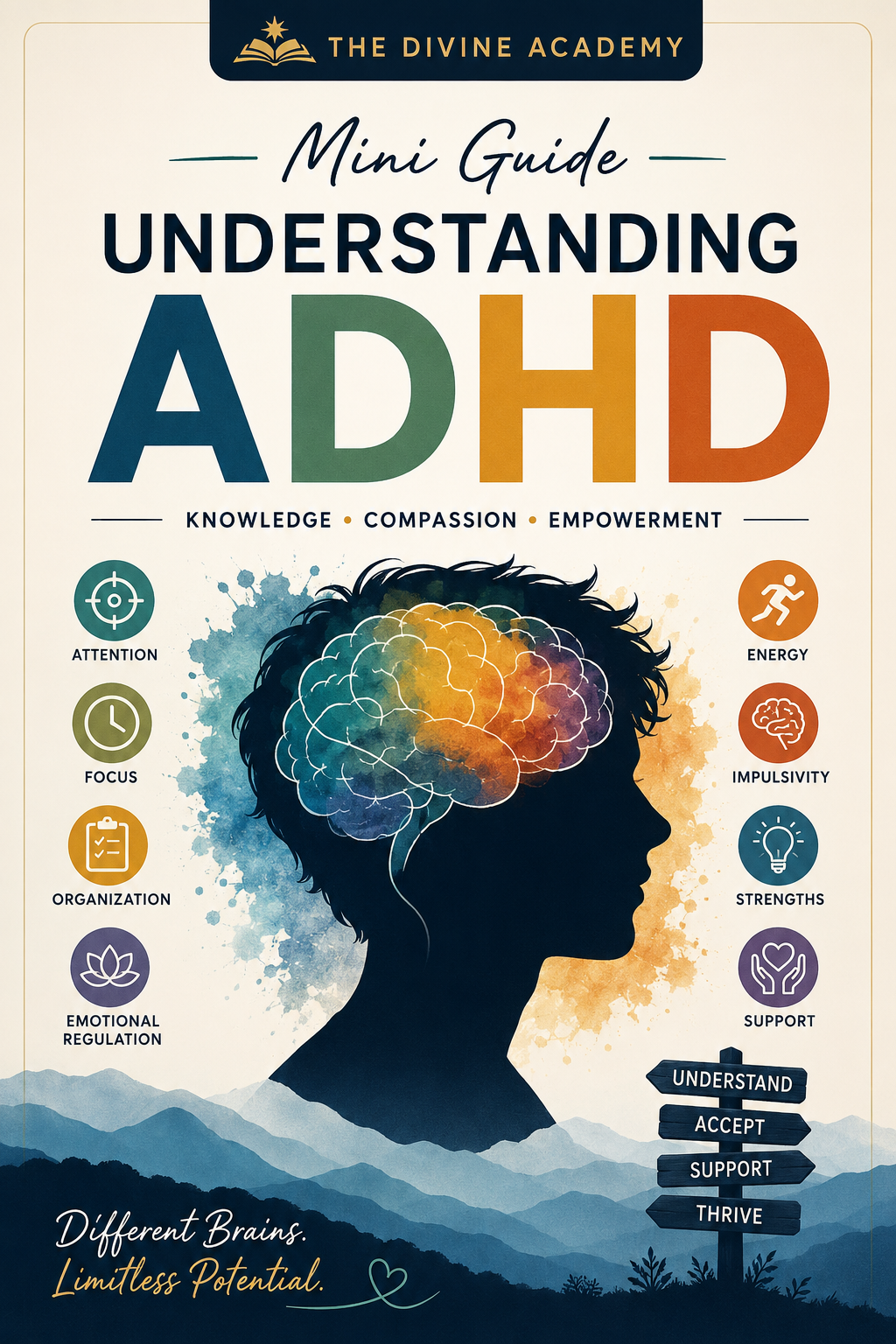
Understanding ADHD
Mini Guide • Mental Health
Attention-Deficit/Hyperactivity Disorder (ADHD) is much more than being distracted, energetic, or forgetful.
ADHD is a neurodevelopmental condition that affects how the brain regulates attention, executive functioning, self-regulation, and impulse control. While many people occasionally lose focus or procrastinate, ADHD involves persistent patterns that can significantly affect school, work, relationships, and everyday responsibilities.
Because ADHD presents differently from person to person, it is often misunderstood. Some individuals primarily struggle with attention and organization, while others experience hyperactivity, impulsivity, or a combination of both. Many adults with ADHD are diagnosed later in life after years of wondering why everyday tasks seemed more difficult than they appeared for others.
This guide explores how ADHD affects the brain, the three presentations of ADHD, executive functioning, emotional regulation, hyperfocus, and the practical realities of living with the condition.
You'll also learn about evidence-based treatments, helpful strategies, common misconceptions, and the strengths that many people with ADHD recognize within themselves.
Whether you're learning for yourself, supporting someone you care about, or expanding your understanding of mental health, this guide provides an educational, balanced introduction to one of the most common neurodevelopmental conditions.
Inside This Guide
Inside this Mini Guide, you'll explore:
What ADHD is
ADHD vs. everyday distractibility
Executive functioning explained
The three presentations of ADHD
Inattention, hyperactivity, and impulsivity
Emotional regulation
Hyperfocus
ADHD in children, teenagers, and adults
Common myths about ADHD
ADHD at school and in the workplace
ADHD in relationships
Strengths commonly associated with ADHD
Causes and risk factors
Diagnosis and treatment
Practical real-life examples
Reflection questions for self-awareness
Healthy next steps for continued learning
At a Glance
Learning Path: Mental Health
Resource Type: Mini Guide
Level: Beginner
Length: Approximately 35 Pages
Format: Digital PDF
Who This Is For
This guide is for anyone who has ever wondered:
"What is ADHD really?"
"Is ADHD more than being distracted?"
"What's the difference between ADHD and ADD?"
"Can adults have ADHD?"
"What is executive functioning?"
"Why do some people struggle with organization or time management?"
"What is hyperfocus?"
"How is ADHD treated?"
"How can I better support someone living with ADHD?"
Whether you're learning for yourself, supporting a loved one, studying psychology, working in education, or simply interested in mental health, this guide offers a clear, compassionate, and evidence-based introduction to ADHD.
It is designed to educate—not diagnose—and should never replace an evaluation or treatment from a qualified healthcare or mental health professional.
Why This Matters
Attention-Deficit/Hyperactivity Disorder affects millions of children, teenagers, and adults around the world, yet it remains widely misunderstood.
Many people incorrectly believe ADHD is simply a lack of discipline, poor motivation, or an inability to pay attention. These misconceptions can lead to frustration, stigma, delayed diagnosis, and missed opportunities for support.
Understanding ADHD helps replace myths with facts.
It reminds us that ADHD is a neurodevelopmental condition that affects executive functioning, emotional regulation, attention, and impulse control—not intelligence, character, or personal worth.
Education also helps us recognize that ADHD presents differently from person to person. Some individuals are highly energetic and impulsive, while others appear quiet, thoughtful, and inattentive. Recognizing these differences can improve understanding, encourage earlier support, and reduce unnecessary judgment.
Knowledge alone cannot diagnose ADHD, but it can help people recognize when professional evaluation may be beneficial and provide a stronger foundation for supporting themselves or others.
With education, practical strategies, healthy routines, evidence-based treatment, and appropriate accommodations when needed, many people living with ADHD build successful careers, meaningful relationships, achieve personal goals, and live fulfilling lives.
Understanding creates awareness.
Awareness reduces stigma.
And greater understanding empowers people to recognize both the challenges and the strengths that can come with ADHD.
Mini Guide • Mental Health
Attention-Deficit/Hyperactivity Disorder (ADHD) is much more than being distracted, energetic, or forgetful.
ADHD is a neurodevelopmental condition that affects how the brain regulates attention, executive functioning, self-regulation, and impulse control. While many people occasionally lose focus or procrastinate, ADHD involves persistent patterns that can significantly affect school, work, relationships, and everyday responsibilities.
Because ADHD presents differently from person to person, it is often misunderstood. Some individuals primarily struggle with attention and organization, while others experience hyperactivity, impulsivity, or a combination of both. Many adults with ADHD are diagnosed later in life after years of wondering why everyday tasks seemed more difficult than they appeared for others.
This guide explores how ADHD affects the brain, the three presentations of ADHD, executive functioning, emotional regulation, hyperfocus, and the practical realities of living with the condition.
You'll also learn about evidence-based treatments, helpful strategies, common misconceptions, and the strengths that many people with ADHD recognize within themselves.
Whether you're learning for yourself, supporting someone you care about, or expanding your understanding of mental health, this guide provides an educational, balanced introduction to one of the most common neurodevelopmental conditions.
Inside This Guide
Inside this Mini Guide, you'll explore:
What ADHD is
ADHD vs. everyday distractibility
Executive functioning explained
The three presentations of ADHD
Inattention, hyperactivity, and impulsivity
Emotional regulation
Hyperfocus
ADHD in children, teenagers, and adults
Common myths about ADHD
ADHD at school and in the workplace
ADHD in relationships
Strengths commonly associated with ADHD
Causes and risk factors
Diagnosis and treatment
Practical real-life examples
Reflection questions for self-awareness
Healthy next steps for continued learning
At a Glance
Learning Path: Mental Health
Resource Type: Mini Guide
Level: Beginner
Length: Approximately 35 Pages
Format: Digital PDF
Who This Is For
This guide is for anyone who has ever wondered:
"What is ADHD really?"
"Is ADHD more than being distracted?"
"What's the difference between ADHD and ADD?"
"Can adults have ADHD?"
"What is executive functioning?"
"Why do some people struggle with organization or time management?"
"What is hyperfocus?"
"How is ADHD treated?"
"How can I better support someone living with ADHD?"
Whether you're learning for yourself, supporting a loved one, studying psychology, working in education, or simply interested in mental health, this guide offers a clear, compassionate, and evidence-based introduction to ADHD.
It is designed to educate—not diagnose—and should never replace an evaluation or treatment from a qualified healthcare or mental health professional.
Why This Matters
Attention-Deficit/Hyperactivity Disorder affects millions of children, teenagers, and adults around the world, yet it remains widely misunderstood.
Many people incorrectly believe ADHD is simply a lack of discipline, poor motivation, or an inability to pay attention. These misconceptions can lead to frustration, stigma, delayed diagnosis, and missed opportunities for support.
Understanding ADHD helps replace myths with facts.
It reminds us that ADHD is a neurodevelopmental condition that affects executive functioning, emotional regulation, attention, and impulse control—not intelligence, character, or personal worth.
Education also helps us recognize that ADHD presents differently from person to person. Some individuals are highly energetic and impulsive, while others appear quiet, thoughtful, and inattentive. Recognizing these differences can improve understanding, encourage earlier support, and reduce unnecessary judgment.
Knowledge alone cannot diagnose ADHD, but it can help people recognize when professional evaluation may be beneficial and provide a stronger foundation for supporting themselves or others.
With education, practical strategies, healthy routines, evidence-based treatment, and appropriate accommodations when needed, many people living with ADHD build successful careers, meaningful relationships, achieve personal goals, and live fulfilling lives.
Understanding creates awareness.
Awareness reduces stigma.
And greater understanding empowers people to recognize both the challenges and the strengths that can come with ADHD.