 Image 1 of 1
Understand the foundations that allow love to function safely, mutually, and sustainably within a relationship.
Two people can genuinely love each other and still experience broken trust, disrespect, poor communication, incompatibility, emotional unsafety, inconsistency, unresolved conflict, or one-sided effort.
This does not necessarily mean the love is fake. It means love and relationship health are not the same thing.
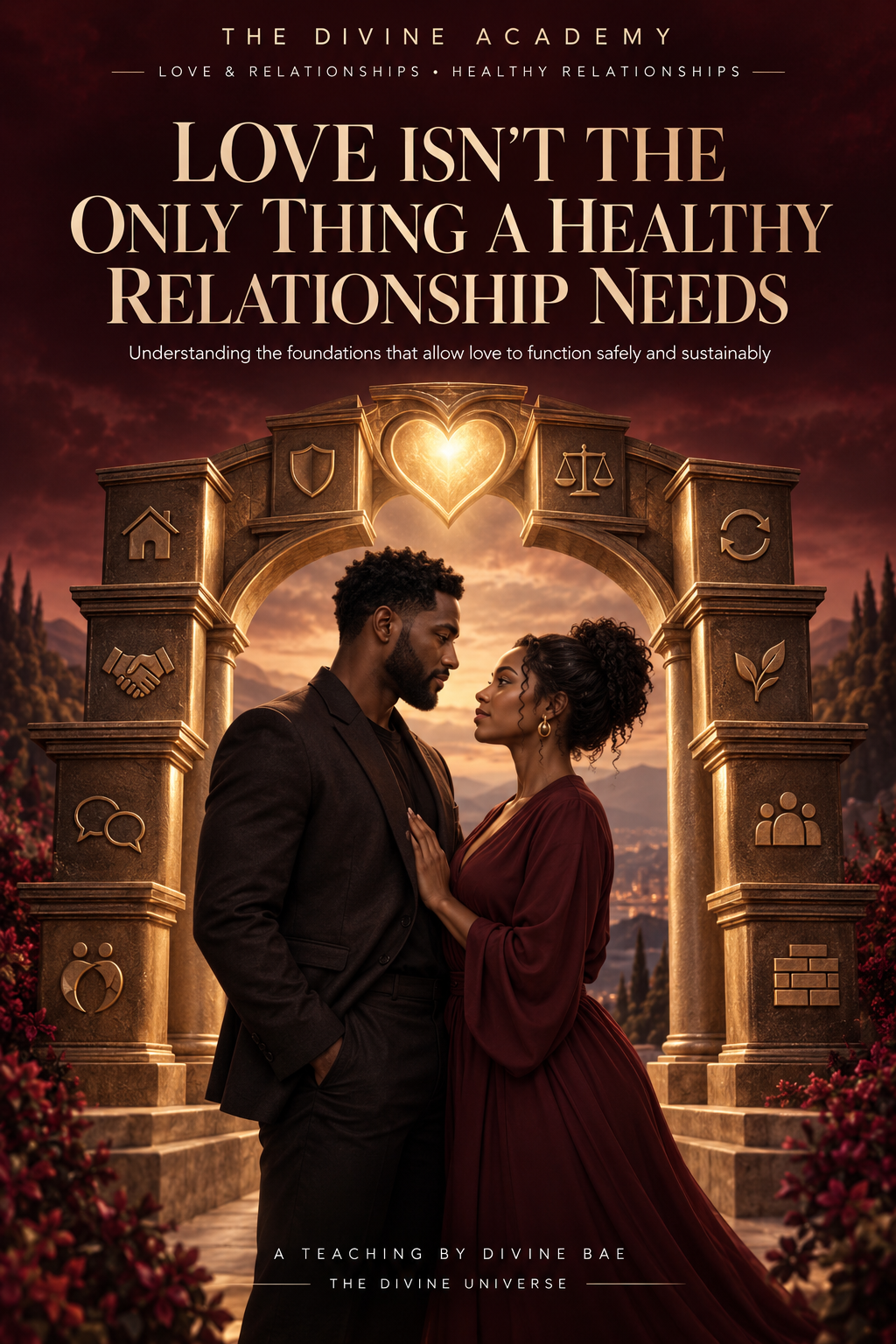
Love Isn’t the Only Thing a Healthy Relationship Needs is an Expanded Teaching created to help you look beyond the presence of love and understand what else a relationship needs to function in a healthy, mutual, and sustainable way.
This resource will help you:
Understand the difference between love and relationship health
Recognize why strong feelings do not automatically create healthy behavior
Explore the foundations that allow love to function safely
Distinguish love, chemistry, and compatibility
Recognize when relationship effort has become one-sided
Understand why intentions, impact, behavior, and patterns all matter
Evaluate how a relationship functions—not only how strongly you feel
Why This Distinction Matters
Explore why the presence of love does not erase unhealthy patterns or automatically provide what a relationship needs.
Love vs. Relationship Health
Understand love as the emotional bond and relationship health as the dynamic both people repeatedly create through their behavior.
What Love Cannot Provide by Itself
Learn why love cannot replace safety, respect, trust, compatibility, relational skills, mutual effort, or changed behavior.
What a Healthy Relationship Also Needs
Explore the roles of safety, respect, honesty, trust, communication, consistency, reciprocity, compatibility, boundaries, accountability, repair, and shared willingness.
When Love and Compatibility Are Not the Same
Understand why two people can love each other while wanting different lives, holding conflicting values, or needing things the relationship cannot sustainably provide.
Why Mutual Participation Matters
Explore why one person cannot communicate, repair, adjust, and maintain a healthy relationship for both people.
Common Misunderstandings
Examine assumptions about love overcoming everything, healthy relationships never having conflict, unconditional acceptance, mind-reading, apologies, and what it means when a relationship ends.
Examples and Scenarios
See how love may exist without trust, communication, compatibility, reciprocity, or accountability—and what healthy foundations look like in practice.
What to Pay Attention To
Begin evaluating how love is expressed, what happens during conflict, whether effort is mutual, and what the relationship requires you to sacrifice.
Key Takeaways
Bring the Teaching together through a final reflection on how the relationship consistently functions beyond the presence of love.
Love-versus-relationship-health distinctions
Relationship foundation explanations
Real-life examples and scenarios
Mutuality and compatibility questions
A Relationship Foundation Check-In
A final guided reflection
You love someone but the relationship remains unstable or painful
You are questioning whether love is enough to sustain a relationship
Strong chemistry makes it difficult to evaluate compatibility
Apologies occur, but the same harmful patterns continue
You feel responsible for carrying, repairing, or maintaining the relationship
You want to understand what healthy love requires beyond feelings
Format: Digital Expanded Teaching
Length: Approximately 29 pages
Delivery: Digital download
Access: PDF
TDU Branch: The Divine Academy
Learning Path: Love & Relationships
Focus: Healthy Relationships
This resource is educational and self-reflective. It does not provide individualized relationship advice, couples therapy, counseling, legal advice, or a determination about whether a relationship should continue or end.
If your relationship involves abuse, coercion, threats, stalking, intimidation, or immediate danger, prioritize your safety and seek appropriate professional, legal, emergency, or domestic-violence support. Relationship skills cannot make abuse safe.
Understand the foundations that allow love to function safely, mutually, and sustainably within a relationship.
Two people can genuinely love each other and still experience broken trust, disrespect, poor communication, incompatibility, emotional unsafety, inconsistency, unresolved conflict, or one-sided effort.
This does not necessarily mean the love is fake. It means love and relationship health are not the same thing.
Love Isn’t the Only Thing a Healthy Relationship Needs is an Expanded Teaching created to help you look beyond the presence of love and understand what else a relationship needs to function in a healthy, mutual, and sustainable way.
This resource will help you:
Understand the difference between love and relationship health
Recognize why strong feelings do not automatically create healthy behavior
Explore the foundations that allow love to function safely
Distinguish love, chemistry, and compatibility
Recognize when relationship effort has become one-sided
Understand why intentions, impact, behavior, and patterns all matter
Evaluate how a relationship functions—not only how strongly you feel
Why This Distinction Matters
Explore why the presence of love does not erase unhealthy patterns or automatically provide what a relationship needs.
Love vs. Relationship Health
Understand love as the emotional bond and relationship health as the dynamic both people repeatedly create through their behavior.
What Love Cannot Provide by Itself
Learn why love cannot replace safety, respect, trust, compatibility, relational skills, mutual effort, or changed behavior.
What a Healthy Relationship Also Needs
Explore the roles of safety, respect, honesty, trust, communication, consistency, reciprocity, compatibility, boundaries, accountability, repair, and shared willingness.
When Love and Compatibility Are Not the Same
Understand why two people can love each other while wanting different lives, holding conflicting values, or needing things the relationship cannot sustainably provide.
Why Mutual Participation Matters
Explore why one person cannot communicate, repair, adjust, and maintain a healthy relationship for both people.
Common Misunderstandings
Examine assumptions about love overcoming everything, healthy relationships never having conflict, unconditional acceptance, mind-reading, apologies, and what it means when a relationship ends.
Examples and Scenarios
See how love may exist without trust, communication, compatibility, reciprocity, or accountability—and what healthy foundations look like in practice.
What to Pay Attention To
Begin evaluating how love is expressed, what happens during conflict, whether effort is mutual, and what the relationship requires you to sacrifice.
Key Takeaways
Bring the Teaching together through a final reflection on how the relationship consistently functions beyond the presence of love.
Love-versus-relationship-health distinctions
Relationship foundation explanations
Real-life examples and scenarios
Mutuality and compatibility questions
A Relationship Foundation Check-In
A final guided reflection
You love someone but the relationship remains unstable or painful
You are questioning whether love is enough to sustain a relationship
Strong chemistry makes it difficult to evaluate compatibility
Apologies occur, but the same harmful patterns continue
You feel responsible for carrying, repairing, or maintaining the relationship
You want to understand what healthy love requires beyond feelings
Format: Digital Expanded Teaching
Length: Approximately 29 pages
Delivery: Digital download
Access: PDF
TDU Branch: The Divine Academy
Learning Path: Love & Relationships
Focus: Healthy Relationships
This resource is educational and self-reflective. It does not provide individualized relationship advice, couples therapy, counseling, legal advice, or a determination about whether a relationship should continue or end.
If your relationship involves abuse, coercion, threats, stalking, intimidation, or immediate danger, prioritize your safety and seek appropriate professional, legal, emergency, or domestic-violence support. Relationship skills cannot make abuse safe.