 Image 1 of 1
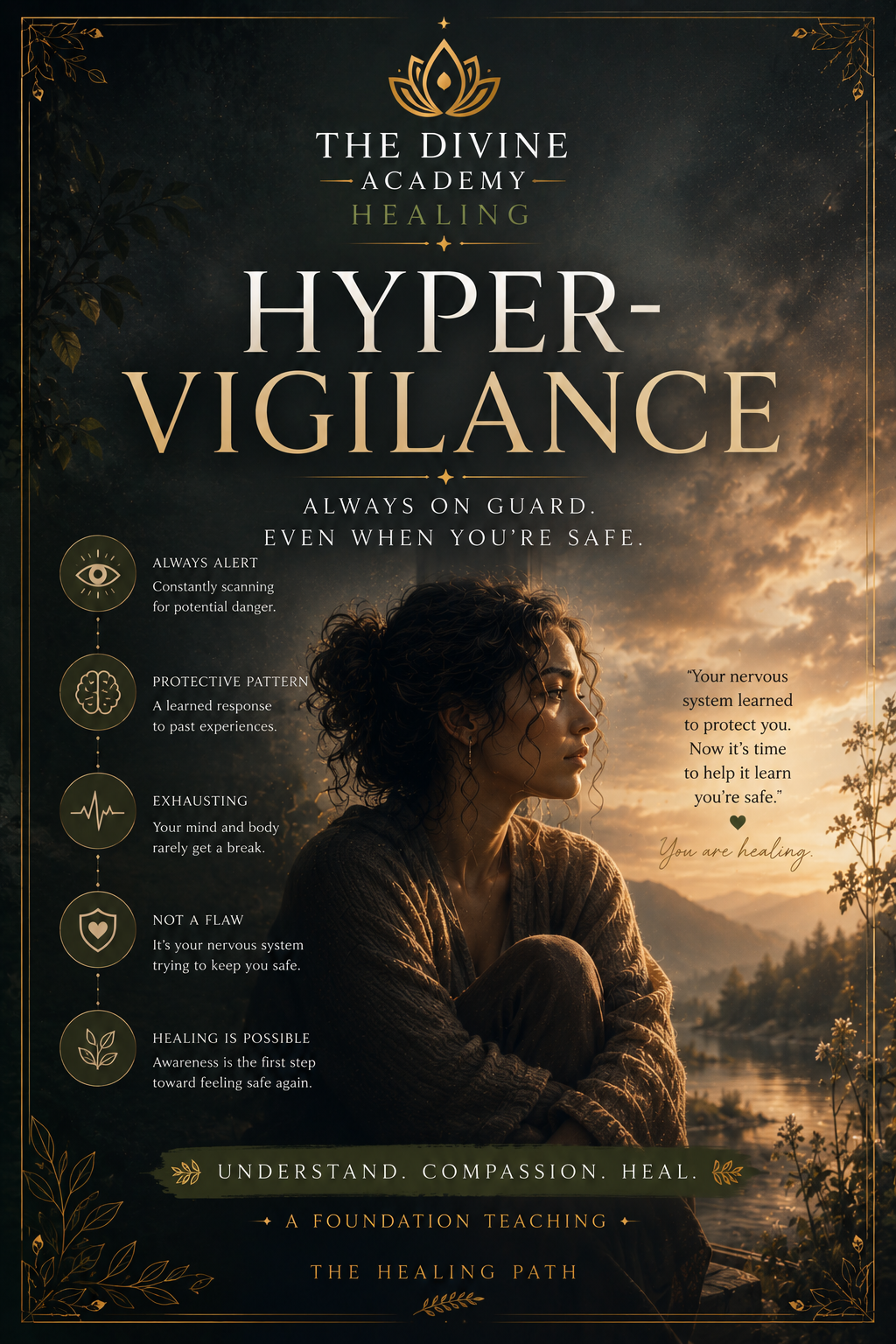
When your nervous system has learned that danger is always possible, staying alert can become second nature—even when you're safe.
Do you constantly scan your surroundings?
Notice subtle shifts in people's tone or body language?
Struggle to relax because part of you always feels like it needs to stay prepared?
These experiences may not simply be habits or personality traits.
They may be signs of hyper-vigilance—a heightened state of awareness in which the mind and body remain alert for potential threats.
While this response can be incredibly helpful during genuinely dangerous situations, it can become exhausting when your nervous system continues operating as though danger is always nearby.
This Foundation Teaching explores what hyper-vigilance is, why it develops, how it affects daily life, and why understanding your nervous system is one of the first steps toward healing.
What You'll Learn
Inside this Foundation Teaching, you'll discover:
What hyper-vigilance is
Why the nervous system becomes hyper-alert
Common signs and everyday experiences of hyper-vigilance
How prolonged stress and trauma can influence protective responses
The difference between healthy awareness and constant alertness
Common misconceptions about hyper-vigilance
Why understanding these patterns can support healing
At a Glance
Learning Path: Healing
Resource Type: Foundation Teaching
Level: Beginner
Length: 6 pages
Format: Digital PDF
Who This Teaching Is For
This teaching is for anyone who has ever wondered:
"Why can't I fully relax?"
"Why do I always expect something to go wrong?"
"Why do I notice everything around me?"
"Why do I feel on edge even when nothing is happening?"
"Why is it so difficult to feel safe?"
Whether you've experienced ongoing stress, difficult life experiences, or simply recognize these patterns in yourself, this teaching offers a compassionate introduction to understanding one possible reason they occur.
Why This Matters
Hyper-vigilance is often misunderstood.
Many people describe themselves as "overthinking," "too sensitive," or "always anxious" without realizing that their nervous system may have learned to remain on guard as a way of protecting them.
These responses are not character flaws.
They're protective strategies that often developed for understandable reasons.
Understanding this doesn't erase the experience, but it can change how you relate to it.
Instead of asking, "What's wrong with me?" you can begin asking, "What might my nervous system have been trying to protect me from?"
That shift from judgment to understanding is often where healing begins.
When your nervous system has learned that danger is always possible, staying alert can become second nature—even when you're safe.
Do you constantly scan your surroundings?
Notice subtle shifts in people's tone or body language?
Struggle to relax because part of you always feels like it needs to stay prepared?
These experiences may not simply be habits or personality traits.
They may be signs of hyper-vigilance—a heightened state of awareness in which the mind and body remain alert for potential threats.
While this response can be incredibly helpful during genuinely dangerous situations, it can become exhausting when your nervous system continues operating as though danger is always nearby.
This Foundation Teaching explores what hyper-vigilance is, why it develops, how it affects daily life, and why understanding your nervous system is one of the first steps toward healing.
What You'll Learn
Inside this Foundation Teaching, you'll discover:
What hyper-vigilance is
Why the nervous system becomes hyper-alert
Common signs and everyday experiences of hyper-vigilance
How prolonged stress and trauma can influence protective responses
The difference between healthy awareness and constant alertness
Common misconceptions about hyper-vigilance
Why understanding these patterns can support healing
At a Glance
Learning Path: Healing
Resource Type: Foundation Teaching
Level: Beginner
Length: 6 pages
Format: Digital PDF
Who This Teaching Is For
This teaching is for anyone who has ever wondered:
"Why can't I fully relax?"
"Why do I always expect something to go wrong?"
"Why do I notice everything around me?"
"Why do I feel on edge even when nothing is happening?"
"Why is it so difficult to feel safe?"
Whether you've experienced ongoing stress, difficult life experiences, or simply recognize these patterns in yourself, this teaching offers a compassionate introduction to understanding one possible reason they occur.
Why This Matters
Hyper-vigilance is often misunderstood.
Many people describe themselves as "overthinking," "too sensitive," or "always anxious" without realizing that their nervous system may have learned to remain on guard as a way of protecting them.
These responses are not character flaws.
They're protective strategies that often developed for understandable reasons.
Understanding this doesn't erase the experience, but it can change how you relate to it.
Instead of asking, "What's wrong with me?" you can begin asking, "What might my nervous system have been trying to protect me from?"
That shift from judgment to understanding is often where healing begins.