 Image 1 of 1
Mini Guide • Feminine, Masculine & Polarity
Being independent is a strength—but believing you have to do everything alone can become a burden.
Many people take pride in being self-reliant, capable, and dependable. Yet for some, independence becomes more than a strength—it becomes a survival strategy. Refusing help, avoiding vulnerability, and struggling to receive support can create emotional exhaustion and make meaningful connection more difficult.
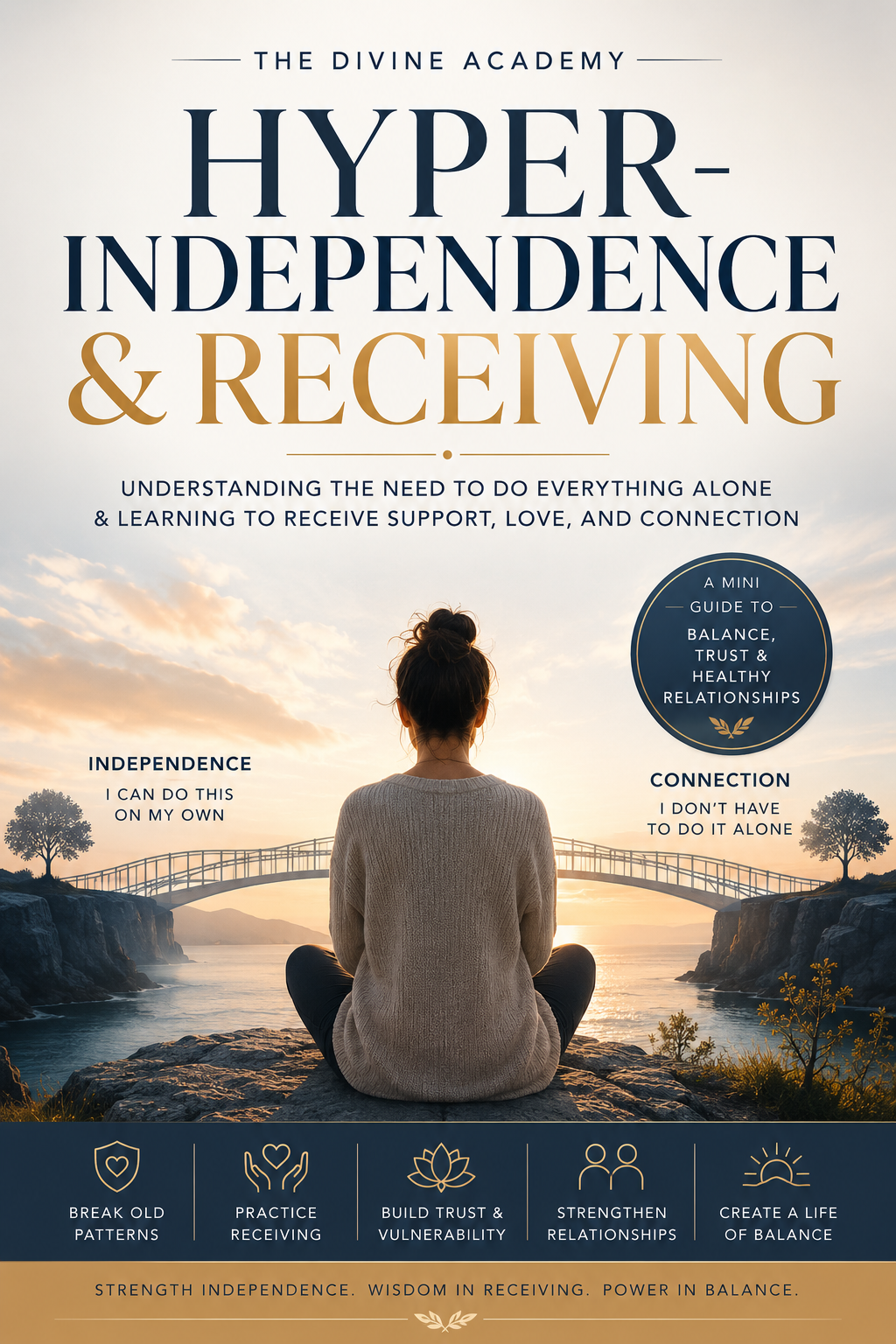
This mini guide explores the difference between healthy independence and hyper-independence while helping you understand why receiving love, care, encouragement, and support can sometimes feel uncomfortable. Through practical insights, you'll learn how to build trust, embrace healthy vulnerability, and develop relationships where both giving and receiving can exist in balance.
Whether you're navigating personal growth, healing old patterns, or simply wanting healthier relationships, this guide offers practical tools to help you remain independent without carrying everything alone.
Inside This Mini Guide
You'll explore:
What hyper-independence is
Healthy independence vs. hyper-independence
Why people develop hyper-independent patterns
The psychology of self-reliance
Why receiving can feel uncomfortable
Giving vs. receiving
Trust and vulnerability
Asking for help
Receiving compliments, love, and support
Hyper-independence in relationships
Healthy interdependence
Practical real-life examples
Common questions and misconceptions
Reflection exercises
Actionable next steps
At a Glance
Format: Digital PDF
Length: 32 pages
Level: Beginner
Category: Feminine, Masculine & Polarity
Who This Mini Guide Is For
This guide is ideal for anyone who wants to:
Understand the difference between healthy independence and hyper-independence
Become more comfortable receiving support
Build healthier romantic relationships
Strengthen trust and emotional connection
Explore vulnerability without losing independence
Develop healthier relationship dynamics
Break patterns of carrying everything alone
Why This Matters
Many people have been taught that strength means never needing anyone else.
While independence is a valuable quality, healthy relationships also require trust, vulnerability, and the ability to receive support. Learning how to balance self-reliance with connection can reduce emotional exhaustion, strengthen relationships, and create space for mutual care.
Understanding these patterns isn't about becoming dependent on others—it's about recognizing that true strength includes both standing on your own and allowing trusted people to stand beside you.
Mini Guide • Feminine, Masculine & Polarity
Being independent is a strength—but believing you have to do everything alone can become a burden.
Many people take pride in being self-reliant, capable, and dependable. Yet for some, independence becomes more than a strength—it becomes a survival strategy. Refusing help, avoiding vulnerability, and struggling to receive support can create emotional exhaustion and make meaningful connection more difficult.
This mini guide explores the difference between healthy independence and hyper-independence while helping you understand why receiving love, care, encouragement, and support can sometimes feel uncomfortable. Through practical insights, you'll learn how to build trust, embrace healthy vulnerability, and develop relationships where both giving and receiving can exist in balance.
Whether you're navigating personal growth, healing old patterns, or simply wanting healthier relationships, this guide offers practical tools to help you remain independent without carrying everything alone.
Inside This Mini Guide
You'll explore:
What hyper-independence is
Healthy independence vs. hyper-independence
Why people develop hyper-independent patterns
The psychology of self-reliance
Why receiving can feel uncomfortable
Giving vs. receiving
Trust and vulnerability
Asking for help
Receiving compliments, love, and support
Hyper-independence in relationships
Healthy interdependence
Practical real-life examples
Common questions and misconceptions
Reflection exercises
Actionable next steps
At a Glance
Format: Digital PDF
Length: 32 pages
Level: Beginner
Category: Feminine, Masculine & Polarity
Who This Mini Guide Is For
This guide is ideal for anyone who wants to:
Understand the difference between healthy independence and hyper-independence
Become more comfortable receiving support
Build healthier romantic relationships
Strengthen trust and emotional connection
Explore vulnerability without losing independence
Develop healthier relationship dynamics
Break patterns of carrying everything alone
Why This Matters
Many people have been taught that strength means never needing anyone else.
While independence is a valuable quality, healthy relationships also require trust, vulnerability, and the ability to receive support. Learning how to balance self-reliance with connection can reduce emotional exhaustion, strengthen relationships, and create space for mutual care.
Understanding these patterns isn't about becoming dependent on others—it's about recognizing that true strength includes both standing on your own and allowing trusted people to stand beside you.