 Image 1 of 1
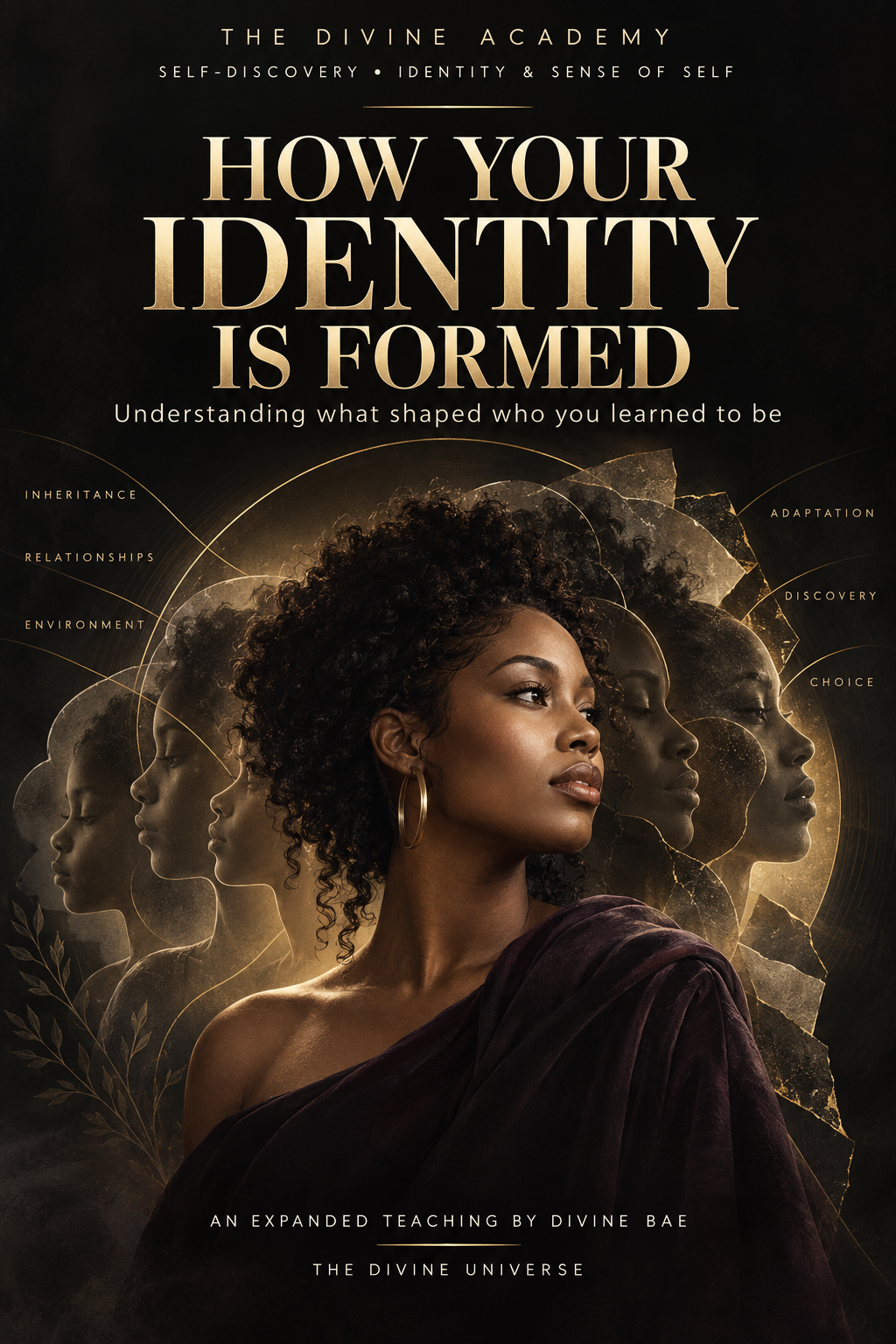
Understand the experiences, relationships, roles, beliefs, adaptations, and choices that have shaped your sense of who you are.
Your identity may feel deeply personal, but it did not form in isolation.
Before you had the language to define yourself, other people were already responding to you, assigning roles, reinforcing certain qualities, and teaching you which parts of yourself were accepted, misunderstood, praised, criticized, or ignored.
How Your Identity Is Formed is an Expanded Teaching created to help you understand how your natural traits, family, culture, relationships, life experiences, adaptations, and personal choices have contributed to your sense of self.
This resource will help you recognize which parts of your identity were inherited, assigned, adapted, discovered, or consciously chosen—without reducing any part of you to simply real or false.
This resource will help you:
Understand what identity is and how it differs from personality
Recognize how identity begins forming during early life
Explore the major relationships, environments, and experiences that shape identity
Distinguish between inherited, assigned, adapted, discovered, and chosen identities
Identify roles and labels that may have become central to how you see yourself
Reflect on which parts of your identity still fit who you are today
Why Understanding Identity Matters
Explore how your identity influences what you believe is possible, what roles you occupy, what treatment you accept, and which parts of yourself you express or suppress.
What Identity Actually Is
Understand identity as a layered combination of personal qualities, values, beliefs, roles, relationships, experiences, social connections, and life stories.
How Identity Begins to Form
Learn how early relationships, repeated messages, belonging, environmental expectations, and personal interpretations contribute to a developing sense of self.
The Major Influences on Identity
Explore the influence of natural temperament, family, culture, community, social expectations, relationships, life experiences, and personal choices.
The Different Ways Identity Forms
Distinguish between inherited, assigned, adapted, discovered, and consciously chosen parts of your identity.
How Identity Can Change
Understand how growth, healing, transitions, loss, new roles, and changing values can reshape the way you understand yourself.
Common Misunderstandings
Examine assumptions about authenticity, outside influence, adapted identities, changing over time, and the idea that one role represents your entire self.
Examples and Scenarios
See how identity can form through family roles, repeated labels, self-protection, relationships, careers, and previously unexplored qualities.
What to Pay Attention To
Begin noticing your “I am” statements, automatic roles, performed identities, hidden qualities, restrictive labels, and the environments that affect your self-expression.
Key Takeaways
Bring the Teaching together through a final reflection on which parts of your identity feel rooted, restrictive, incomplete, or ready to evolve.
Identity-formation examples and scenarios
Self-observation questions
Role and label recognition
Inherited, assigned, adapted, discovered, and chosen identity distinctions
An Identity Influence Check-In
A final guided reflection
You are questioning who you are outside of your roles and responsibilities
You recognize that other people’s expectations have influenced how you define yourself
You have outgrown an identity that once helped you belong or feel safe
You want to understand why certain labels feel difficult to release
You are entering a new stage of life and no longer identify with an earlier version of yourself
You want to distinguish between who you naturally are, who you adapted into, and who you consciously choose to become
Format: Digital Expanded Teaching
Length: Approximately 37 pages
Delivery: Digital download
Access: PDF
TDU Branch: The Divine Academy
Learning Path: Self-Discovery
Focus: Identity & Sense of Self
Understand the experiences, relationships, roles, beliefs, adaptations, and choices that have shaped your sense of who you are.
Your identity may feel deeply personal, but it did not form in isolation.
Before you had the language to define yourself, other people were already responding to you, assigning roles, reinforcing certain qualities, and teaching you which parts of yourself were accepted, misunderstood, praised, criticized, or ignored.
How Your Identity Is Formed is an Expanded Teaching created to help you understand how your natural traits, family, culture, relationships, life experiences, adaptations, and personal choices have contributed to your sense of self.
This resource will help you recognize which parts of your identity were inherited, assigned, adapted, discovered, or consciously chosen—without reducing any part of you to simply real or false.
This resource will help you:
Understand what identity is and how it differs from personality
Recognize how identity begins forming during early life
Explore the major relationships, environments, and experiences that shape identity
Distinguish between inherited, assigned, adapted, discovered, and chosen identities
Identify roles and labels that may have become central to how you see yourself
Reflect on which parts of your identity still fit who you are today
Why Understanding Identity Matters
Explore how your identity influences what you believe is possible, what roles you occupy, what treatment you accept, and which parts of yourself you express or suppress.
What Identity Actually Is
Understand identity as a layered combination of personal qualities, values, beliefs, roles, relationships, experiences, social connections, and life stories.
How Identity Begins to Form
Learn how early relationships, repeated messages, belonging, environmental expectations, and personal interpretations contribute to a developing sense of self.
The Major Influences on Identity
Explore the influence of natural temperament, family, culture, community, social expectations, relationships, life experiences, and personal choices.
The Different Ways Identity Forms
Distinguish between inherited, assigned, adapted, discovered, and consciously chosen parts of your identity.
How Identity Can Change
Understand how growth, healing, transitions, loss, new roles, and changing values can reshape the way you understand yourself.
Common Misunderstandings
Examine assumptions about authenticity, outside influence, adapted identities, changing over time, and the idea that one role represents your entire self.
Examples and Scenarios
See how identity can form through family roles, repeated labels, self-protection, relationships, careers, and previously unexplored qualities.
What to Pay Attention To
Begin noticing your “I am” statements, automatic roles, performed identities, hidden qualities, restrictive labels, and the environments that affect your self-expression.
Key Takeaways
Bring the Teaching together through a final reflection on which parts of your identity feel rooted, restrictive, incomplete, or ready to evolve.
Identity-formation examples and scenarios
Self-observation questions
Role and label recognition
Inherited, assigned, adapted, discovered, and chosen identity distinctions
An Identity Influence Check-In
A final guided reflection
You are questioning who you are outside of your roles and responsibilities
You recognize that other people’s expectations have influenced how you define yourself
You have outgrown an identity that once helped you belong or feel safe
You want to understand why certain labels feel difficult to release
You are entering a new stage of life and no longer identify with an earlier version of yourself
You want to distinguish between who you naturally are, who you adapted into, and who you consciously choose to become
Format: Digital Expanded Teaching
Length: Approximately 37 pages
Delivery: Digital download
Access: PDF
TDU Branch: The Divine Academy
Learning Path: Self-Discovery
Focus: Identity & Sense of Self