 Image 1 of 1
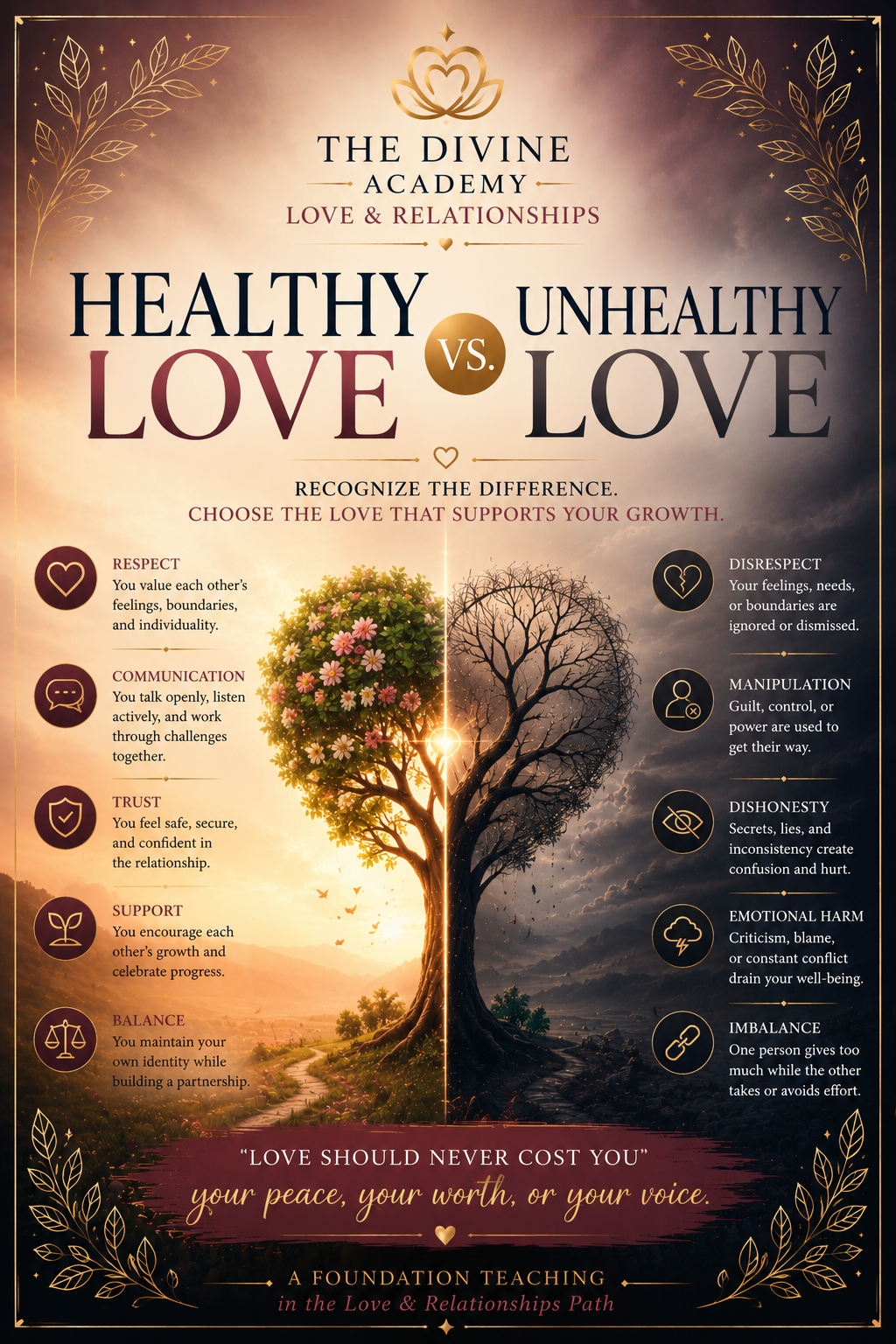
Healthy Love vs Unhealthy Love
Foundation Teaching • Love & Relationships
Love isn't measured by how intense it feels—it's reflected in how two people consistently treat one another.
Many people grow up hearing that love conquers all.
Others are taught that if there's enough chemistry, passion, or commitment, everything else will work itself out.
But healthy relationships are built on much more than love alone.
Trust.
Respect.
Communication.
Emotional safety.
Honesty.
Mutual effort.
These are the foundations that help relationships grow and endure.
At the same time, unhealthy relationships don't always begin with obvious warning signs. They often develop gradually through repeated patterns that leave one or both people feeling unheard, disrespected, emotionally unsafe, or disconnected.
This Foundation Teaching explores the differences between healthy and unhealthy relationship dynamics, helping you recognize the qualities that strengthen relationships and the patterns that may signal something needs to change.
What You'll Learn
Inside this Foundation Teaching, you'll discover:
The characteristics of healthy love
Common signs of unhealthy relationship dynamics
Why conflict alone doesn't make a relationship unhealthy
The role of communication, trust, respect, and emotional safety
How healthy relationships navigate challenges
Common misconceptions about healthy love
How awareness helps you build healthier relationships
At a Glance
Learning Path: Love & Relationships
Resource Type: Foundation Teaching
Level: Beginner
Length: 6 Pages
Format: Digital PDF
Who This Teaching Is For
This teaching is for anyone who has ever wondered:
"What does a healthy relationship actually look like?"
"Is conflict normal in healthy relationships?"
"How can I recognize unhealthy relationship patterns?"
"What's the difference between a difficult relationship and an unhealthy one?"
"How do I build healthier relationships?"
Whether you're beginning a new relationship, reflecting on a previous one, or simply wanting a clearer understanding of relationship dynamics, this teaching provides a compassionate, evidence-informed guide to recognizing the qualities that support lasting, healthy love.
Why This Matters
Many people can identify obvious red flags.
Far fewer have been taught what healthy love consistently looks like.
Healthy relationships aren't defined by perfection.
They aren't relationships without disagreements, mistakes, or difficult seasons.
Instead, they're relationships where both people consistently work toward understanding, accountability, respect, and mutual growth.
Learning the difference between healthy and unhealthy love helps shift your focus away from simply asking,
"Do we love each other?"
and toward asking,
"Does this relationship consistently support the well-being of both of us?"
That question often provides far greater clarity.
The more you understand healthy relationship dynamics, the more confidently you can recognize behaviors worth nurturing, patterns worth addressing, and standards worth protecting.
Healthy love doesn't ask you to lose yourself.
It creates space for both people to grow together while honoring each person's individuality.
Foundation Teaching • Love & Relationships
Love isn't measured by how intense it feels—it's reflected in how two people consistently treat one another.
Many people grow up hearing that love conquers all.
Others are taught that if there's enough chemistry, passion, or commitment, everything else will work itself out.
But healthy relationships are built on much more than love alone.
Trust.
Respect.
Communication.
Emotional safety.
Honesty.
Mutual effort.
These are the foundations that help relationships grow and endure.
At the same time, unhealthy relationships don't always begin with obvious warning signs. They often develop gradually through repeated patterns that leave one or both people feeling unheard, disrespected, emotionally unsafe, or disconnected.
This Foundation Teaching explores the differences between healthy and unhealthy relationship dynamics, helping you recognize the qualities that strengthen relationships and the patterns that may signal something needs to change.
What You'll Learn
Inside this Foundation Teaching, you'll discover:
The characteristics of healthy love
Common signs of unhealthy relationship dynamics
Why conflict alone doesn't make a relationship unhealthy
The role of communication, trust, respect, and emotional safety
How healthy relationships navigate challenges
Common misconceptions about healthy love
How awareness helps you build healthier relationships
At a Glance
Learning Path: Love & Relationships
Resource Type: Foundation Teaching
Level: Beginner
Length: 6 Pages
Format: Digital PDF
Who This Teaching Is For
This teaching is for anyone who has ever wondered:
"What does a healthy relationship actually look like?"
"Is conflict normal in healthy relationships?"
"How can I recognize unhealthy relationship patterns?"
"What's the difference between a difficult relationship and an unhealthy one?"
"How do I build healthier relationships?"
Whether you're beginning a new relationship, reflecting on a previous one, or simply wanting a clearer understanding of relationship dynamics, this teaching provides a compassionate, evidence-informed guide to recognizing the qualities that support lasting, healthy love.
Why This Matters
Many people can identify obvious red flags.
Far fewer have been taught what healthy love consistently looks like.
Healthy relationships aren't defined by perfection.
They aren't relationships without disagreements, mistakes, or difficult seasons.
Instead, they're relationships where both people consistently work toward understanding, accountability, respect, and mutual growth.
Learning the difference between healthy and unhealthy love helps shift your focus away from simply asking,
"Do we love each other?"
and toward asking,
"Does this relationship consistently support the well-being of both of us?"
That question often provides far greater clarity.
The more you understand healthy relationship dynamics, the more confidently you can recognize behaviors worth nurturing, patterns worth addressing, and standards worth protecting.
Healthy love doesn't ask you to lose yourself.
It creates space for both people to grow together while honoring each person's individuality.