 Image 1 of 1
Foundation Teaching • Healing
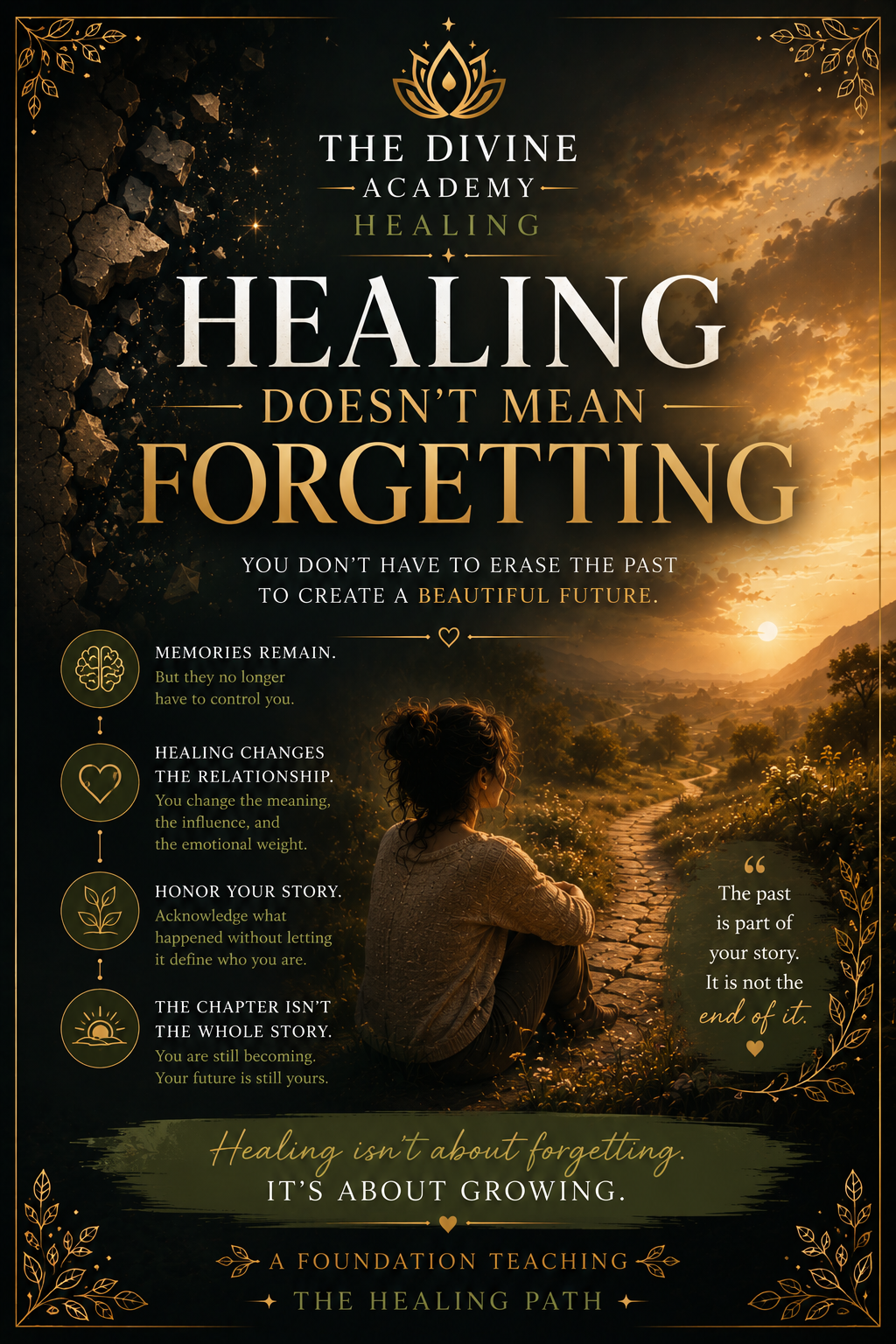
Healing isn't about erasing your story. It's about changing the way your story lives within you.
Many people believe healing means reaching a point where painful memories disappear.
If they still remember what happened—or if difficult emotions occasionally resurface—they wonder whether they've truly healed.
But healing doesn't ask you to forget.
Your experiences, both joyful and painful, become part of your life's story. While you may not be able to erase what happened, you can change how those experiences influence your thoughts, emotions, relationships, and future.
Healing isn't about pretending the past never existed.
It's about learning that the past doesn't have to control the present.
This Foundation Teaching explores why healing and remembering can exist together, how your relationship with painful experiences can change over time, and why growth doesn't require erasing your history.
What You'll Learn
Inside this Foundation Teaching, you'll discover:
Why healing doesn't require forgetting
How memories and healing can coexist
The difference between remembering and reliving
How healing changes your relationship with past experiences
Why emotional healing is often a gradual process
Common misconceptions about healing
How self-compassion supports long-term growth
At a Glance
Learning Path: Healing
Resource Type: Foundation Teaching
Level: Beginner
Length: 6 Pages
Format: Digital PDF
Who This Teaching Is For
This teaching is for anyone who has ever wondered:
"Why do I still remember what happened?"
"Why do certain memories still affect me?"
"Does remembering mean I haven't healed?"
"Will I ever stop thinking about the past?"
"Can I heal without forgetting?"
Whether you're navigating grief, difficult life experiences, emotional healing, or simply learning how to move forward, this teaching offers a compassionate perspective on what healing truly looks like.
Why This Matters
Many people measure healing by asking whether the memories are gone.
A healthier question is:
How do those memories influence my life today?
Healing doesn't erase your past.
It changes your relationship with it.
Over time, memories that once felt overwhelming may become reminders of your resilience, growth, wisdom, or strength rather than sources of constant pain.
Healing doesn't mean pretending something never happened.
It means allowing your past to become one chapter of your story instead of the author of your future.
Remembering isn't failure.
It's part of being human.
The goal isn't to erase your story.
The goal is to keep writing it.
Foundation Teaching • Healing
Healing isn't about erasing your story. It's about changing the way your story lives within you.
Many people believe healing means reaching a point where painful memories disappear.
If they still remember what happened—or if difficult emotions occasionally resurface—they wonder whether they've truly healed.
But healing doesn't ask you to forget.
Your experiences, both joyful and painful, become part of your life's story. While you may not be able to erase what happened, you can change how those experiences influence your thoughts, emotions, relationships, and future.
Healing isn't about pretending the past never existed.
It's about learning that the past doesn't have to control the present.
This Foundation Teaching explores why healing and remembering can exist together, how your relationship with painful experiences can change over time, and why growth doesn't require erasing your history.
What You'll Learn
Inside this Foundation Teaching, you'll discover:
Why healing doesn't require forgetting
How memories and healing can coexist
The difference between remembering and reliving
How healing changes your relationship with past experiences
Why emotional healing is often a gradual process
Common misconceptions about healing
How self-compassion supports long-term growth
At a Glance
Learning Path: Healing
Resource Type: Foundation Teaching
Level: Beginner
Length: 6 Pages
Format: Digital PDF
Who This Teaching Is For
This teaching is for anyone who has ever wondered:
"Why do I still remember what happened?"
"Why do certain memories still affect me?"
"Does remembering mean I haven't healed?"
"Will I ever stop thinking about the past?"
"Can I heal without forgetting?"
Whether you're navigating grief, difficult life experiences, emotional healing, or simply learning how to move forward, this teaching offers a compassionate perspective on what healing truly looks like.
Why This Matters
Many people measure healing by asking whether the memories are gone.
A healthier question is:
How do those memories influence my life today?
Healing doesn't erase your past.
It changes your relationship with it.
Over time, memories that once felt overwhelming may become reminders of your resilience, growth, wisdom, or strength rather than sources of constant pain.
Healing doesn't mean pretending something never happened.
It means allowing your past to become one chapter of your story instead of the author of your future.
Remembering isn't failure.
It's part of being human.
The goal isn't to erase your story.
The goal is to keep writing it.