 Image 1 of 1
Understand three connected mental, emotional, and physical responses that are often mistaken for one another.
Fear, stress, and anxiety can feel very similar. Each may involve a racing heart, muscle tension, changes in breathing, difficulty concentrating, restlessness, trouble sleeping, or feeling on edge.
Because these responses overlap, it can be difficult to identify what you are actually experiencing.
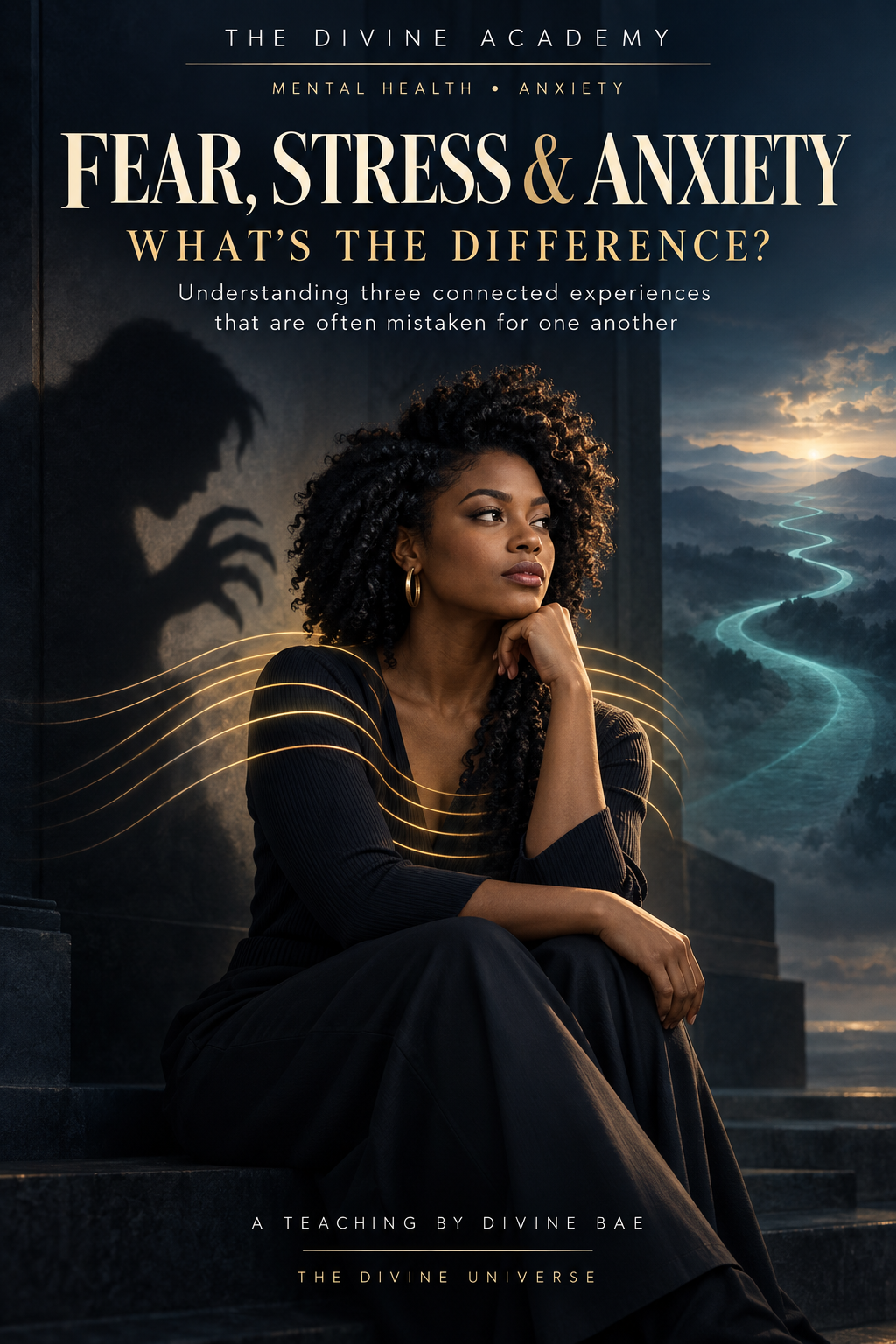
Fear, Stress & Anxiety: What’s the Difference? is an Expanded Teaching created to help you understand the basic distinctions between these three experiences, how they can overlap, and what your mind and body may be responding to.
This resource will help you:
Understand the basic differences between fear, stress, and anxiety
Recognize what typically activates each response
Identify whether your attention is focused on immediate danger, current pressure, or a possible future outcome
Understand how each response may affect your thoughts, emotions, behavior, and body
Recognize how fear, stress, and anxiety can activate one another
Develop clearer language for describing what you may be experiencing
Identify when additional professional support may be appropriate
Why Knowing the Difference Matters
Explore how clearer language can help you understand what is happening and ask more useful questions about what you may need.
What Fear Is
Understand fear as a response to something perceived as dangerous, harmful, or threatening in the present moment.
What Stress Is
Explore how stress can develop when demands or pressures feel greater than your available time, energy, control, support, or resources.
What Anxiety Is
Understand how anxiety often involves anticipation, uncertainty, or concern about something that may happen—even when an immediate threat is not present.
Fear vs. Stress vs. Anxiety
Compare the central focus, common triggers, time orientation, and guiding question connected to each experience.
How They Can Overlap
Learn how stress can create anxiety, fear can continue as anxious anticipation, anxiety can create additional stress, and more than one response can occur simultaneously.
Common Misunderstandings
Examine assumptions about fear and anxiety being identical, stress being a milder form of anxiety, anxiety predicting danger, and experiencing fear as a sign of weakness.
Examples and Scenarios
See how fear, stress, and anxiety may appear within work, medical appointments, relationships, public speaking, and financial difficulties.
What to Pay Attention To
Begin noticing the trigger, time focus, physical response, mental focus, and action urge connected to your experience.
Key Takeaways
Bring the Teaching together through a final reflection that helps you identify whether fear, stress, anxiety, or a combination may be present.
A fear, stress, and anxiety comparison chart
Mental, emotional, physical, and behavioral distinctions
Everyday examples and scenarios
Trigger and time-focus questions
A “What Am I Experiencing?” Check-In
A final guided reflection
You use fear, stress, and anxiety interchangeably
You struggle to identify what your mind and body are responding to
You feel physically activated but are unsure why
You want to distinguish current pressure from future-focused worry
You experience more than one of these responses within the same situation
You want clearer language for understanding your experience without diagnosing yourself
Format: Digital Expanded Teaching
Length: Approximately 29 pages
Delivery: Digital download
Access: PDF
TDU Branch: The Divine Academy
Learning Path: Mental Health
Focus: Anxiety
This resource is educational and self-reflective. It does not diagnose or treat anxiety disorders, trauma-related conditions, chronic stress, medical concerns, or another mental-health condition.
If fear, stress, or anxiety is intense, persistent, worsening, or interfering with sleep, work, school, relationships, responsibilities, or daily functioning, consider seeking support from a qualified mental-health or medical professional.
Understand three connected mental, emotional, and physical responses that are often mistaken for one another.
Fear, stress, and anxiety can feel very similar. Each may involve a racing heart, muscle tension, changes in breathing, difficulty concentrating, restlessness, trouble sleeping, or feeling on edge.
Because these responses overlap, it can be difficult to identify what you are actually experiencing.
Fear, Stress & Anxiety: What’s the Difference? is an Expanded Teaching created to help you understand the basic distinctions between these three experiences, how they can overlap, and what your mind and body may be responding to.
This resource will help you:
Understand the basic differences between fear, stress, and anxiety
Recognize what typically activates each response
Identify whether your attention is focused on immediate danger, current pressure, or a possible future outcome
Understand how each response may affect your thoughts, emotions, behavior, and body
Recognize how fear, stress, and anxiety can activate one another
Develop clearer language for describing what you may be experiencing
Identify when additional professional support may be appropriate
Why Knowing the Difference Matters
Explore how clearer language can help you understand what is happening and ask more useful questions about what you may need.
What Fear Is
Understand fear as a response to something perceived as dangerous, harmful, or threatening in the present moment.
What Stress Is
Explore how stress can develop when demands or pressures feel greater than your available time, energy, control, support, or resources.
What Anxiety Is
Understand how anxiety often involves anticipation, uncertainty, or concern about something that may happen—even when an immediate threat is not present.
Fear vs. Stress vs. Anxiety
Compare the central focus, common triggers, time orientation, and guiding question connected to each experience.
How They Can Overlap
Learn how stress can create anxiety, fear can continue as anxious anticipation, anxiety can create additional stress, and more than one response can occur simultaneously.
Common Misunderstandings
Examine assumptions about fear and anxiety being identical, stress being a milder form of anxiety, anxiety predicting danger, and experiencing fear as a sign of weakness.
Examples and Scenarios
See how fear, stress, and anxiety may appear within work, medical appointments, relationships, public speaking, and financial difficulties.
What to Pay Attention To
Begin noticing the trigger, time focus, physical response, mental focus, and action urge connected to your experience.
Key Takeaways
Bring the Teaching together through a final reflection that helps you identify whether fear, stress, anxiety, or a combination may be present.
A fear, stress, and anxiety comparison chart
Mental, emotional, physical, and behavioral distinctions
Everyday examples and scenarios
Trigger and time-focus questions
A “What Am I Experiencing?” Check-In
A final guided reflection
You use fear, stress, and anxiety interchangeably
You struggle to identify what your mind and body are responding to
You feel physically activated but are unsure why
You want to distinguish current pressure from future-focused worry
You experience more than one of these responses within the same situation
You want clearer language for understanding your experience without diagnosing yourself
Format: Digital Expanded Teaching
Length: Approximately 29 pages
Delivery: Digital download
Access: PDF
TDU Branch: The Divine Academy
Learning Path: Mental Health
Focus: Anxiety
This resource is educational and self-reflective. It does not diagnose or treat anxiety disorders, trauma-related conditions, chronic stress, medical concerns, or another mental-health condition.
If fear, stress, or anxiety is intense, persistent, worsening, or interfering with sleep, work, school, relationships, responsibilities, or daily functioning, consider seeking support from a qualified mental-health or medical professional.