 Image 1 of 1
Mini Guide • Love & Relationships
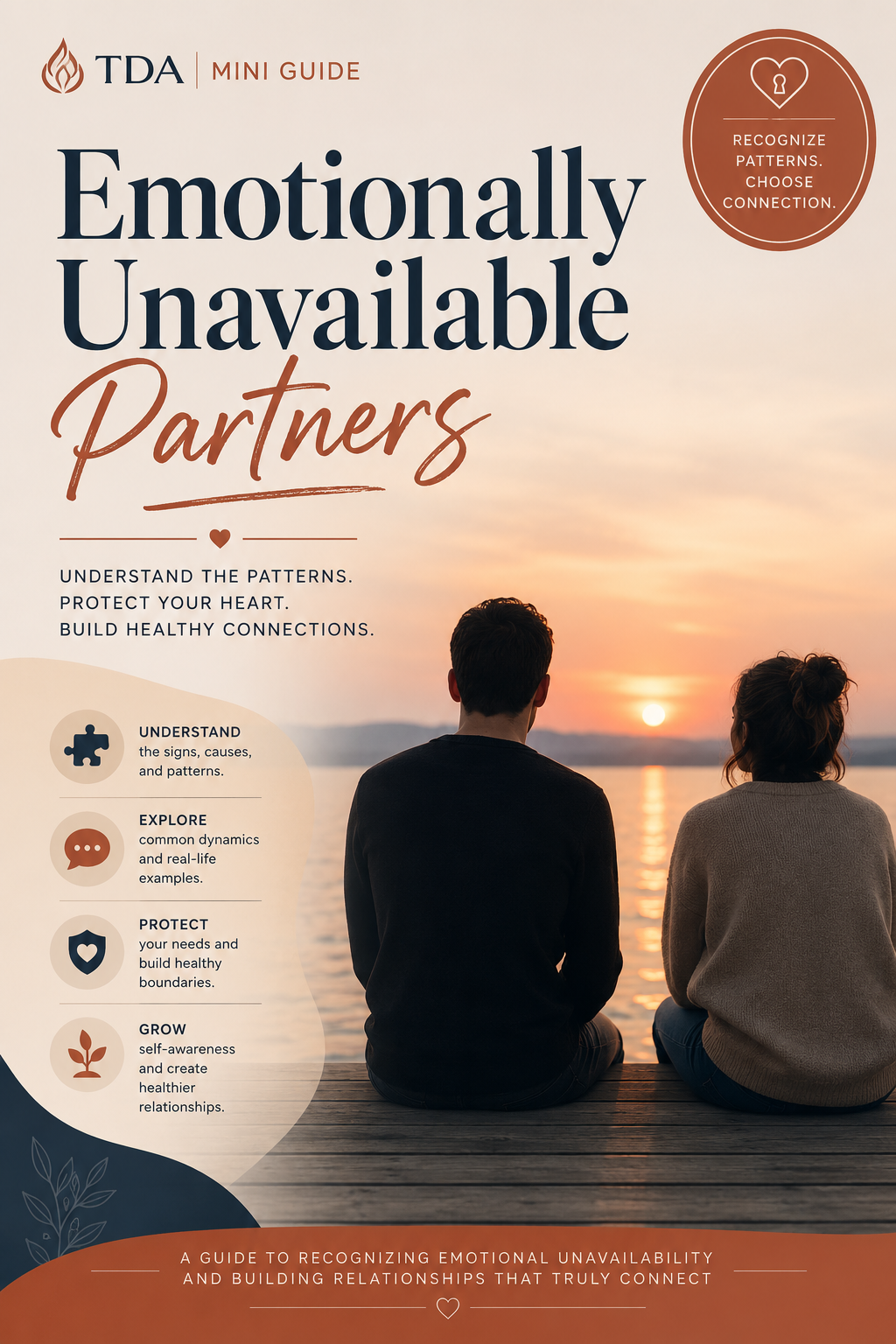
Emotional connection is one of the foundations of a healthy relationship.
When emotional availability is missing, relationships can become confusing, one-sided, and emotionally exhausting. Mixed signals, inconsistent communication, and difficulty expressing emotions often leave people wondering whether the relationship can truly grow.
This guide explores emotional unavailability from a balanced perspective—helping you understand the patterns without making assumptions or placing blame.
You'll learn how emotional availability influences trust, vulnerability, communication, and long-term relationship health while developing the awareness to recognize healthier relationship dynamics.
Whether you're trying to better understand a current relationship, reflect on past experiences, or strengthen your own emotional availability, this guide offers practical insights you can apply in everyday life.
Inside This Mini Guide
You'll explore:
What emotional unavailability is—and what it isn't.
Emotional availability versus emotional distance.
Signs of emotionally unavailable behavior.
Common causes of emotional unavailability.
Emotional unavailability versus healthy independence.
Common relationship dynamics.
Real-life relationship examples.
Reflection exercises for self-awareness.
Practical steps toward healthier relationships.
How emotional availability can grow over time.
At a Glance
Format: Digital PDF
Length: 33 pages
Category: Mini Guide
Learning Path: Love & Relationships
Skill Level: Beginner to Intermediate
Who This Guide Is For
This guide is ideal for anyone who wants to:
Better understand emotionally unavailable behavior.
Recognize unhealthy relationship patterns.
Improve communication in relationships.
Build healthier emotional connections.
Strengthen personal boundaries.
Develop greater relationship awareness.
Make more confident relationship decisions.
No previous knowledge of psychology or relationship theory is required.
Why This Matters
Many people spend years trying to understand why certain relationships feel emotionally distant or inconsistent.
Learning about emotional availability can help you:
Recognize recurring relationship patterns.
Understand the difference between emotional distance and healthy independence.
Build stronger communication skills.
Identify healthy emotional investment.
Strengthen trust and emotional safety.
Set healthier relationship boundaries.
Make relationship decisions based on consistent behaviors rather than uncertainty.
This guide isn't about labeling people.
It's about understanding relationship dynamics so you can create healthier, more fulfilling connections.
Mini Guide • Love & Relationships
Emotional connection is one of the foundations of a healthy relationship.
When emotional availability is missing, relationships can become confusing, one-sided, and emotionally exhausting. Mixed signals, inconsistent communication, and difficulty expressing emotions often leave people wondering whether the relationship can truly grow.
This guide explores emotional unavailability from a balanced perspective—helping you understand the patterns without making assumptions or placing blame.
You'll learn how emotional availability influences trust, vulnerability, communication, and long-term relationship health while developing the awareness to recognize healthier relationship dynamics.
Whether you're trying to better understand a current relationship, reflect on past experiences, or strengthen your own emotional availability, this guide offers practical insights you can apply in everyday life.
Inside This Mini Guide
You'll explore:
What emotional unavailability is—and what it isn't.
Emotional availability versus emotional distance.
Signs of emotionally unavailable behavior.
Common causes of emotional unavailability.
Emotional unavailability versus healthy independence.
Common relationship dynamics.
Real-life relationship examples.
Reflection exercises for self-awareness.
Practical steps toward healthier relationships.
How emotional availability can grow over time.
At a Glance
Format: Digital PDF
Length: 33 pages
Category: Mini Guide
Learning Path: Love & Relationships
Skill Level: Beginner to Intermediate
Who This Guide Is For
This guide is ideal for anyone who wants to:
Better understand emotionally unavailable behavior.
Recognize unhealthy relationship patterns.
Improve communication in relationships.
Build healthier emotional connections.
Strengthen personal boundaries.
Develop greater relationship awareness.
Make more confident relationship decisions.
No previous knowledge of psychology or relationship theory is required.
Why This Matters
Many people spend years trying to understand why certain relationships feel emotionally distant or inconsistent.
Learning about emotional availability can help you:
Recognize recurring relationship patterns.
Understand the difference between emotional distance and healthy independence.
Build stronger communication skills.
Identify healthy emotional investment.
Strengthen trust and emotional safety.
Set healthier relationship boundaries.
Make relationship decisions based on consistent behaviors rather than uncertainty.
This guide isn't about labeling people.
It's about understanding relationship dynamics so you can create healthier, more fulfilling connections.