 Image 1 of 1
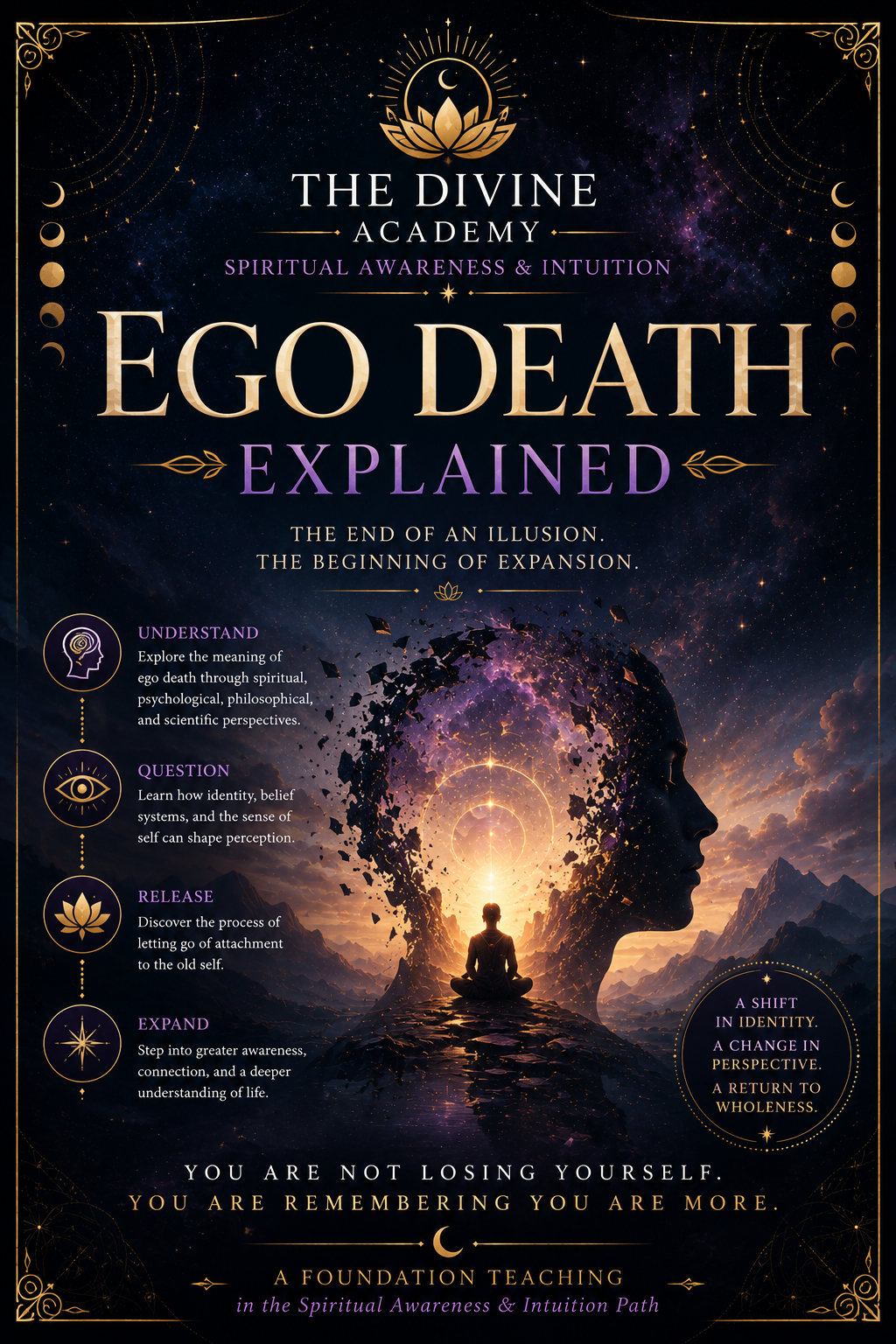
Ego Death Explained
Foundation Teaching • Spiritual Awareness & Intuition
The phrase "ego death" is used in many ways—but what it actually means depends on the perspective you're exploring.
You've probably heard someone say,
"I experienced ego death."
For some, it's described as a profound spiritual transformation.
For others, it's a psychological shift in identity.
Some philosophies view it as releasing attachment to the self, while psychedelic research often uses the related term ego dissolution to describe temporary changes in a person's sense of self during altered states of consciousness.
Despite how often the phrase appears in conversations about spirituality, it doesn't have one universally accepted definition.
Different traditions understand it in different ways.
This Foundation Teaching explores the history of the concept, how psychology, spirituality, philosophy, and science each interpret ego death, and why curiosity and discernment are essential when exploring ideas about identity, consciousness, and personal transformation.
What You'll Learn
Inside this Foundation Teaching, you'll discover:
What the term ego death generally means
How spirituality, psychology, philosophy, and science interpret the concept differently
The difference between the psychological meaning of the ego and the everyday use of the word
What ego dissolution means in psychedelic research
Common experiences people associate with profound identity shifts
Common misconceptions about ego death
Why discernment matters when exploring consciousness and personal growth
At a Glance
Learning Path: Spiritual Awareness & Intuition
Resource Type: Foundation Teaching
Level: Beginner
Length: 6 Pages
Format: Digital PDF
Who This Teaching Is For
This teaching is for anyone who has ever wondered:
"What is ego death?"
"Is ego death a spiritual experience or a psychological one?"
"What does psychology mean by the ego?"
"Why do different people describe ego death differently?"
"How can I explore these ideas without accepting only one explanation?"
Whether you're interested in spirituality, psychology, philosophy, consciousness, or personal growth, this teaching offers a balanced introduction to one of the most fascinating—and frequently misunderstood—concepts in modern spiritual conversations.
Why This Matters
The term ego death is often used without much explanation.
As a result, many people assume everyone means the same thing when they use it.
They don't.
Understanding multiple perspectives helps you move beyond simplified internet definitions and appreciate the rich history behind the concept.
It also encourages an important distinction:
Exploring a perspective doesn't require adopting it as your belief.
Instead, you learn how different traditions understand identity, consciousness, transformation, and the human experience.
This approach creates space for curiosity without certainty, openness without blind acceptance, and exploration without losing the ability to think critically.
The goal isn't to tell you what ego death is.
The goal is to help you understand why different people describe similar experiences in very different ways.
Foundation Teaching • Spiritual Awareness & Intuition
The phrase "ego death" is used in many ways—but what it actually means depends on the perspective you're exploring.
You've probably heard someone say,
"I experienced ego death."
For some, it's described as a profound spiritual transformation.
For others, it's a psychological shift in identity.
Some philosophies view it as releasing attachment to the self, while psychedelic research often uses the related term ego dissolution to describe temporary changes in a person's sense of self during altered states of consciousness.
Despite how often the phrase appears in conversations about spirituality, it doesn't have one universally accepted definition.
Different traditions understand it in different ways.
This Foundation Teaching explores the history of the concept, how psychology, spirituality, philosophy, and science each interpret ego death, and why curiosity and discernment are essential when exploring ideas about identity, consciousness, and personal transformation.
What You'll Learn
Inside this Foundation Teaching, you'll discover:
What the term ego death generally means
How spirituality, psychology, philosophy, and science interpret the concept differently
The difference between the psychological meaning of the ego and the everyday use of the word
What ego dissolution means in psychedelic research
Common experiences people associate with profound identity shifts
Common misconceptions about ego death
Why discernment matters when exploring consciousness and personal growth
At a Glance
Learning Path: Spiritual Awareness & Intuition
Resource Type: Foundation Teaching
Level: Beginner
Length: 6 Pages
Format: Digital PDF
Who This Teaching Is For
This teaching is for anyone who has ever wondered:
"What is ego death?"
"Is ego death a spiritual experience or a psychological one?"
"What does psychology mean by the ego?"
"Why do different people describe ego death differently?"
"How can I explore these ideas without accepting only one explanation?"
Whether you're interested in spirituality, psychology, philosophy, consciousness, or personal growth, this teaching offers a balanced introduction to one of the most fascinating—and frequently misunderstood—concepts in modern spiritual conversations.
Why This Matters
The term ego death is often used without much explanation.
As a result, many people assume everyone means the same thing when they use it.
They don't.
Understanding multiple perspectives helps you move beyond simplified internet definitions and appreciate the rich history behind the concept.
It also encourages an important distinction:
Exploring a perspective doesn't require adopting it as your belief.
Instead, you learn how different traditions understand identity, consciousness, transformation, and the human experience.
This approach creates space for curiosity without certainty, openness without blind acceptance, and exploration without losing the ability to think critically.
The goal isn't to tell you what ego death is.
The goal is to help you understand why different people describe similar experiences in very different ways.