 Image 1 of 1
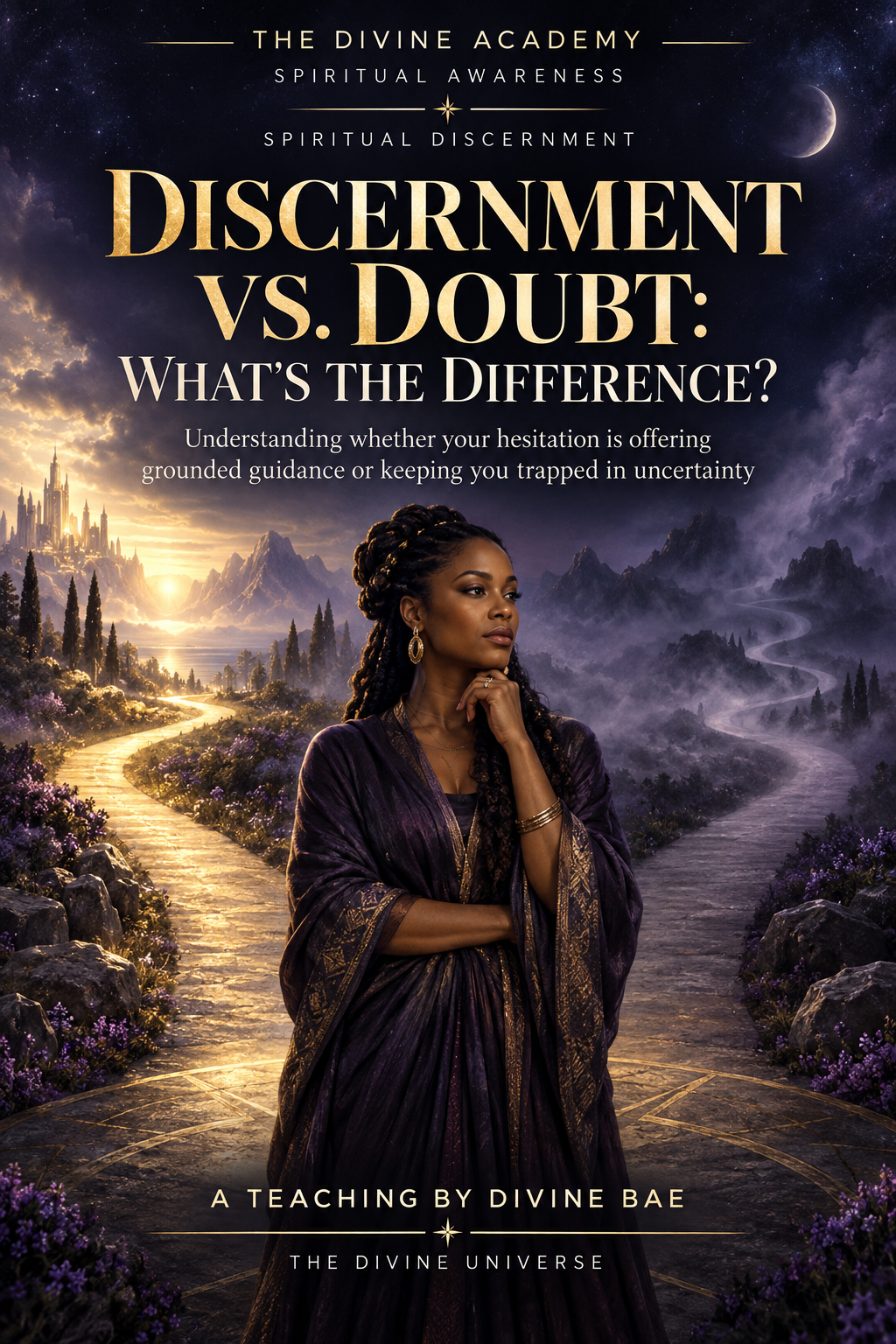
Understand whether your hesitation is offering grounded guidance or keeping you trapped in uncertainty.
Sometimes hesitation is useful. It encourages you to pause, examine what you are experiencing, and notice what may not be clear.
Other times, questioning becomes a cycle. You reconsider the same decision, search for more confirmation, or wait for a level of certainty that may never arrive.
Discernment vs. Doubt: What’s the Difference? will help you recognize whether your uncertainty is revealing useful information or repeatedly preventing you from trusting any conclusion.
Through this teaching, you will be able to:
Understand the difference between discernment and doubt
Recognize when questioning is creating greater clarity
Identify when doubt has become repetitive or limiting
Examine how fear, desire, conditioning, and stress may influence your interpretation
Consider intuition alongside facts, context, and possible consequences
Separate a genuine concern from the discomfort of uncertainty
Make more conscious decisions without requiring complete certainty
This Teaching explains how discernment and doubt can both make you pause while serving different purposes. It explores what each experience may look like, what can influence your interpretation, and how to determine whether your hesitation is revealing something important or keeping you trapped in repeated questioning.
You’ll also work through relatable scenarios and a Discernment or Doubt Check-In designed to help you separate what you know, fear, hope, and assume before choosing a grounded next step.
Focused self-reflection questions
Three relatable scenarios
Discernment and doubt distinctions
A Discernment or Doubt Check-In
A final decision-making reflection
You struggle to tell the difference between intuition and fear
You repeatedly reconsider decisions you have already examined
You search for signs, reassurance, or additional confirmation before acting
You worry that doubt means you are not trusting your spiritual guidance
You want to evaluate inner experiences without automatically dismissing them
You want a grounded way to make choices without needing a guarantee
Format: Digital Teaching
Length: 14 pages
Delivery: Digital download
Access: PDF
TDU Branch: The Divine Academy
Area: Spiritual Awareness
Focus: Spiritual Discernment
This resource is intended for educational, spiritual, and self-reflective purposes. It cannot determine whether a specific feeling, sign, message, dream, or intuitive impression is accurate.
Spiritual reflection should not replace evidence, practical judgment, professional guidance, or consideration of consequences—especially when decisions involve health, safety, finances, legal matters, or another person’s well-being.
Understand whether your hesitation is offering grounded guidance or keeping you trapped in uncertainty.
Sometimes hesitation is useful. It encourages you to pause, examine what you are experiencing, and notice what may not be clear.
Other times, questioning becomes a cycle. You reconsider the same decision, search for more confirmation, or wait for a level of certainty that may never arrive.
Discernment vs. Doubt: What’s the Difference? will help you recognize whether your uncertainty is revealing useful information or repeatedly preventing you from trusting any conclusion.
Through this teaching, you will be able to:
Understand the difference between discernment and doubt
Recognize when questioning is creating greater clarity
Identify when doubt has become repetitive or limiting
Examine how fear, desire, conditioning, and stress may influence your interpretation
Consider intuition alongside facts, context, and possible consequences
Separate a genuine concern from the discomfort of uncertainty
Make more conscious decisions without requiring complete certainty
This Teaching explains how discernment and doubt can both make you pause while serving different purposes. It explores what each experience may look like, what can influence your interpretation, and how to determine whether your hesitation is revealing something important or keeping you trapped in repeated questioning.
You’ll also work through relatable scenarios and a Discernment or Doubt Check-In designed to help you separate what you know, fear, hope, and assume before choosing a grounded next step.
Focused self-reflection questions
Three relatable scenarios
Discernment and doubt distinctions
A Discernment or Doubt Check-In
A final decision-making reflection
You struggle to tell the difference between intuition and fear
You repeatedly reconsider decisions you have already examined
You search for signs, reassurance, or additional confirmation before acting
You worry that doubt means you are not trusting your spiritual guidance
You want to evaluate inner experiences without automatically dismissing them
You want a grounded way to make choices without needing a guarantee
Format: Digital Teaching
Length: 14 pages
Delivery: Digital download
Access: PDF
TDU Branch: The Divine Academy
Area: Spiritual Awareness
Focus: Spiritual Discernment
This resource is intended for educational, spiritual, and self-reflective purposes. It cannot determine whether a specific feeling, sign, message, dream, or intuitive impression is accurate.
Spiritual reflection should not replace evidence, practical judgment, professional guidance, or consideration of consequences—especially when decisions involve health, safety, finances, legal matters, or another person’s well-being.