 Image 1 of 1
Foundation Teaching • Purpose, Prosperity & Life Cycles
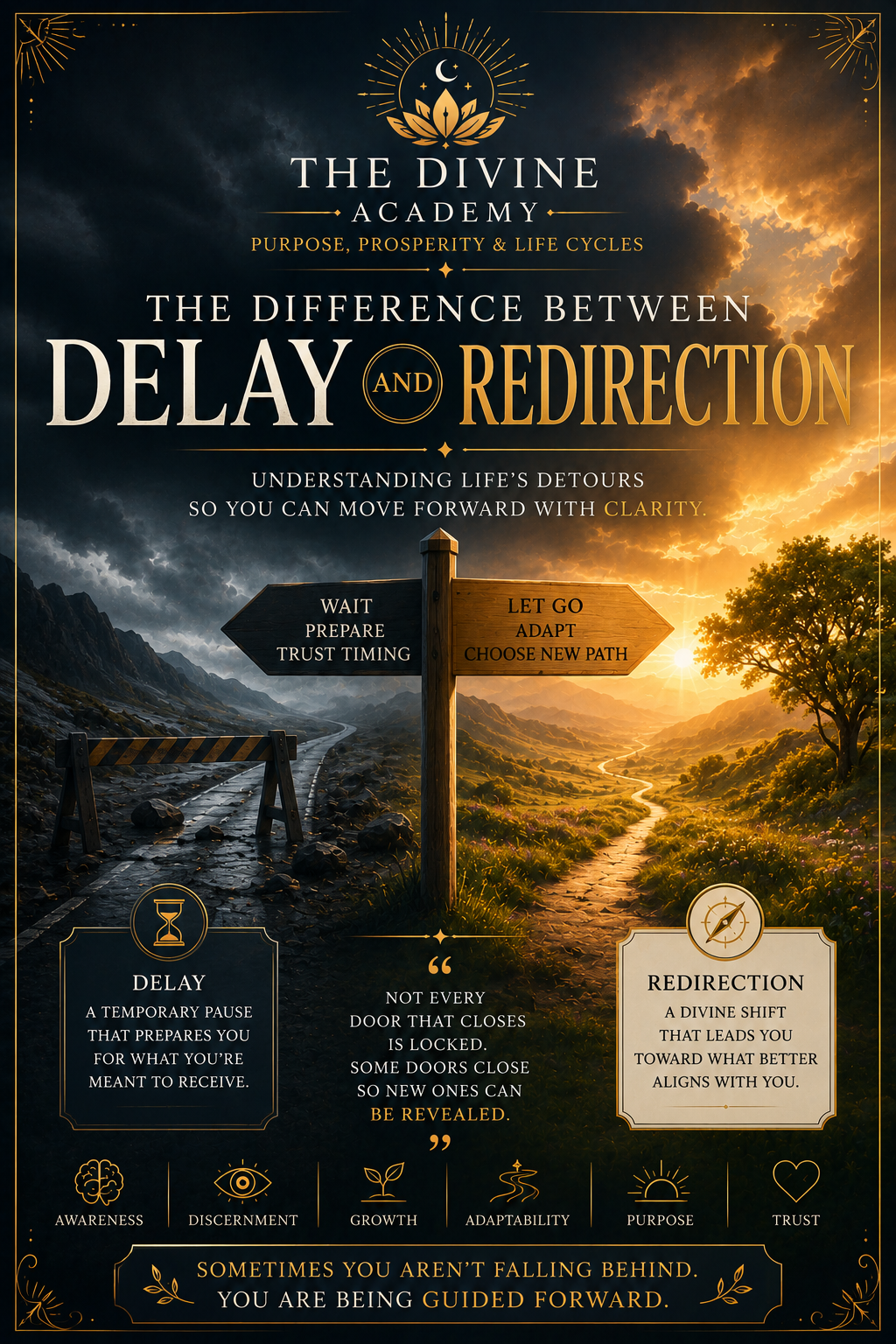
Not every pause means stop—and not every closed door means keep waiting.
When plans change, opportunities stall, or progress feels uncertain, it can be difficult to know what the experience actually means.
Are you simply facing a delay?
Or is it time to move in a different direction?
Both can involve frustration, disappointment, uncertainty, and the feeling that life is not moving according to plan.
This Foundation Teaching helps you better understand the difference between a temporary interruption and a meaningful shift, so you can approach setbacks with greater awareness, flexibility, and clarity.
What You'll Learn
Inside this Foundation Teaching, you'll discover:
What delay and redirection mean
The key difference between a pause and a change in direction
Why the two can feel similar while you are experiencing them
How setbacks can influence decision-making
Common misunderstandings about persistence, timing, and change
Why reflection and adaptability matter when choosing what comes next
At a Glance
Learning Path: Purpose, Prosperity & Life Cycles
Resource Type: Foundation Teaching
Level: Beginner
Length: 6 Pages
Format: Digital PDF
Who This Teaching Is For
This teaching is for anyone who wants to:
Better understand what a setback may be asking of them
Know when to remain patient and when to reconsider their direction
Approach uncertainty with greater clarity
Develop a healthier relationship with delays and changing plans
Become more intentional when deciding whether to continue, pause, or pivot
Why This Matters
The way we interpret setbacks can shape what we do next.
Assuming every obstacle means we should give up can cause us to abandon meaningful goals too quickly. Assuming every closed door is temporary can keep us attached to paths that no longer fit our needs, values, or circumstances.
Understanding the difference between delay and redirection does not provide an instant answer to every uncertain situation. It creates space for reflection, patience, and more intentional choices.
Whether you are navigating a career decision, relationship change, personal goal, business plan, or major life transition, this teaching offers a grounded foundation for understanding when to keep going and when to choose a new path.
Foundation Teaching • Purpose, Prosperity & Life Cycles
Not every pause means stop—and not every closed door means keep waiting.
When plans change, opportunities stall, or progress feels uncertain, it can be difficult to know what the experience actually means.
Are you simply facing a delay?
Or is it time to move in a different direction?
Both can involve frustration, disappointment, uncertainty, and the feeling that life is not moving according to plan.
This Foundation Teaching helps you better understand the difference between a temporary interruption and a meaningful shift, so you can approach setbacks with greater awareness, flexibility, and clarity.
What You'll Learn
Inside this Foundation Teaching, you'll discover:
What delay and redirection mean
The key difference between a pause and a change in direction
Why the two can feel similar while you are experiencing them
How setbacks can influence decision-making
Common misunderstandings about persistence, timing, and change
Why reflection and adaptability matter when choosing what comes next
At a Glance
Learning Path: Purpose, Prosperity & Life Cycles
Resource Type: Foundation Teaching
Level: Beginner
Length: 6 Pages
Format: Digital PDF
Who This Teaching Is For
This teaching is for anyone who wants to:
Better understand what a setback may be asking of them
Know when to remain patient and when to reconsider their direction
Approach uncertainty with greater clarity
Develop a healthier relationship with delays and changing plans
Become more intentional when deciding whether to continue, pause, or pivot
Why This Matters
The way we interpret setbacks can shape what we do next.
Assuming every obstacle means we should give up can cause us to abandon meaningful goals too quickly. Assuming every closed door is temporary can keep us attached to paths that no longer fit our needs, values, or circumstances.
Understanding the difference between delay and redirection does not provide an instant answer to every uncertain situation. It creates space for reflection, patience, and more intentional choices.
Whether you are navigating a career decision, relationship change, personal goal, business plan, or major life transition, this teaching offers a grounded foundation for understanding when to keep going and when to choose a new path.