 Image 1 of 1
Mini Guide • Spiritual Awareness, Intuition & Inner Development
Your intuition may already be speaking—you may simply need to learn how to recognize its language.
Intuition is often described as a quiet inner knowing, gut feeling, sudden insight, meaningful dream, physical sensation, or subtle awareness that draws your attention toward something important.
Yet many people struggle to trust these experiences.
Fear, anxiety, overthinking, emotional reactions, and constant outside opinions can make it difficult to tell the difference between intuition and other internal signals.
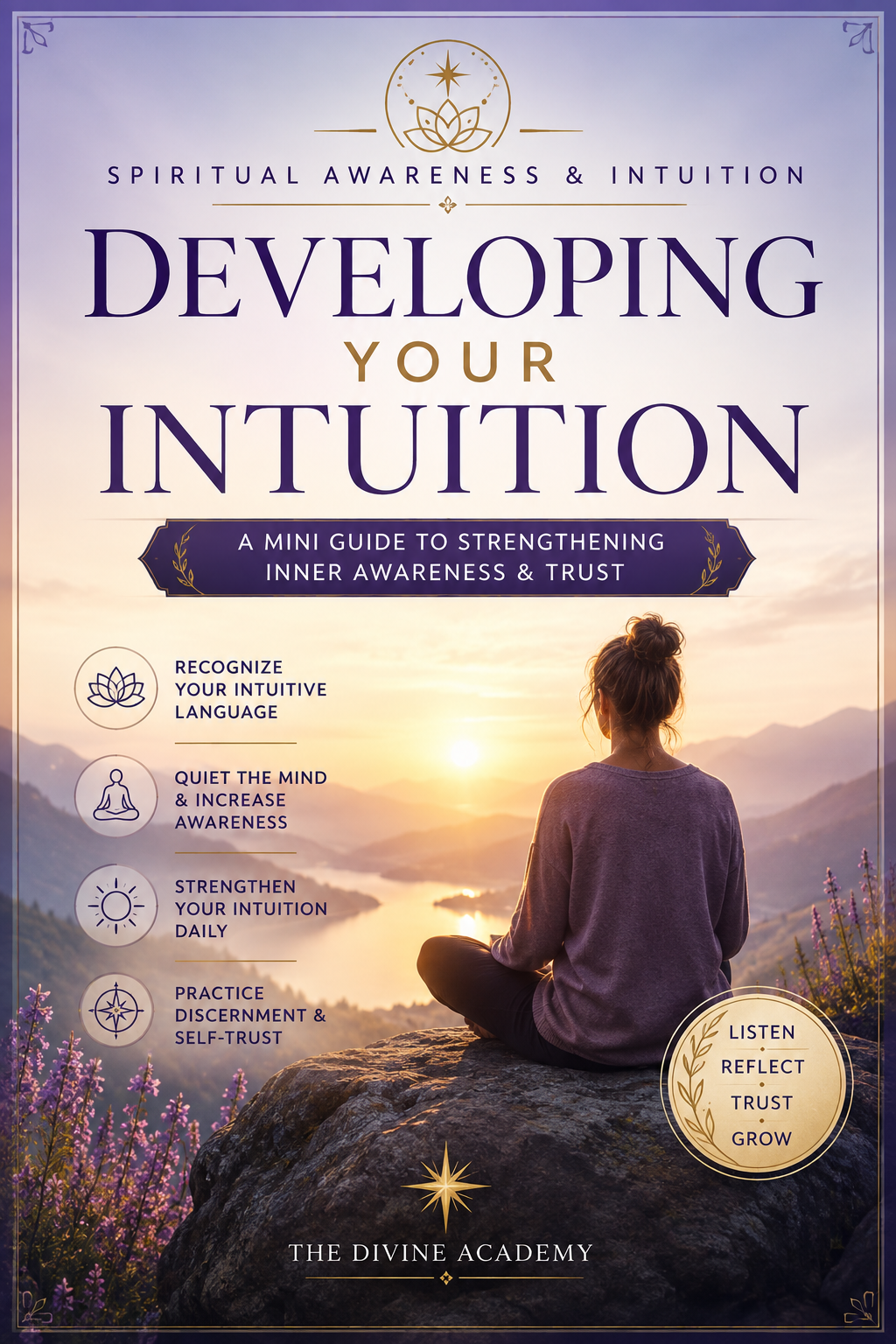
Developing Your Intuition offers a grounded introduction to strengthening your intuitive awareness while emphasizing the importance of discernment, self-reflection, and critical thinking.
Rather than teaching you to accept every feeling as truth, this mini guide helps you observe your experiences, recognize recurring patterns, understand your natural intuitive language, and build confidence through small, intentional practices.
Whether you already consider yourself intuitive or are only beginning to explore inner guidance, this guide provides a practical foundation for developing greater awareness, self-trust, and discernment in everyday life.
Inside This Mini Guide
You’ll explore:
What intuition is
Common ways intuition may appear
Your personal intuitive language
Intuition vs. fear, anxiety, and wishful thinking
How stress and mental noise affect intuition
The role of mindfulness and reflection
Practical ways to strengthen intuitive awareness
Common obstacles such as doubt and overthinking
Why discernment is essential
How to test and reflect on intuitive impressions
Balancing intuition with logic and evidence
Everyday examples and guided reflection questions
Practical next steps for continued development
At a Glance
Learning Path: Spiritual Awareness & Intuition
Product Type: Mini Guide
Format: Digital PDF
Level: Beginner
Length: 37 pages
Who This Mini Guide Is For
This guide is ideal for anyone who wants to:
Better understand how intuition may appear
Strengthen trust in their inner guidance
Learn the difference between intuition and fear
Reduce overthinking and mental noise
Develop stronger self-awareness
Practice discernment
Explore dreams, inner knowing, and meaningful impressions
Make more thoughtful and intentional decisions
Balance intuitive awareness with grounded reasoning
No previous knowledge or intuitive experience is required.
Why This Matters
Intuition is often either dismissed completely or treated as unquestionable truth.
Both extremes can create confusion.
A healthier approach allows intuition, discernment, self-awareness, observation, and critical thinking to work together.
By learning to recognize your own patterns, reflect on your experiences, and remain open to new information, you can develop a more grounded relationship with your inner guidance.
This isn’t about always being right.
It’s about becoming more aware, more reflective, and more confident in understanding yourself.
Mini Guide • Spiritual Awareness, Intuition & Inner Development
Your intuition may already be speaking—you may simply need to learn how to recognize its language.
Intuition is often described as a quiet inner knowing, gut feeling, sudden insight, meaningful dream, physical sensation, or subtle awareness that draws your attention toward something important.
Yet many people struggle to trust these experiences.
Fear, anxiety, overthinking, emotional reactions, and constant outside opinions can make it difficult to tell the difference between intuition and other internal signals.
Developing Your Intuition offers a grounded introduction to strengthening your intuitive awareness while emphasizing the importance of discernment, self-reflection, and critical thinking.
Rather than teaching you to accept every feeling as truth, this mini guide helps you observe your experiences, recognize recurring patterns, understand your natural intuitive language, and build confidence through small, intentional practices.
Whether you already consider yourself intuitive or are only beginning to explore inner guidance, this guide provides a practical foundation for developing greater awareness, self-trust, and discernment in everyday life.
Inside This Mini Guide
You’ll explore:
What intuition is
Common ways intuition may appear
Your personal intuitive language
Intuition vs. fear, anxiety, and wishful thinking
How stress and mental noise affect intuition
The role of mindfulness and reflection
Practical ways to strengthen intuitive awareness
Common obstacles such as doubt and overthinking
Why discernment is essential
How to test and reflect on intuitive impressions
Balancing intuition with logic and evidence
Everyday examples and guided reflection questions
Practical next steps for continued development
At a Glance
Learning Path: Spiritual Awareness & Intuition
Product Type: Mini Guide
Format: Digital PDF
Level: Beginner
Length: 37 pages
Who This Mini Guide Is For
This guide is ideal for anyone who wants to:
Better understand how intuition may appear
Strengthen trust in their inner guidance
Learn the difference between intuition and fear
Reduce overthinking and mental noise
Develop stronger self-awareness
Practice discernment
Explore dreams, inner knowing, and meaningful impressions
Make more thoughtful and intentional decisions
Balance intuitive awareness with grounded reasoning
No previous knowledge or intuitive experience is required.
Why This Matters
Intuition is often either dismissed completely or treated as unquestionable truth.
Both extremes can create confusion.
A healthier approach allows intuition, discernment, self-awareness, observation, and critical thinking to work together.
By learning to recognize your own patterns, reflect on your experiences, and remain open to new information, you can develop a more grounded relationship with your inner guidance.
This isn’t about always being right.
It’s about becoming more aware, more reflective, and more confident in understanding yourself.