 Image 1 of 1
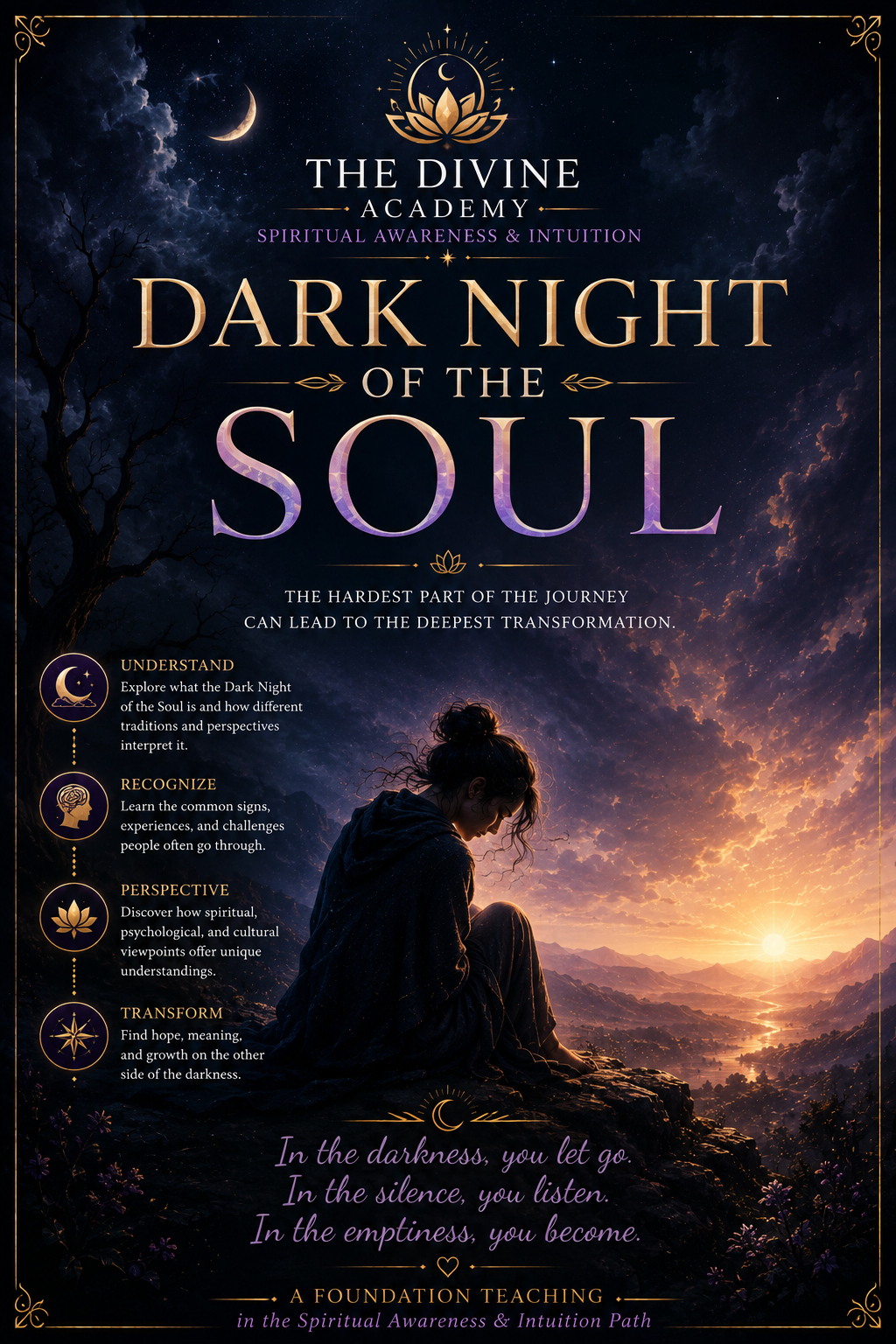
Dark Night of the Soul
Foundation Teaching • Spiritual Awareness & Intuition
Sometimes the deepest transformation begins when the life, beliefs, or identity you once relied on no longer feel the same.
There are seasons when everything that once felt certain begins to shift.
Your beliefs may no longer make sense.
Your sense of direction may disappear.
The things that once gave your life meaning may suddenly feel distant, unfamiliar, or empty.
Some spiritual traditions describe this experience as the Dark Night of the Soul.
Today, the phrase is also used more broadly to describe periods of profound inner questioning, identity change, grief, emotional struggle, or existential transformation.
But not every difficult season has the same cause or requires the same kind of support.
This Foundation Teaching explores the historical meaning of the Dark Night of the Soul, the different ways people interpret similar experiences, and why curiosity, discernment, and appropriate support are essential when navigating deep personal change.
What You'll Learn
Inside this Foundation Teaching, you'll discover:
Where the phrase Dark Night of the Soul originated
What the term has historically meant
How the concept is understood in modern spiritual communities
Psychological and philosophical perspectives on similar experiences
Common experiences people associate with deep inner transformation
Why spiritual language should not replace mental health awareness
How discernment helps you understand what kind of support may be needed
At a Glance
Learning Path: Spiritual Awareness & Intuition
Resource Type: Foundation Teaching
Level: Beginner
Length: 6 Pages
Format: Digital PDF
Who This Teaching Is For
This teaching is for anyone who has ever wondered:
"What is the Dark Night of the Soul?"
"Why do I feel disconnected from everything that once gave me meaning?"
"Is this a spiritual awakening, depression, grief, or something else?"
"Why am I questioning my identity and beliefs?"
"Can difficult inner experiences lead to growth?"
Whether you're exploring spirituality, navigating a major life transition, or trying to understand a period of deep emotional or existential change, this teaching offers a balanced introduction to the concept without forcing every experience into one explanation.
Why This Matters
The phrase Dark Night of the Soul can help some people find language for experiences that feel difficult to explain.
But spiritual language can also become limiting when it's treated as the only possible explanation.
Feelings of emptiness, disconnection, hopelessness, exhaustion, or loss of meaning may be interpreted spiritually, but they can also overlap with grief, burnout, trauma, depression, anxiety, or other mental health concerns.
Understanding multiple perspectives creates space for both spiritual exploration and responsible self-awareness.
It allows you to honor the meaning an experience may hold while still recognizing when professional care or additional support may be necessary.
The goal isn't to romanticize suffering.
It's to understand that difficult periods can carry meaning without assuming pain must be endured alone.
Transformation may emerge through reflection, support, healing, and time—but receiving help does not make the experience less spiritual or less meaningful.
Foundation Teaching • Spiritual Awareness & Intuition
Sometimes the deepest transformation begins when the life, beliefs, or identity you once relied on no longer feel the same.
There are seasons when everything that once felt certain begins to shift.
Your beliefs may no longer make sense.
Your sense of direction may disappear.
The things that once gave your life meaning may suddenly feel distant, unfamiliar, or empty.
Some spiritual traditions describe this experience as the Dark Night of the Soul.
Today, the phrase is also used more broadly to describe periods of profound inner questioning, identity change, grief, emotional struggle, or existential transformation.
But not every difficult season has the same cause or requires the same kind of support.
This Foundation Teaching explores the historical meaning of the Dark Night of the Soul, the different ways people interpret similar experiences, and why curiosity, discernment, and appropriate support are essential when navigating deep personal change.
What You'll Learn
Inside this Foundation Teaching, you'll discover:
Where the phrase Dark Night of the Soul originated
What the term has historically meant
How the concept is understood in modern spiritual communities
Psychological and philosophical perspectives on similar experiences
Common experiences people associate with deep inner transformation
Why spiritual language should not replace mental health awareness
How discernment helps you understand what kind of support may be needed
At a Glance
Learning Path: Spiritual Awareness & Intuition
Resource Type: Foundation Teaching
Level: Beginner
Length: 6 Pages
Format: Digital PDF
Who This Teaching Is For
This teaching is for anyone who has ever wondered:
"What is the Dark Night of the Soul?"
"Why do I feel disconnected from everything that once gave me meaning?"
"Is this a spiritual awakening, depression, grief, or something else?"
"Why am I questioning my identity and beliefs?"
"Can difficult inner experiences lead to growth?"
Whether you're exploring spirituality, navigating a major life transition, or trying to understand a period of deep emotional or existential change, this teaching offers a balanced introduction to the concept without forcing every experience into one explanation.
Why This Matters
The phrase Dark Night of the Soul can help some people find language for experiences that feel difficult to explain.
But spiritual language can also become limiting when it's treated as the only possible explanation.
Feelings of emptiness, disconnection, hopelessness, exhaustion, or loss of meaning may be interpreted spiritually, but they can also overlap with grief, burnout, trauma, depression, anxiety, or other mental health concerns.
Understanding multiple perspectives creates space for both spiritual exploration and responsible self-awareness.
It allows you to honor the meaning an experience may hold while still recognizing when professional care or additional support may be necessary.
The goal isn't to romanticize suffering.
It's to understand that difficult periods can carry meaning without assuming pain must be endured alone.
Transformation may emerge through reflection, support, healing, and time—but receiving help does not make the experience less spiritual or less meaningful.